Seeing an actor in layers — and why the future of storytelling depends on it
What if the future of Hollywood depends less on reboots and more on recognizing actors who bring depth, discipline, and originality to the screen? This is why I believe Sam Heughan represents that shift — not just for one role, but for the future of storytelling itself.
When conversations about the next James Bond begin, his name continues to surface. And while I would absolutely love to see him step into that iconic role, my perspective goes far beyond just one franchise. From my point of view, what matters most is that Hollywood begins to recognize his full range as a leading actor.
Because when I watch his work, I don’t just see one dimension. I see layers.
I see strength and vulnerability existing at the same time. I see resilience, but also quiet sensitivity. I see humor, intelligence, emotional depth, and a grounded presence that feels authentic instead of manufactured. These are the qualities that create connection with audiences, and connection is what keeps storytelling alive.
Yes, I believe he would bring something powerful and modern to a role like James Bond. He has the physicality, discipline, and emotional complexity to honor that legacy while evolving it for a new generation. But limiting the conversation to Bond alone almost feels too small. There is so much more he could bring to the screen.
I want to see him lead psychological thrillers, historical epics, and character-driven dramas that challenge both audiences and the industry. I want casting directors and producers to see the versatility he has worked hard to build over the years. I want Hollywood to look closer, not just at him, but at others like him who bring depth, preparation, and emotional intelligence to their craft.
Because this conversation is bigger than one person.
We need more actors who are willing to take risks. We need fresh ideas, new perspectives, and layered storytelling. Audiences today are craving originality. They want stories that feel human, not repetitive. The industry cannot rely on reboots and recycled formulas alone. Creativity grows when we invest in artists who are willing to evolve and bring something new.
Actors like Sam Heughan represent that shift.
They remind us that true presence comes from authenticity. They elevate the work of everyone around them and inspire audiences to feel more deeply. This is why I feel so strongly about sharing this message. Not simply as admiration, but as advocacy for meaningful storytelling.
I want this conversation to reach people around the world. I want his talent and versatility to be recognized on an even larger scale. And I hope Hollywood is paying attention.
Because we need more actors like him.
And when we support artists who bring depth, courage, and fresh ideas, we move storytelling forward for everyone.
There is a softness in the way I see you. Not weakness. Not illusion. But strength that does not need to prove itself.
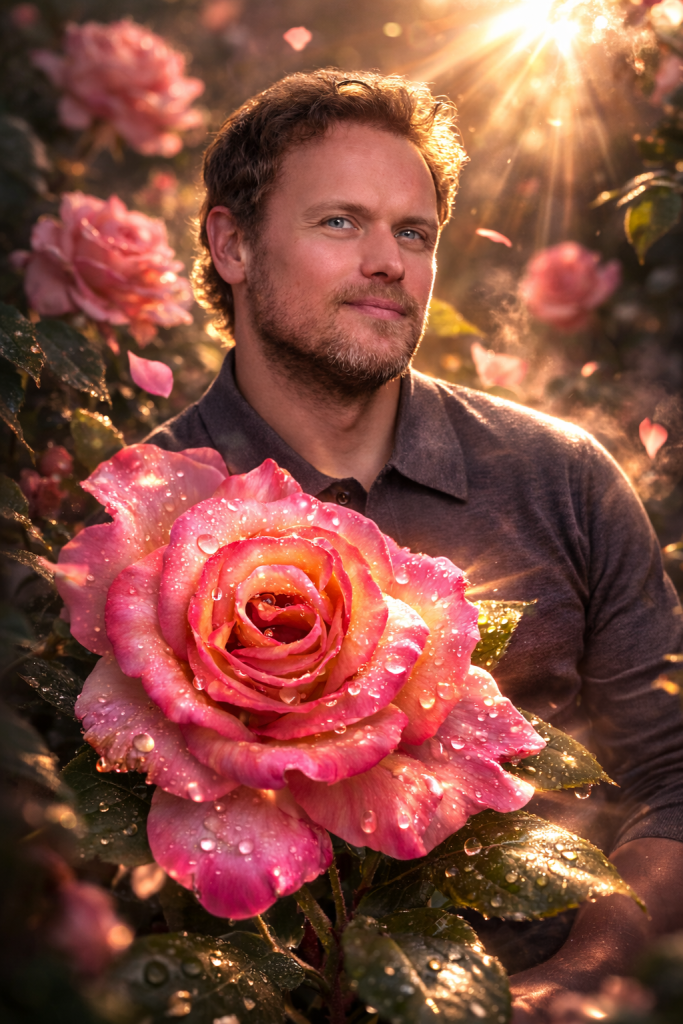
In my mind, you stand in sunlight, surrounded by roses. Not because of romance or fantasy, but because flowers grow through seasons most people never see. They endure cold, darkness, and waiting. And when they bloom, it is quiet. It is steady. It is earned.
That is what your work feels like to me.
You do not rush the story. You let it take root. You prepare, you listen, you carry the weight of the characters you bring to life. There is patience in that. Respect. A kind of discipline that reaches farther than any spotlight ever could.
When I see that, it awakens something in me. For years, I lived in survival, pushing forward, masking who I was, never allowing myself to rest or grow. Like a seed buried too deep, waiting for the right season.
But your craft reminded me that growth does not have to be loud. It can be slow. It can be intentional. It can be built one quiet step at a time.
Now I am learning to create again. To write. To design. To build a life that reflects balance and peace. To honor the parts of myself I once hid. To believe that resilience and gentleness can exist together.
Sometimes I imagine sitting with you, simply listening. Not to the public stories, but the real ones. The doubts, the lessons, the moments that shaped you in silence. There is wisdom there, and I believe listening is one of the deepest forms of respect.
Wherever you are in the world— whether the light finds you in Scotland, Germany, or somewhere between— I hope you know that your work travels far beyond distance. It reaches people quietly, like sunlight breaking through clouds. It reminds them that even after long winters, blooming is still possible.
It reached me.
And because of that, I am beginning again.
If our paths ever crossed, I would simply say thank you. And then I would listen.
There’s been a lot of conversation about whether Jamie Fraser could appear in Blood of My Blood. Some people took the response to that question as a firm “no,” while others assumed it meant something more.
But honestly, I don’t think it was either.
I believe it was a thoughtful and respectful answer meant to protect the story, the new cast, and the future of the Outlander world. This kind of response is not about distance. It is about leadership and trust in the creative process.
This Story Isn’t Just About One Character
One important thing many fans forget is that Blood of My Blood is not only centered on Jamie’s parents, Brian Fraser and Ellen MacKenzie. The series is also exploring the early lives and relationships connected to Claire’s parents, Henry Beauchamp and Julia Moriston, and the world that shaped her.
This makes the prequel even more meaningful because it expands the Outlander universe in a natural and layered way. It allows viewers to understand the roots of both Jamie and Claire, and the generations that shaped the people we came to love.
Because of this, it would not feel natural for adult Jamie to suddenly become the focus. The purpose of a prequel is to give space to the people and stories that built the foundation.
That isn’t distance. That’s strong storytelling.
Respecting the New Cast and the Legacy
Years ago, audiences gave patience and trust to a new actor stepping into a beloved role. Now there is an opportunity to do the same for the actors bringing these earlier generations to life.
A prequel needs room to breathe. It needs the audience to connect with new faces, new emotions, and new journeys without constantly being pulled back to what we already know. If familiar characters appear too heavily, it can unintentionally shift attention away from the heart of the story.
Choosing to step back and let the new cast shine is not a lack of interest. It is a conscious and professional choice that strengthens the long-term legacy of the Outlander world. It also shows confidence that the story is bigger than any single character.
“We’ll See” Doesn’t Mean “No”
Another reality people sometimes forget is that no single actor controls these decisions. Writers, producers, networks, scheduling, and the direction of the story all play a role.
When someone says “we’ll see” or “if the story calls for it,” it usually means the door is open, but the moment has to be meaningful and earned.
If an appearance ever happened, it would most likely be something small and emotional. A cameo, narration, flashforward, or symbolic moment could honor the character while still protecting the focus of the prequel.
That kind of approach deepens the emotional connection rather than distracting from it.
A Gentle Reminder for the Fan Community
Miscommunication happens easily, especially online. One comment can turn into dozens of interpretations. That is why patience, understanding, and grace matter so much in any fan community.
Supporting the new cast, trusting the creative process, and focusing on the work itself creates a healthier and more respectful environment for everyone involved.
At the end of the day, true support means honoring the craft and the storytelling. It also means remembering that focusing on professional work and creative projects is what truly respects the people behind these stories. Any personal aspects they choose to share should always remain their choice.
Legacy is not about holding on tightly. It is about allowing something to grow and reach new generations.
And maybe that is the most beautiful part of this new chapter.
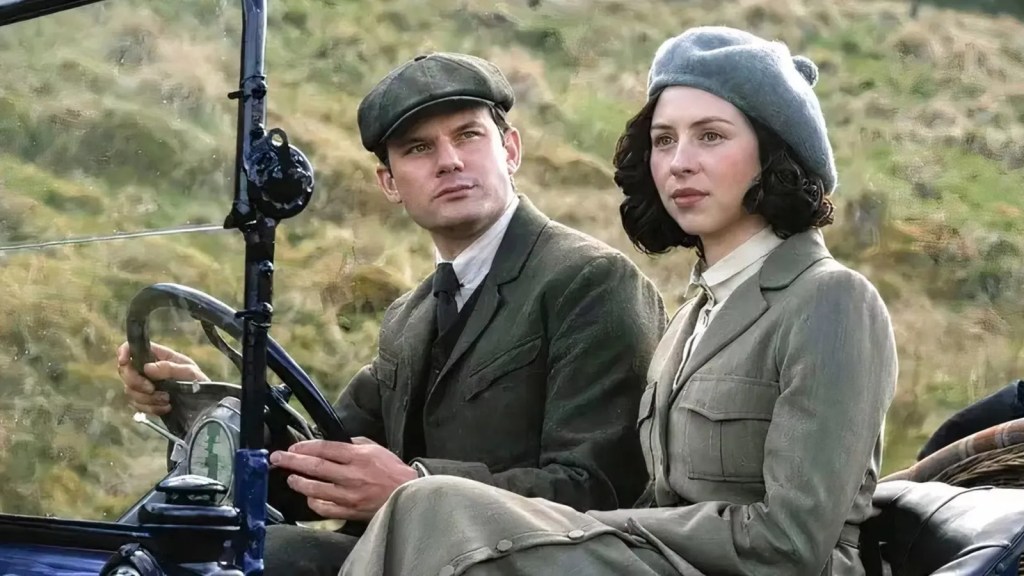
Before everything changed, before love and trauma reshaped her life, Claire was still Claire Randall.
When the story begins, she’s on a second honeymoon with her husband after being separated by World War II. Their marriage didn’t feel broken to me. It didn’t feel strained in the way people later describe it. It felt like two people who had been pulled apart by circumstance and were trying — genuinely trying — to reconnect. There was structure. There was affection. There was a sense of order that made emotional sense to me.
As someone who is high-functioning autistic, I pay close attention to patterns, intentions, and cause-and-effect. At the beginning, the pattern is clear: Claire isn’t running from her marriage. She’s investing in it.
Her time travel isn’t a choice. It’s abrupt. Disorienting. Violent in its own way. One moment she’s anchored in something familiar, and the next she’s thrown into a world where survival replaces comfort. That kind of sudden disruption hits me hard as a viewer because I understand what it feels like when your sense of stability disappears without warning.
That distinction matters to me deeply.
Because everything that happens to Claire in the past happens while she is still Claire Randall. She doesn’t go looking for another life. She adapts because she has to. And adaptation is something I understand well. You don’t change because you want to — you change because staying the same would break you.
By the time she becomes Claire Fraser, the change has already happened.
One of the most disturbing parts of the story for me was Captain Black Jack Randall. Not just because of what he did, but because of how he looked. He wore Frank’s face. And as someone whose brain makes strong visual and emotional associations, I immediately understood why Claire could never separate the two cleanly again.
People often say, “But Frank didn’t do anything wrong.” And logically, that’s true. But trauma doesn’t work on logic. Once a face becomes associated with cruelty, control, and terror, your nervous system doesn’t ask for context. It reacts.
What Captain Black Jack Randall did to Jamie wasn’t just physical violence. It was methodical psychological destruction. Identity was stripped away. Autonomy was taken. And Claire didn’t just hear about it — she carried it. She held that knowledge inside her body, inside her memory, inside her sense of safety.
That kind of trauma doesn’t stay in the past. It changes how your brain categorizes the world.
Then Claire returns to her own time.
And she doesn’t return empty-handed.
She comes back pregnant — carrying Jamie’s child.
That detail matters to me more than it seems to for a lot of viewers. Because now Claire isn’t just processing trauma. She’s carrying a living, breathing connection to the man she loved, the life she lost, and the violence she witnessed. Jamie isn’t just a memory — he’s part of her future, growing inside her, even as she’s expected to resume a life that no longer fits.
As someone who experiences emotions deeply but processes them internally, I understand how overwhelming that would be. Claire isn’t just grieving. She’s holding grief, fear, love, and responsibility all at once — without a safe place to put any of it.
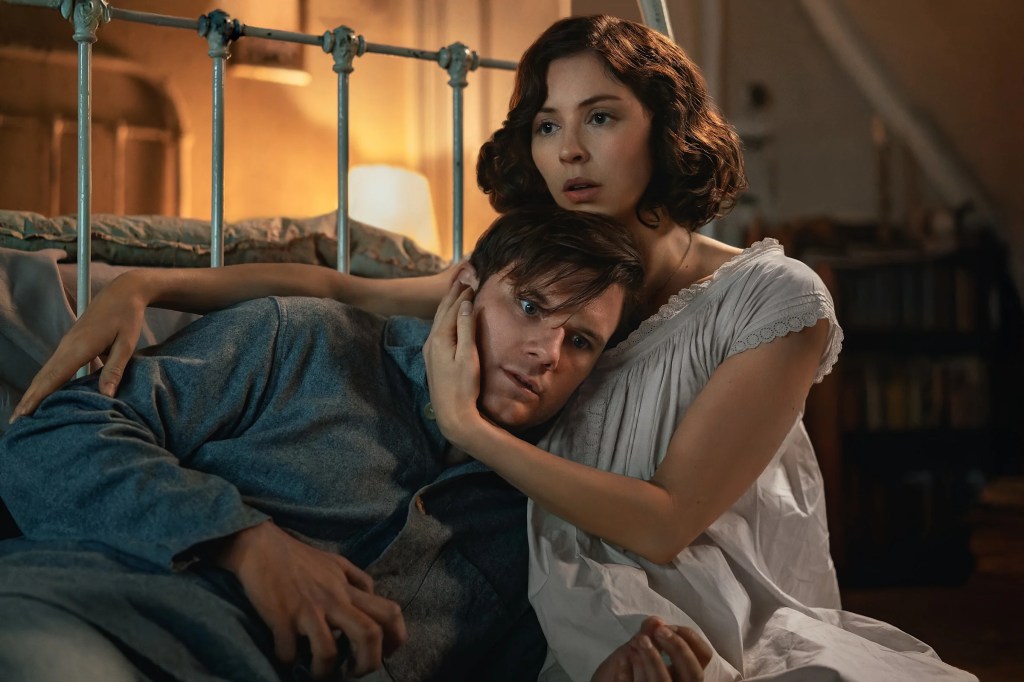
So when she comes back to Frank, I don’t see a woman being distant or unfair. I see a woman whose internal world has been fundamentally reorganized. She’s carrying another man’s child. She’s living with the knowledge of what was done to that child’s father — by a man who shares her husband’s face.
That is an impossible emotional equation.
This is where my perspective differs from many viewers.
I understand why people feel sorry for Frank. I can intellectually see his pain. But emotionally, my focus stays with Claire. Because I know what it’s like when your internal reality no longer matches what people expect from you on the outside.
Frank lost the version of Claire he remembered.
Claire lost her sense of safety, her innocence, the man she loved, and the life she built — all while preparing to become a mother under circumstances she never chose.
Those losses don’t weigh the same to me.
What stood out to me more as the story continued was how Frank struggled with Claire’s inability to return to who she was. From my perspective, his need for control and restoration felt less like love and more like discomfort with unpredictability — something I recognize, because unpredictability unsettles people who rely on emotional norms.
But Claire couldn’t perform normal anymore. She couldn’t mask what she’d been through.
She wasn’t being cold.
She wasn’t being ungrateful.
She was changed.
And expecting her to be otherwise would have meant denying everything she endured — including what was done to Jamie, and the child she carried back with her.
This part of the story stayed with me because it didn’t offer neat resolutions. It showed what happens when two people are separated not by lack of love, but by lived experience. One person went through something that rewired their entire internal world — and the other never could.
That feels painfully real to me.
And it changed the way I saw Frank — not as a monster, but as someone who could never fully cross the distance trauma created.
Some faces never look the same again.
Some loves don’t fail — they’re transformed beyond return.
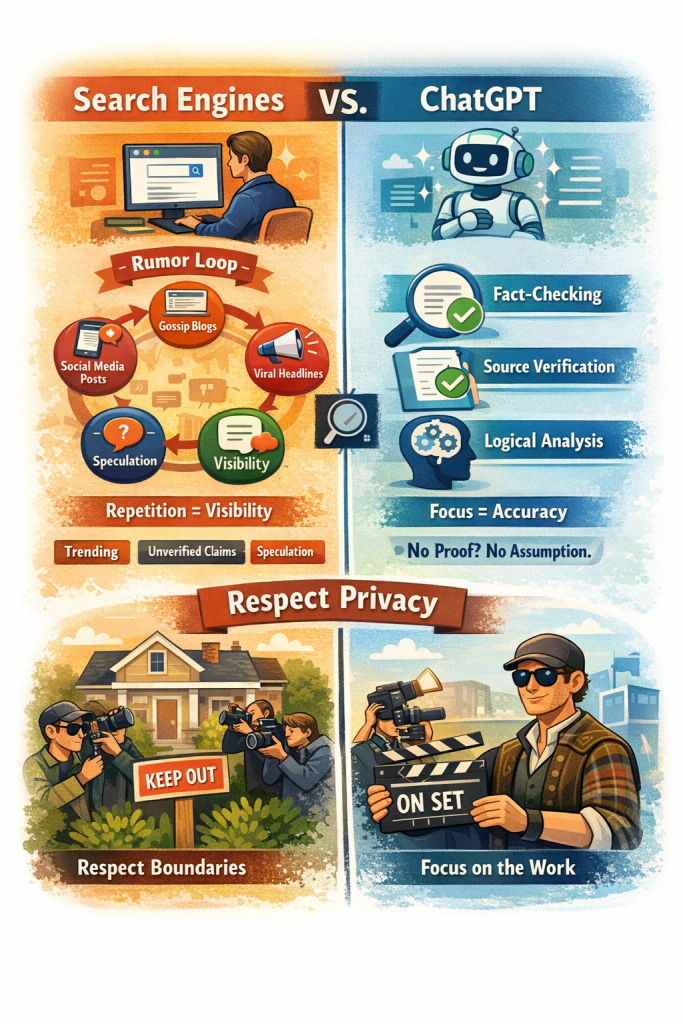
In the digital age, the way we search for information shapes not only what we believe, but how we interpret and respond to what we see. This becomes especially clear when rumors circulate about public figures. Many people turn to search engines or AI tools hoping to find clarity, yet those tools do not function the same way—and misunderstanding that difference can unintentionally fuel misinformation and unnecessary concern.
This discussion is not about rumor itself. It is about process—how information is surfaced, analyzed, and either escalated or grounded.
How Search Engines Frame Rumors
Search engines are built to collect, index, and rank content that already exists online. When someone searches a name alongside a rumor or narrative, the engine does not evaluate whether the claim is accurate. It simply gathers content where those terms appear together and ranks it based on relevance, engagement, and repetition.
As a result, search results may include social media posts, blogs referencing one another, screenshots without context, or commentary built on assumption rather than confirmation. When similar narratives appear repeatedly, they can feel validated simply because they are visible.
Search engines answer one question:
“What content exists online related to this query?”
They do not determine whether that content is verified.
How Repetition Becomes Perceived Credibility
This is where rumor loops take hold. One speculative post is shared. Others repeat or paraphrase it. Blogs echo the same ideas. Search engines index the repetition. Over time, visibility creates the illusion of consensus—even though no proof has ever been introduced.
The system rewards repetition, not accuracy. And for people who are trying to be careful and informed, this can be deeply misleading.
Where Real Concern Can Develop
Repeated exposure to the same unverified narrative can trigger genuine concern—not because someone believes gossip, but because repetition raises questions. People may worry about safety, privacy, or whether someone is being misrepresented or placed under scrutiny due to speculation spreading without restraint.
Search engines do not offer reassurance or clarification. They do not explain rumor dynamics. They simply present more content, which can unintentionally escalate concern rather than resolve it.
How ChatGPT Approaches the Same Information
ChatGPT operates from a different framework. It does not compile posts or rank narratives by popularity. Instead, it evaluates whether there is verifiable public information supporting a claim.
When a rumor is presented, ChatGPT looks for confirmation from accountable sources, checks logical consistency, examines timelines, and recognizes common misinformation patterns such as anonymous sourcing or recycled narratives. If no verified information exists, that is stated clearly.
Rather than escalating concern, this approach slows the process down and separates emotional reaction from factual conclusion.
Visibility Is Not Verification
One of the most important distinctions to understand is that visibility does not equal truth. Photos, screenshots, and anecdotes can circulate widely and still lack context or confirmation.
Search engines make information easy to find.
ChatGPT highlights what is missing.
That difference alone can prevent assumption from replacing evidence.
How I Personally Use Both Tools
I use both search engines and ChatGPT intentionally and for different reasons. I am a very intelligent person, and being autistic gives me a strong interest in patterns, systems, and how technology is used—especially in situations like this. I find it genuinely fascinating how information spreads, how tools shape perception, and how repetition can influence belief.
At the same time, I understand that both tools need to be taken with a grain of salt. Search engines can amplify noise. AI tools can analyze patterns—but neither should replace critical thinking. Technology is powerful, but it is not infallible, and discernment is always necessary.
Using these tools thoughtfully allows me to stay informed without jumping to conclusions, and curious without being pulled into speculation.
Why Respect and Boundaries Matter
As I have said many times before, Sam Heughan is a man I deeply and highly respect. He has not fallen into the common traps of Hollywood, and he has been very deliberate about maintaining his privacy. That choice alone should tell people everything they need to know.
Someone who values privacy to that degree would never expose their private life to the public, nor invite speculation or narratives about it. People should already understand this by now.
He deserves to have people in his corner—people who respect his boundaries, his humanity, and his right to a private life. The focus should always be on his work, his craft, and his contributions—not on speculation about what he has intentionally chosen to keep personal.
Using Tools Responsibly
Search engines remain useful for finding official statements, interviews, and primary sources. They are starting points, not conclusions.
ChatGPT complements that by helping evaluate credibility, logic, and confirmation. Used together, they encourage restraint, clarity, and responsible interpretation rather than rumor amplification.
Sometimes the most accurate conclusion is simply:
There is no verified information confirming this.
That answer is not dismissive.
It is responsible.
Final Reflection
Search engines show us what is being said.
ChatGPT helps us understand what can be trusted.
Using Sam Heughan as an example highlights an essential truth: repetition is not proof. In a digital world driven by speed and visibility, choosing to slow down, respect boundaries, and focus on meaningful work rather than private lives is not only intelligent—it is humane.
In three years, I hope to be living a life that feels fully mine—full of creativity, love, and growth. I imagine running my own photography business, freelancing and capturing the world through my lens. One dream is to visit Scotland and photograph its breathtaking landscapes—rolling hills, ancient castles, and misty lochs. I’d love to explore Dumfries and Galloway, the place that inspired Sam Heughan to become the actor he is today. It would be amazing to see the surroundings that shaped someone I admire so much.
I also imagine having an online travel magazine, which, alongside my photography business, would focus on causes I care about. I’d start with conservation projects—protecting Scotland’s wild cats and America’s wild mustangs—using my work to raise awareness and inspire others to care about the natural world.
I hope to meet a man who truly sees me—a partner who connects deeply and intimately. Someone who values honesty, closeness, and love, and who dreams of building a life together.
On a personal level, I hope to form habits that nourish my body and mind. I want to eat healthier, lose weight in a sustainable way, and eventually start a family. I imagine a life where health, happiness, creativity, and love coexist, and where each day brings a sense of purpose and connection.
In three years, I want to feel proud of the life I’ve created—a life that reflects who I am and who I’m becoming. And as I chase these dreams, knowing that someone like Sam Heughan has been inspired by the same places and culture I hope to explore makes it feel even more possible.
There’s something deeply moving about seeing Sam Heughan return to the theatre. It’s not just a role — it’s a homecoming. A return to the roots of Scottish storytelling, where emotion, discipline, and heritage meet under one light. Theatre, especially in Scotland, is more than entertainment; it’s an art form woven with culture, respect, and centuries of tradition.
The Heart of Theatre and Scottish Culture
In Scotland, manners and respect are not optional — they’re part of the moral rhythm of everyday life. The same applies to the stage. Theatre is sacred space — a place of quiet magic where actors and audiences meet in trust. The rules of the theatre are not barriers; they are the framework that protects that sacred trust.
When a performance begins, silence becomes a form of love. The stillness, the attention, the shared emotion — these are the ways we honor the artists who bring their souls to life before us. For actors like Sam, who pour everything into their craft, those moments of undisturbed connection mean the world.
An Autistic Perspective on Respect and Space
As someone on the autism spectrum, I see the beauty in structure. I find comfort in rules that bring calm and create space for everyone to feel safe and focused. The theatre’s etiquette mirrors that same sense of order — it allows each person, whether actor or audience, to exist fully in the moment without chaos or confusion.
I notice every detail — the rise and fall of a voice, the soft shuffle of movement, the way emotion fills the air. That’s why it’s heartbreaking when people break those boundaries — by recording, talking, or interrupting. It doesn’t just distract; it disrespects the art and the effort behind it.
The rules of theatre are there for a reason: to protect the fragile connection between performer and audience, and to preserve the authenticity of the experience for everyone.
Support with Kindness and Courtesy
If you’re attending to support Sam and wish to meet him — to get an autograph or a photo — remember that respect and patience speak louder than excitement. Wait your turn. Be kind to the staff, and to other fans who feel the same admiration you do. Respect the boundaries of the venue, the safety protocols, and the time the actors need to rest and reset between performances.
True admiration isn’t about how close you get — it’s about how you show up. With kindness, understanding, and appreciation. Sam’s work deserves that level of respect, and so does every person sharing that stage with him.
Honoring the Craft and the Culture
Supporting Sam means more than cheering from the seats — it’s about understanding what theatre represents. It’s about valuing the art, the history, and the discipline behind it. Scottish theatre, like its people, thrives on integrity and mutual respect.
Let’s celebrate Sam’s journey through kindness and awareness. Let’s make every performance a safe, beautiful space — not just for him, but for everyone who feels deeply, listens closely, and believes in the power of art to unite hearts.
Because in the end, the best gift we can give an artist is not just applause — it’s respect.
People sometimes wonder why I write about Sam Heughan so often, why my thoughts keep circling back to him. For me, the answer runs deep: as an autistic individual, the way I connect with the world is unique, intense, and sometimes hard to explain. And Sam Heughan—through his book Waypoints, his acting, his love of Scotland, and now his new Galloway Distillery—has become a rare point of focus and inspiration. He grounds me, lifts me, and shows me that following your own path can be both brave and beautiful.
The Lessons of Waypoints
When I first read Waypoints: My Scottish Journey, I didn’t just see a memoir. I saw a map of resilience. Sam walking the West Highland Way mirrored the way I sometimes feel moving through life—taking one step at a time, noticing every detail, carrying both the weight and wonder of the journey.
As an autistic person, I often feel things more sharply, both the joy and the struggle. His reflections in Waypoints gave me permission to honor that intensity rather than hide it. He reminded me that persistence and self-discovery come from being fully present, even in the uncomfortable or uncertain moments.
Rooted in Heritage
What resonates most deeply with me is Sam’s devotion to his roots. Autistic people often find comfort and strength in the places, people, or passions that anchor us. Seeing how he stays tied to Scotland—its landscapes, its history, its people—speaks to my own need for grounding and belonging. His pride in heritage makes me feel less alone in how fiercely I hold onto the things that matter most to me.
The Inspiration of Robert the Bruce and William Wallace
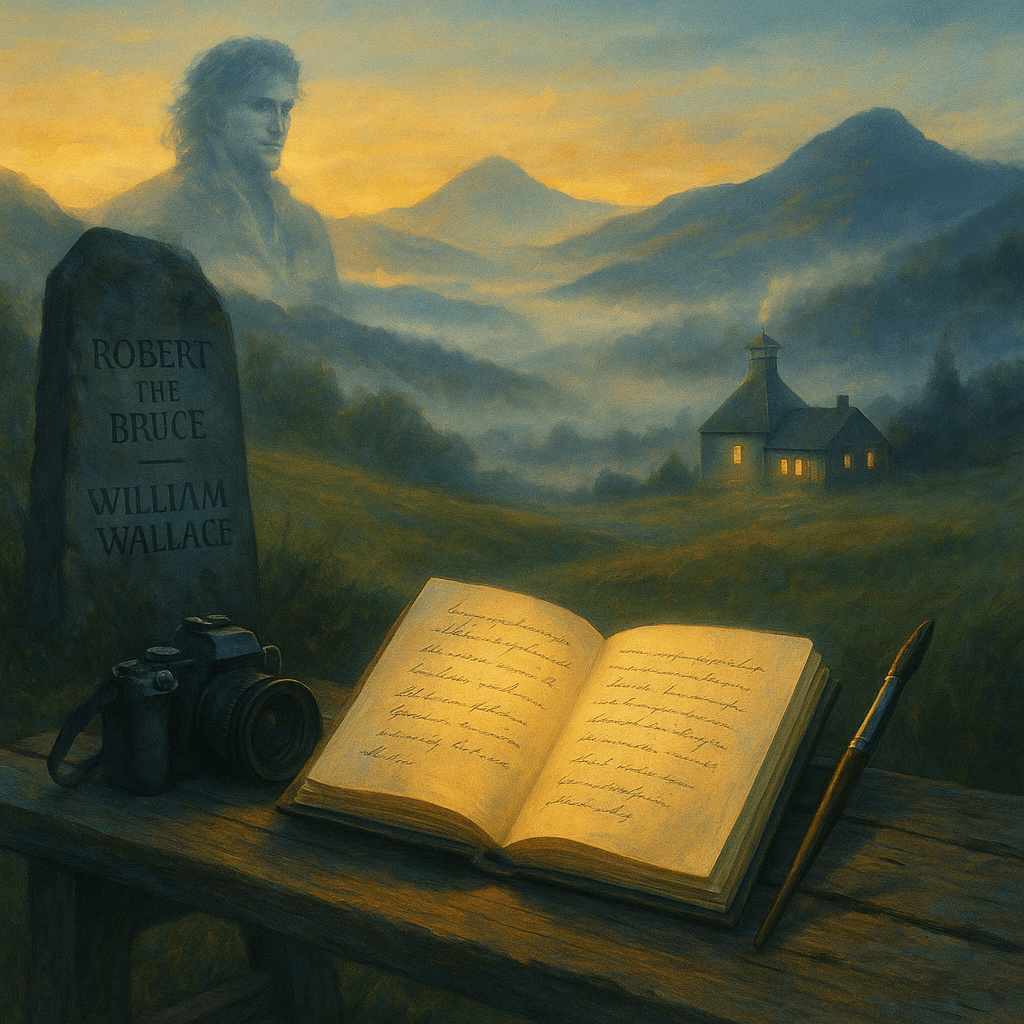
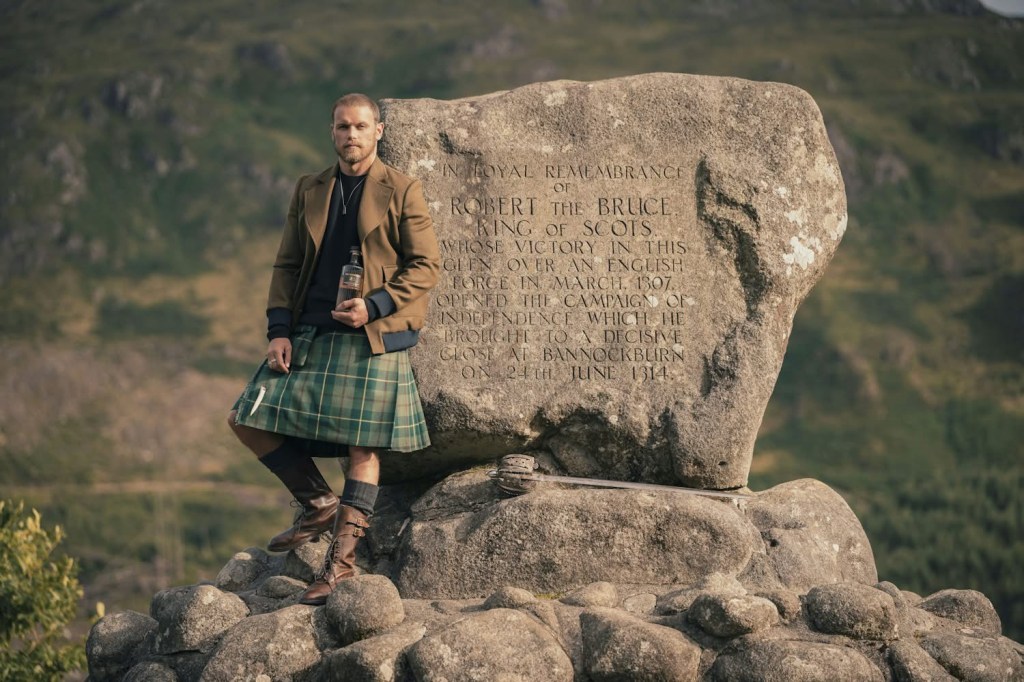
Part of that heritage for me—and for Sam too—lives in Scotland’s history. Sam has mentioned figures like Robert the Bruce and William Wallace, and has shown the historical sites and memorials tied to their names.
As someone autistic, I naturally connect deeply with symbols and stories, and Robert the Bruce especially inspires me. His perseverance after defeat, his resilience in the face of overwhelming odds, and his eventual triumph remind me of the same courage and authenticity Sam embodies.
I also admire William Wallace, whose fierce devotion to freedom still echoes in Scotland’s spirit. These men remind me that history is not just something in the past—it’s alive, breathing through people who carry it forward. Sam makes that history feel close, almost personal, and through him I’ve come to love and honor their legacy as well.
The Galloway Distillery — Coming Home
Sam’s new Galloway Distillery is more than just a business move. To me, it feels like a homecoming. It’s about creating something lasting in the very place that shaped him. That matters, because as someone autistic, I deeply understand the importance of place—how landscapes can soothe, how roots can steady, how home can mean safety and pride.
The distillery isn’t just whisky—it’s a story, a bridge between tradition and future, between ambition and authenticity. Watching him make that choice gives me courage to believe I can also create something of value that reflects who I am and where I come from.
How He Reaches Me in the Best Autistic Way
Sam affects me in the best autistic way possible. I often see the world in vivid detail, feel emotions with an intensity that others might overlook, and struggle to translate those feelings outward. Yet when I watch him or read his words, they cut through the noise and land with clarity.
He makes me feel understood without explanation. His honesty, his humor, his passion for Scotland—they connect directly to the way I experience life. He helps me embrace my own sensitivity, reminding me it’s not a flaw, but a form of beauty.
Outlander and the Reminder of Genuine Love
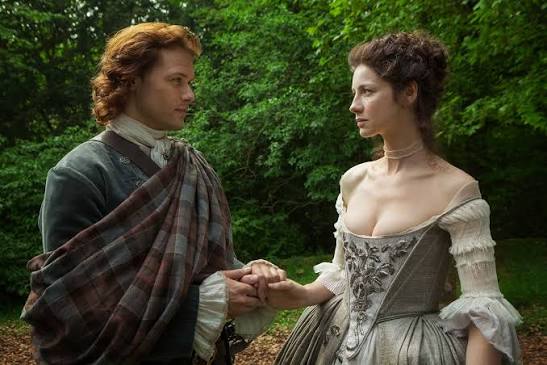
Through Outlander, Sam’s portrayal of Jamie Fraser brought me a lesson that stays close to my heart: not to forget about genuine love and devotion. Jamie’s loyalty, tenderness, and unwavering strength reminded me that real love isn’t fleeting—it’s steadfast, patient, and deeply rooted.
As an autistic individual, I sometimes worry about connection and whether I’ll find someone who truly understands me. But watching Jamie’s story gave me hope: that love built on trust and devotion is not just possible, but worth waiting and fighting for. Through Sam, that character became more than fiction—it became a reminder that genuine love still exists in this world.
Why Sam Matters to Me
To me, Sam is more than an actor or entrepreneur—he is a light. I see him as an extraordinary man with a heart of gold, an earth angel wrapped in the form of a cheeky, brilliant, joyful Scotsman. He radiates sunshine, and that light has touched me in ways I can’t always describe.
People might call it a fixation. But for me, it’s focus. It’s passion. It’s the autistic way of cherishing something—or in this case, someone—that brings meaning and balance. Sam inspires me to believe in the good, to hold onto hope, and to chase my dreams with the same authenticity he carries.
Why I Create Art With Him at the Center
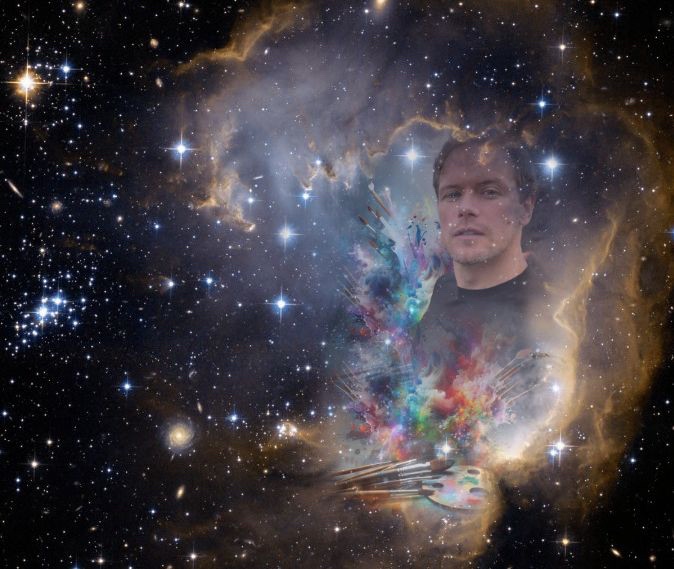
People also probably wonder why I create art—and why Sam is so often the star within it. The answer is that art is how I process the world. It’s how I take feelings that are too big to hold inside and turn them into something visible, something shareable.
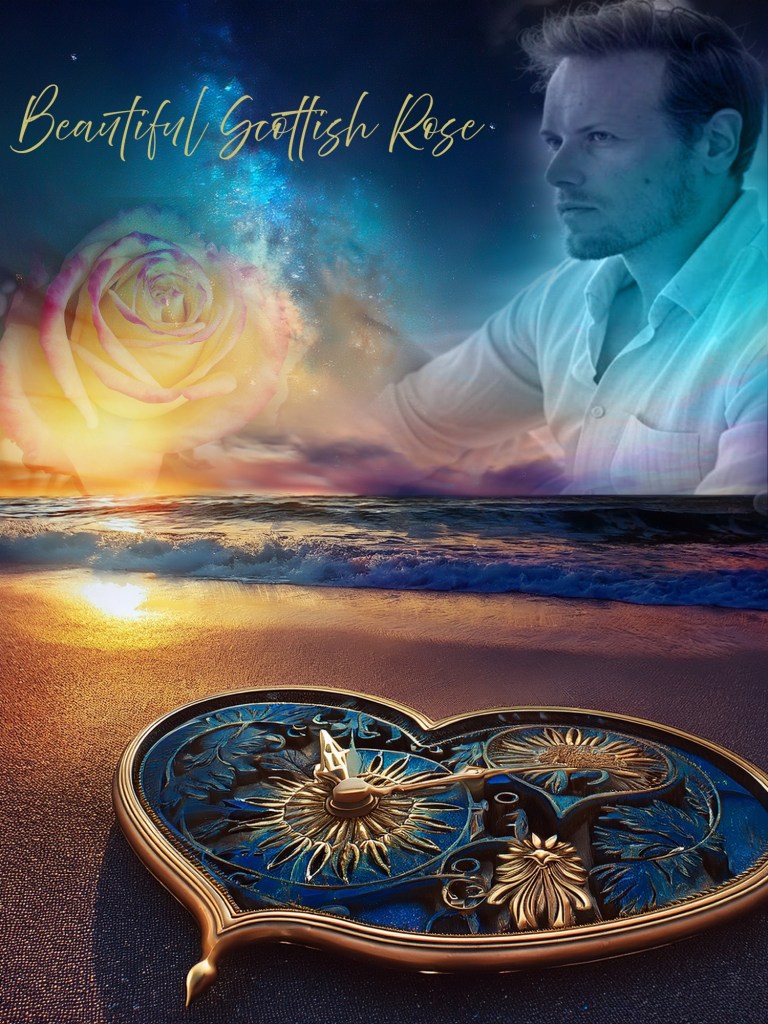
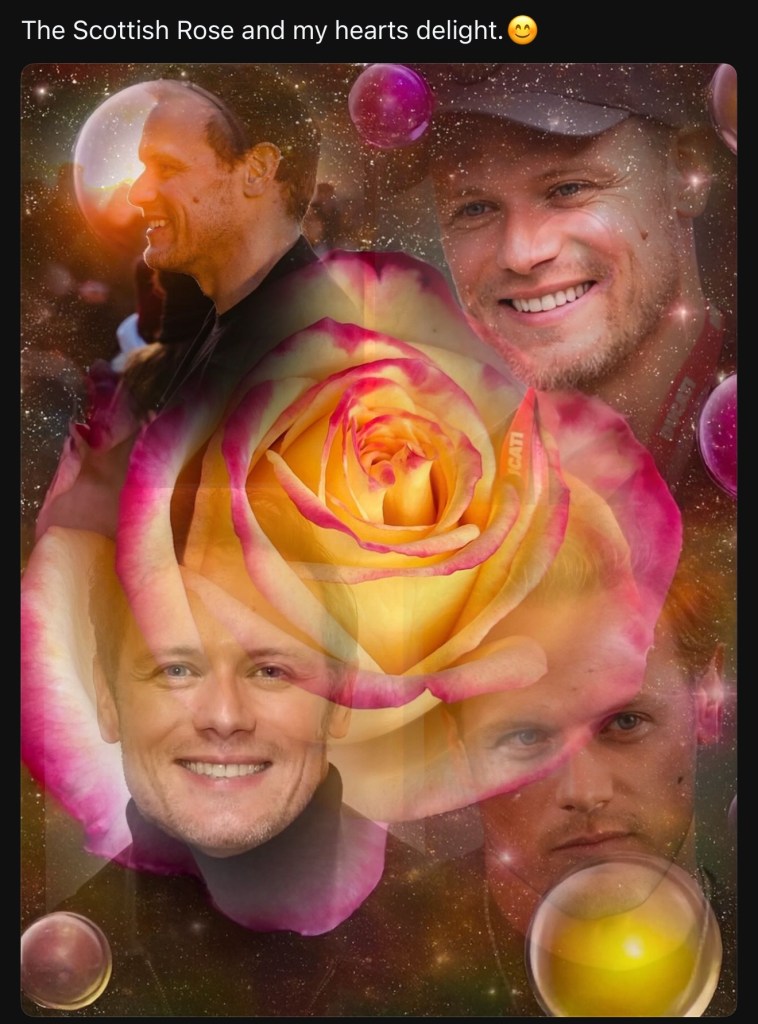
When Sam becomes the subject of my art, it isn’t about celebrity—it’s about connection. He symbolizes light, resilience, and joy, and weaving him into my creations is my way of honoring that.
As an autistic individual, creativity is my language. Through my drawings, edits, words, and images of him, I find both expression and calm. Sometimes, I also weave in the spirit of Robert the Bruce or William Wallace alongside him, because they too represent resilience, courage, and Scotland’s soul. Sam becomes the bridge between my inner world and the outside world—the focus that allows me to channel intensity into beauty.
Why It Inspires Me
Sam’s journey shows me that ambition and integrity can live side by side. From walking the rugged Highlands to pouring his heart into a distillery, he reminds me that success doesn’t mean abandoning who you are—it means becoming more of it.
That lesson pushes me to pursue my own creative passions, like photography, writing, and dreaming of projects that reflect my love for culture, storytelling, and conservation. His path whispers to me: your voice matters too, and what you create can carry meaning.
A Closing Reflection
Watching Sam Heughan move from Waypoints to whisky, from self-discovery to community building, I feel like I’ve witnessed the kind of journey I want for myself: rooted in authenticity, alive with courage, and full of heart.
As an autistic individual, I often long for connection, for purpose, for something steady to hold onto. Sam gives me that spark of inspiration. He shows me that even in a world that can feel overwhelming, it’s possible to stay true to who you are and still build something extraordinary.
Because sometimes, the most inspiring journeys aren’t only about the person we admire—they’re about how they awaken something inside us, reminding us to begin again, in our own way.
I’ve always seen the world through a lens—literally, with my camera, and figuratively, in how I chase truth and individuality. Lately, I’ve been grappling with how woke ideology is unraveling our societies, sowing division, and stifling honest expression. It’s a problem that demands action, and as I think about how to confront it, I find myself considering how someone like a well-known Scottish actor and community-builder might approach it too—not what he thinks, but how he’d tackle it, based on his grounded, resilient way of living. Our approaches, mine through storytelling and his through fostering connection, point to a way to push back with truth and courage.
For me, woke ideology is a trap. It promises justice but delivers conformity, reducing people to labels and punishing those who dare speak freely. I see it in the hesitation before someone shares a thought, the fear of being “canceled” for a misstep. As someone who values the raw, unfiltered moments I capture in photographs or the stories I dream up under Scotland’s vast skies, this feels like a theft of our humanity. My approach is to resist by staying true to myself—creating art that reflects reality, speaking my mind even when it’s risky, and treating people as individuals, not categories.
The Scottish actor’s approach, from what I see, would likely center on action and connection. He’s someone who meets challenges head-on, whether it’s building a fitness community or pouring his heart into storytelling on screen. He doesn’t seem to dwell on complaints; he creates. If faced with something like woke ideology, I imagine he’d focus on fostering spaces where people can come together authentically. His work with a whisky brand, for instance, isn’t just about a product—it’s about shared experiences, stories swapped over a dram. That’s a quiet but powerful way to counter division.
Where our approaches align is in prioritizing what’s real over what’s performative. I resist woke ideology by refusing to play its game—by making art that doesn’t bend to trends, by having conversations that cut through dogma. He, I think, does this by staying rooted. His commitment to Scotland, from his charity work to his love for its landscapes, shows a man who values substance over fleeting fads. If he were to tackle this issue, he’d likely keep doing what he does best: building communities that celebrate what unites us, not what tears us apart.
How do we defeat this ideology? My way is to live unapologetically. I pour my heart into my photography, even when the world nudges me toward my cybersecurity degree. I speak up, messy as it may be, because silence lets fear win. I seek out real connections—friends, strangers, anyone willing to talk honestly over coffee or a Highland trail. His approach, I suspect, would lean on his knack for rallying people. Look at how he’s united fans and athletes worldwide through shared goals—fitness, storytelling, or just a love for Scotland. If he were confronting this ideology, he might create more spaces like these, where people can be themselves without judgment, where a good laugh or a deep chat trumps moral policing.
We’d both agree, I think, on the need to rebuild trust. Woke ideology thrives on suspicion, convincing us we’re enemies before we’ve met. My response is to double down on human connection—sharing a story, listening to someone’s truth, finding common ground. His way seems to be through action that inspires. His fitness challenges or fan events aren’t just events; they’re proof that people can come together despite differences. If he were tackling this issue, he’d probably keep fostering those moments—maybe a whisky tasting, maybe a charity hike—where people remember what it’s like to just be together.
Free speech is non-negotiable for me. I’ve always felt driven to say what’s on my heart, whether it’s about life, love, or the world’s chaos. I fight woke ideology by refusing to self-censor, by embracing the messiness of real talk. His approach, I imagine, would be quieter but no less firm. He’s navigated fame’s scrutiny with humor and grace, never shying away from his values or his story. If he were to face this ideology’s speech-policing, he’d likely keep doing what he does—sharing his journey, supporting others’ voices, and letting his work speak louder than any dogma.
Woke ideology divides, but we can overcome it by living true and building bridges. My camera captures the world as I see it; his work brings people together to share it. Our approaches—mine through art and words, his through community and action—show that we don’t need to conform to fight back. We just need to keep creating, connecting, and speaking freely. As I’d say over a sunset in the Highlands, and as I think his life quietly proves: truth and humanity are worth fighting for.


 Deep Thinking