There’s something that happens for me when I sit with an image long enough—something quiet, something that doesn’t rush or demand attention. It’s not just about looking at what’s in front of me; it’s about allowing myself to feel it fully, without distraction. Over time, without forcing it, something begins to take form in my mind that I’ve come to understand as a person’s shape. Not the outline of their body or the surface of how they appear, but something much deeper—the way they exist through time. It’s the way they carry themselves, the way they return to their work, the way they continue forward even when life asks more of them than most people see. It builds slowly, layer by layer, until it becomes something I can feel clearly, even if I can’t always explain it perfectly. And when I look at Sam Heughan, that shape feels steady. It feels grounded, consistent, and earned over time in a way that doesn’t need to be loud to be understood—and that kind of presence, to me, is something that deserves to be recognized every day, not just in passing moments.
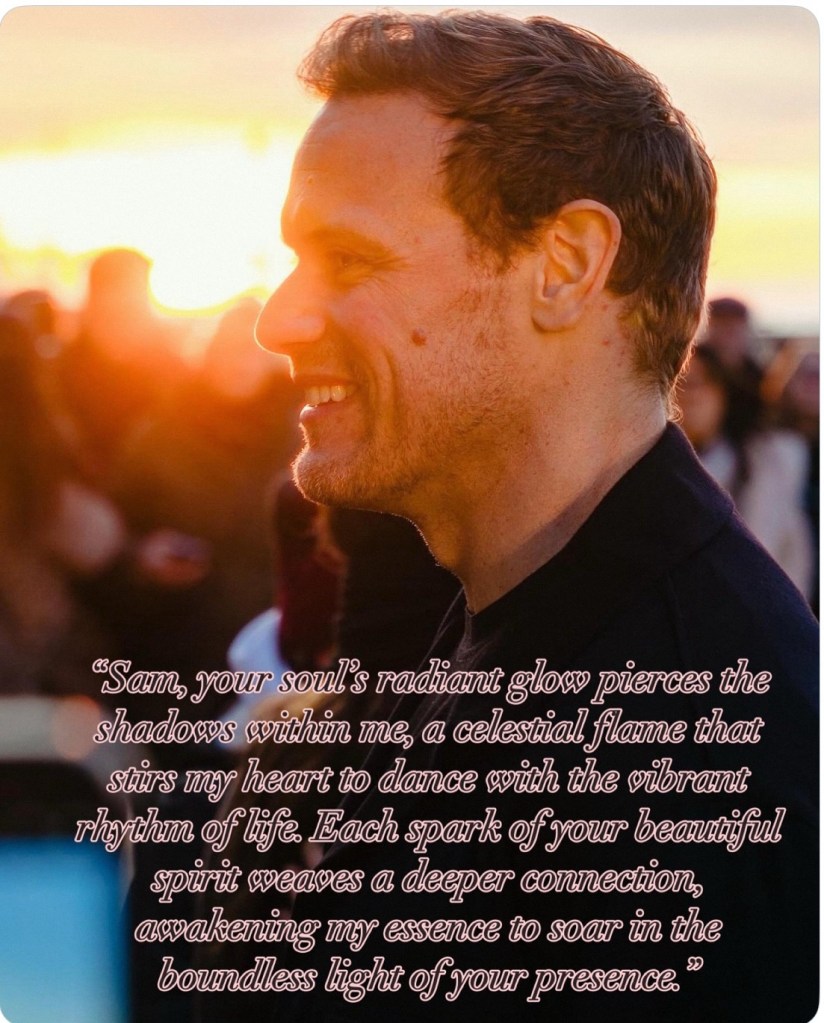
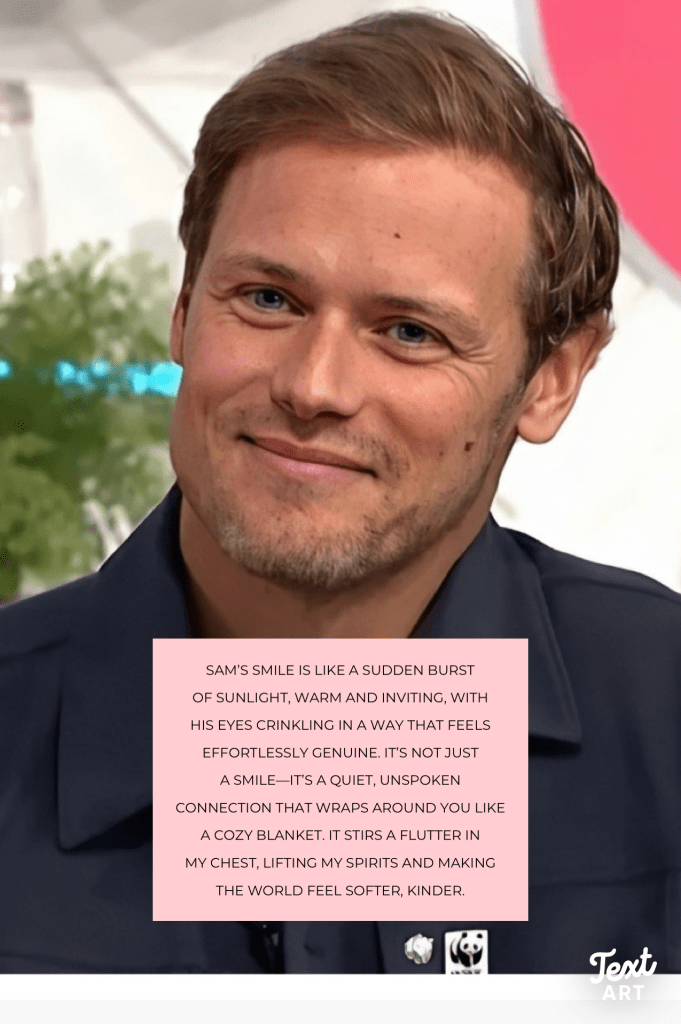
When I look at his photos, I don’t just see a single captured moment frozen in time. I feel everything that surrounds it—the years that led to that expression, the discipline it takes to remain consistent in an industry that is constantly shifting, and the quiet strength it requires to stay rooted in who you are while being seen by so many people. There’s something about that kind of presence that doesn’t need to announce itself. It reveals itself in small, almost unspoken ways—in the eyes that carry experience, in the posture that reflects both confidence and responsibility, and in the stillness that doesn’t feel empty, but rather full of something lived and understood. These are the details my mind naturally holds onto, not because I am searching for them, but because I feel them without trying. And it’s those quiet, consistent details that make me feel like appreciation shouldn’t be occasional—it should be something steady, just like the effort behind them.
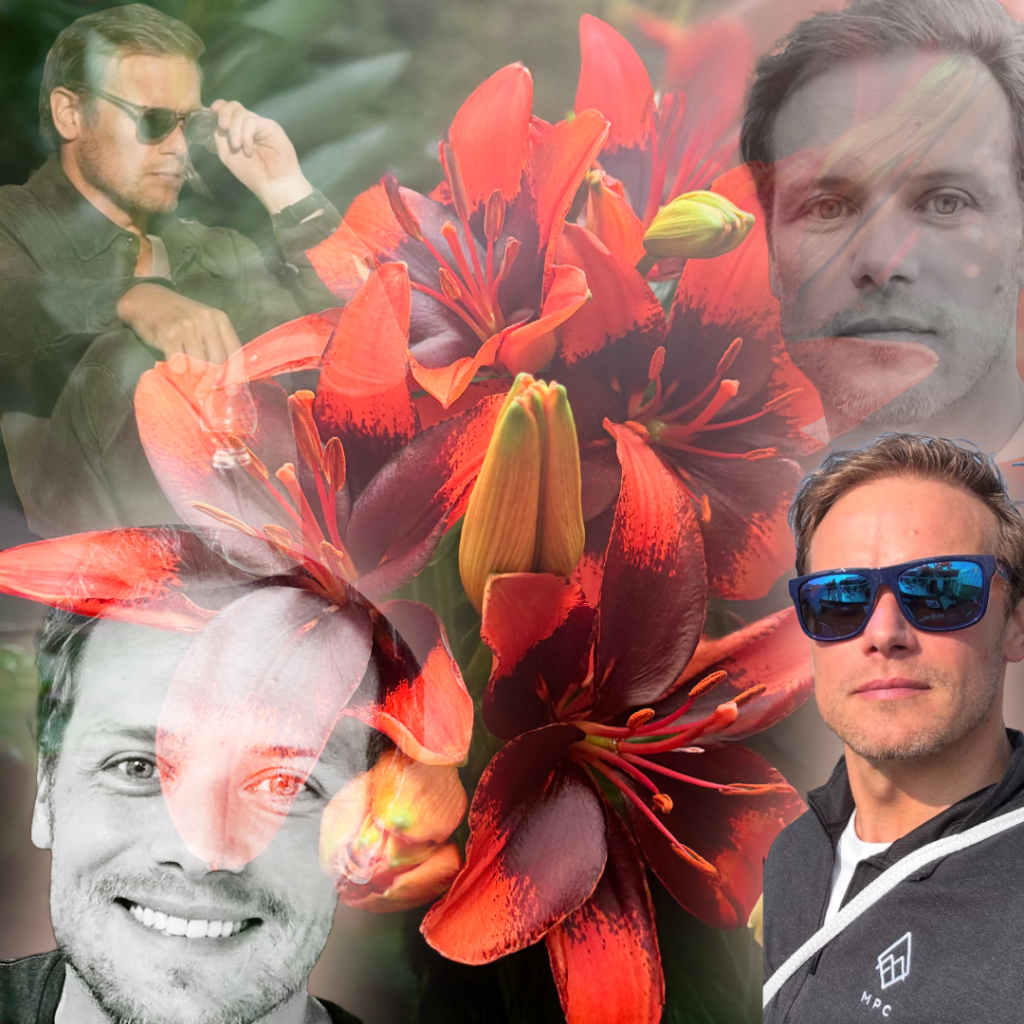
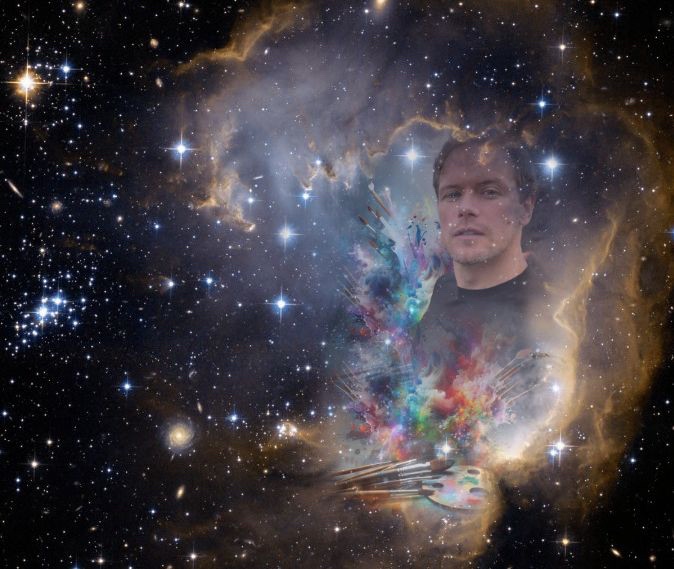
I’ve never approached an image with the thought of whether it should be left as it is or changed into something else. When I see something, I feel it almost immediately, and that feeling doesn’t stay still inside of me. It moves, it expands, and it becomes something that asks to be expressed. It’s not because the original image is lacking anything—in fact, it’s because it already holds so much that I can’t experience it as just a single moment. To me, it becomes layered, almost alive, something that continues beyond what was captured. Creating from it is not about altering it, but about meeting it where it already exists for me internally. And in that process, it becomes another way for me to acknowledge and celebrate what I see—not just once, but in a way that continues.
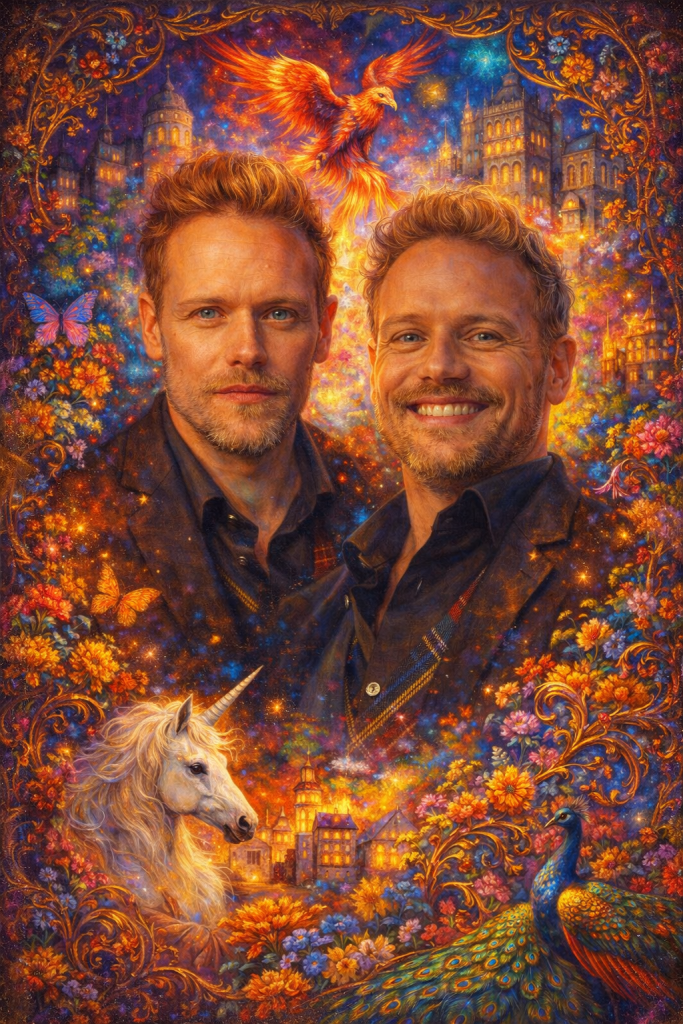
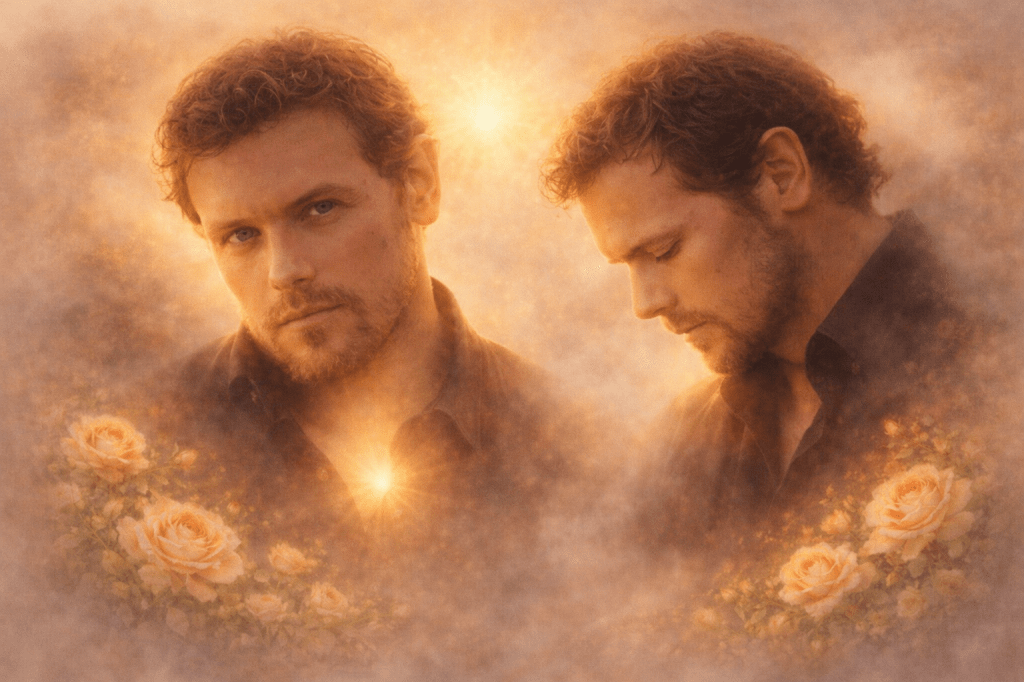
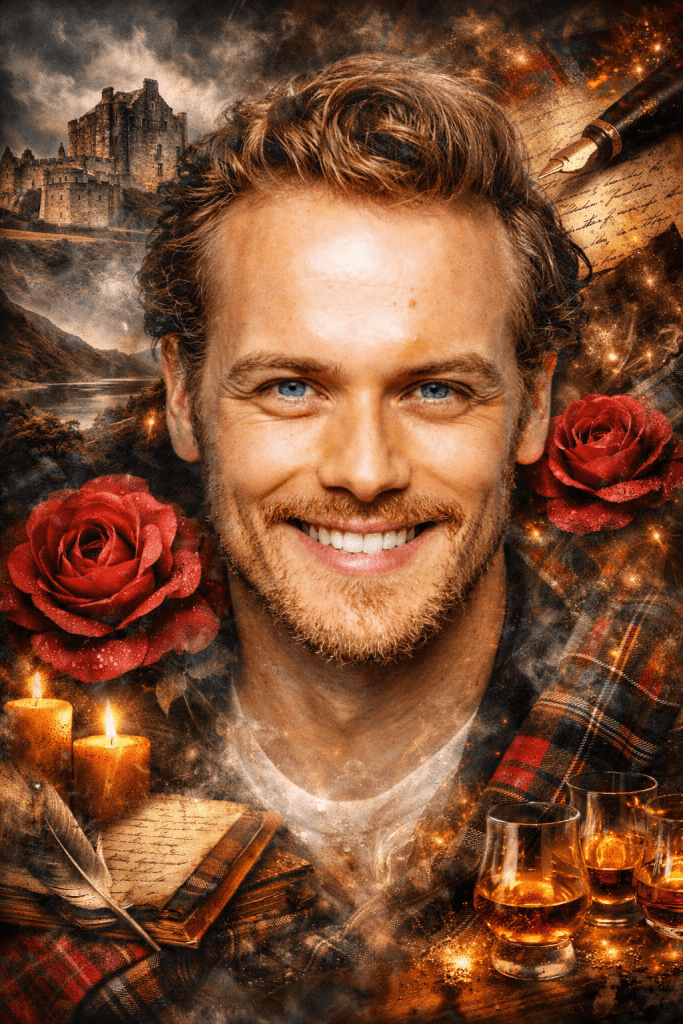
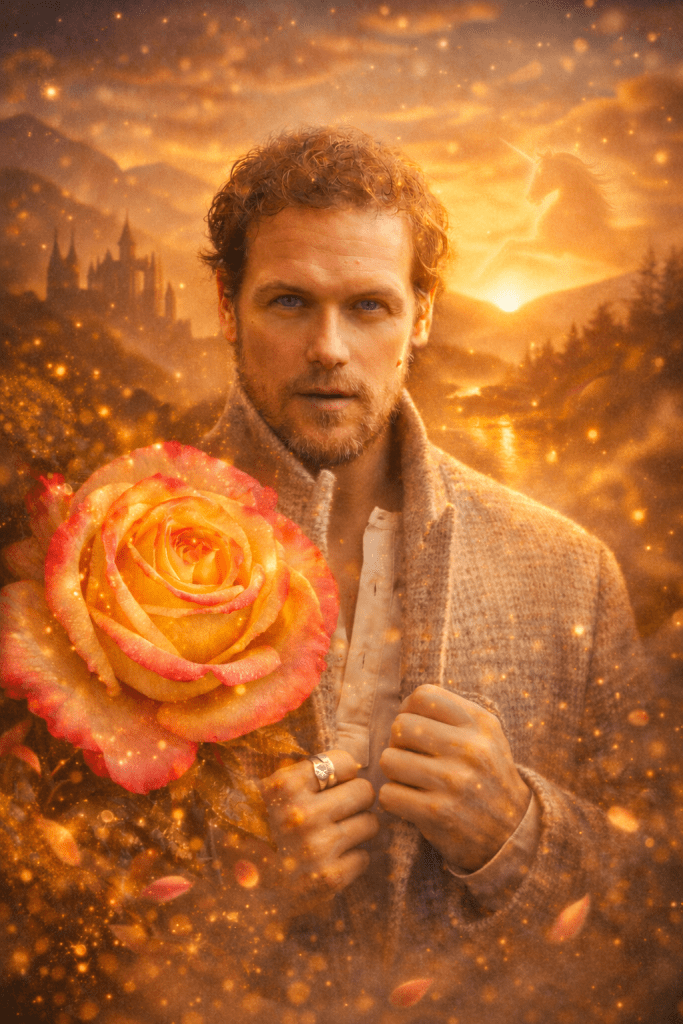
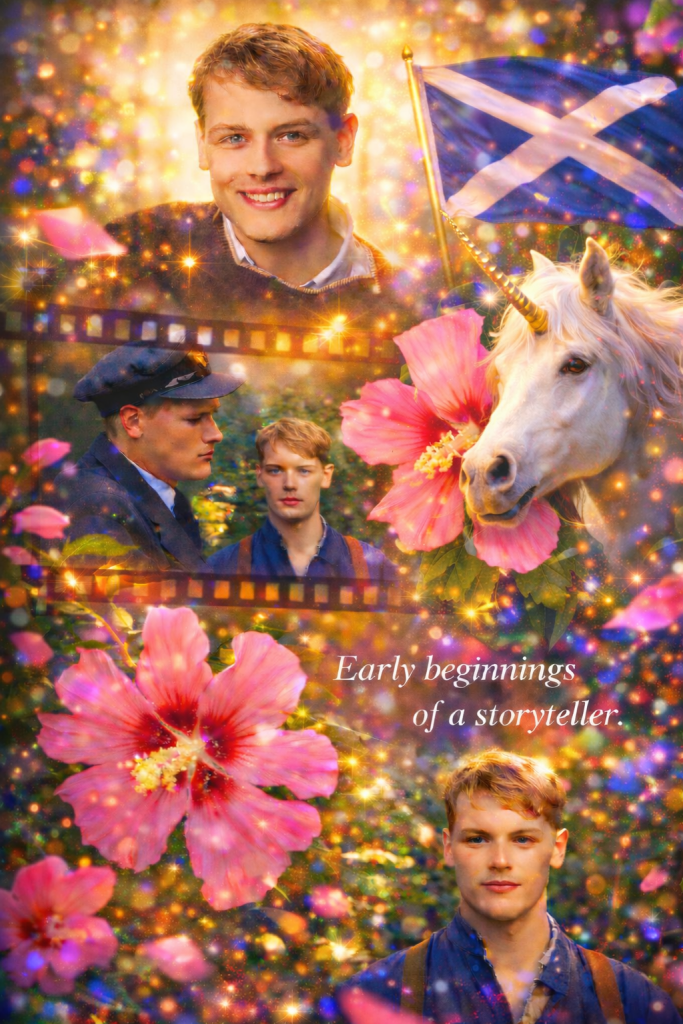
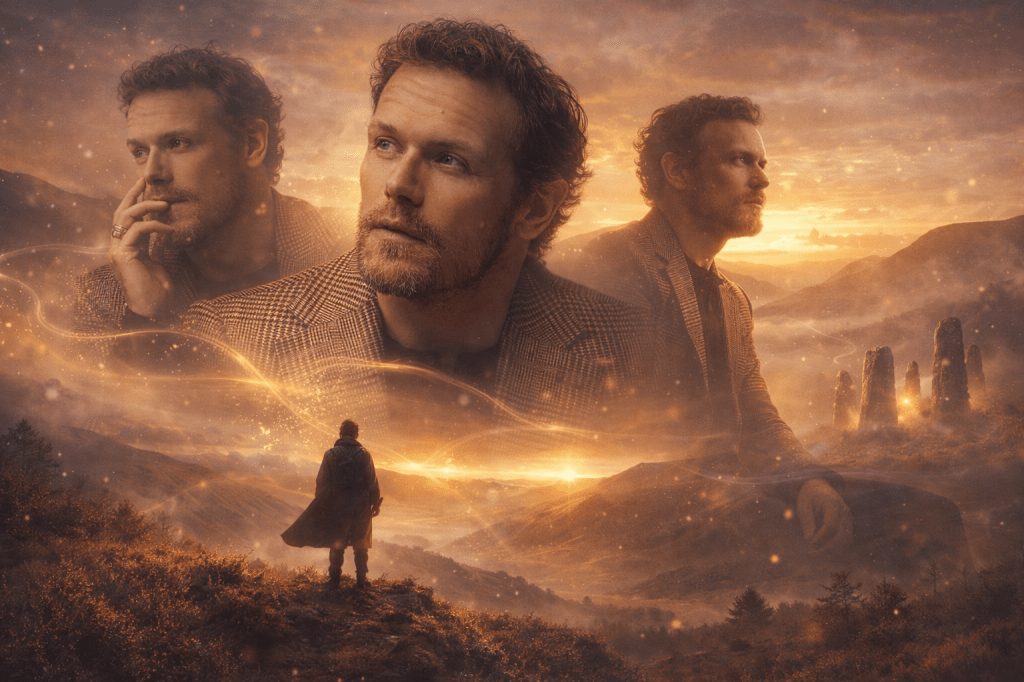
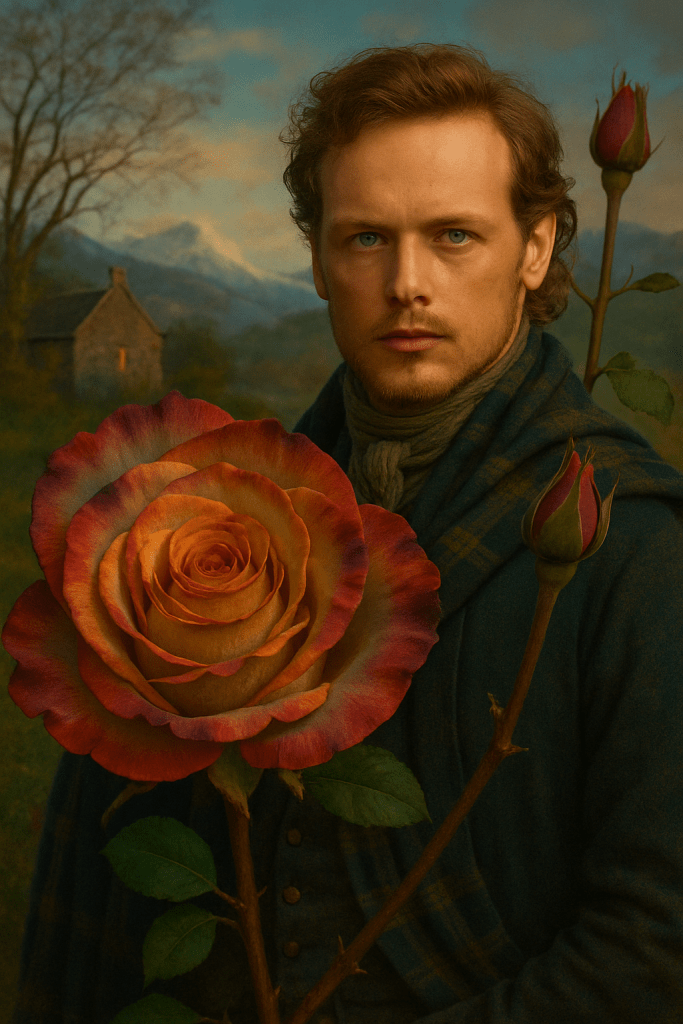
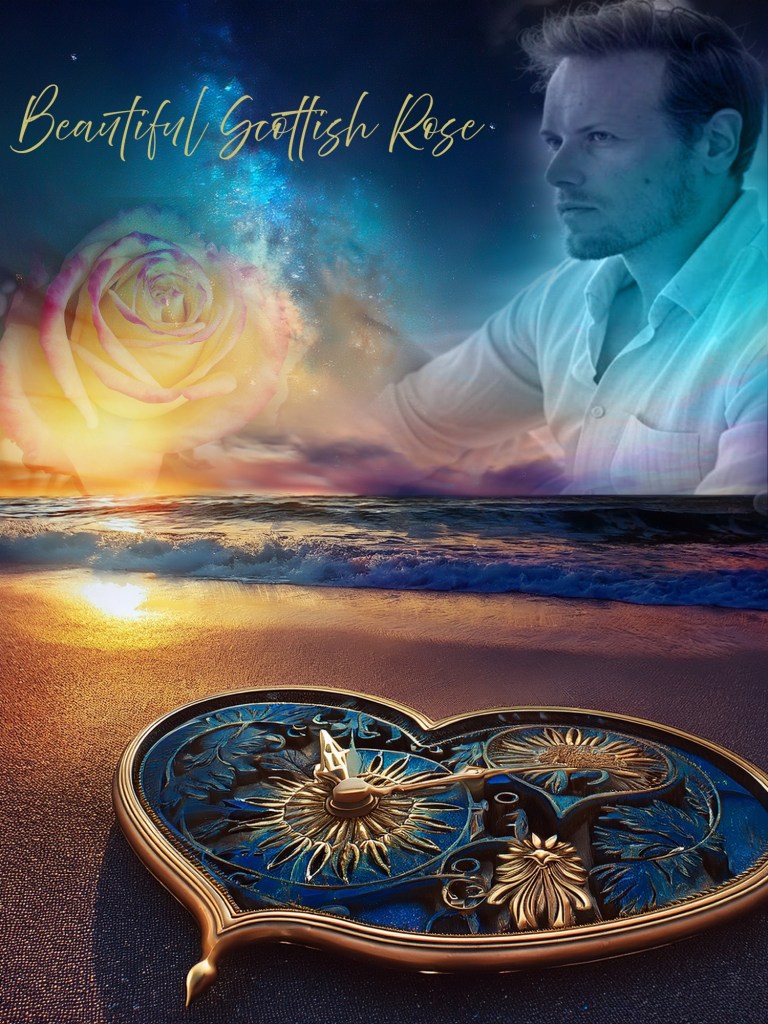
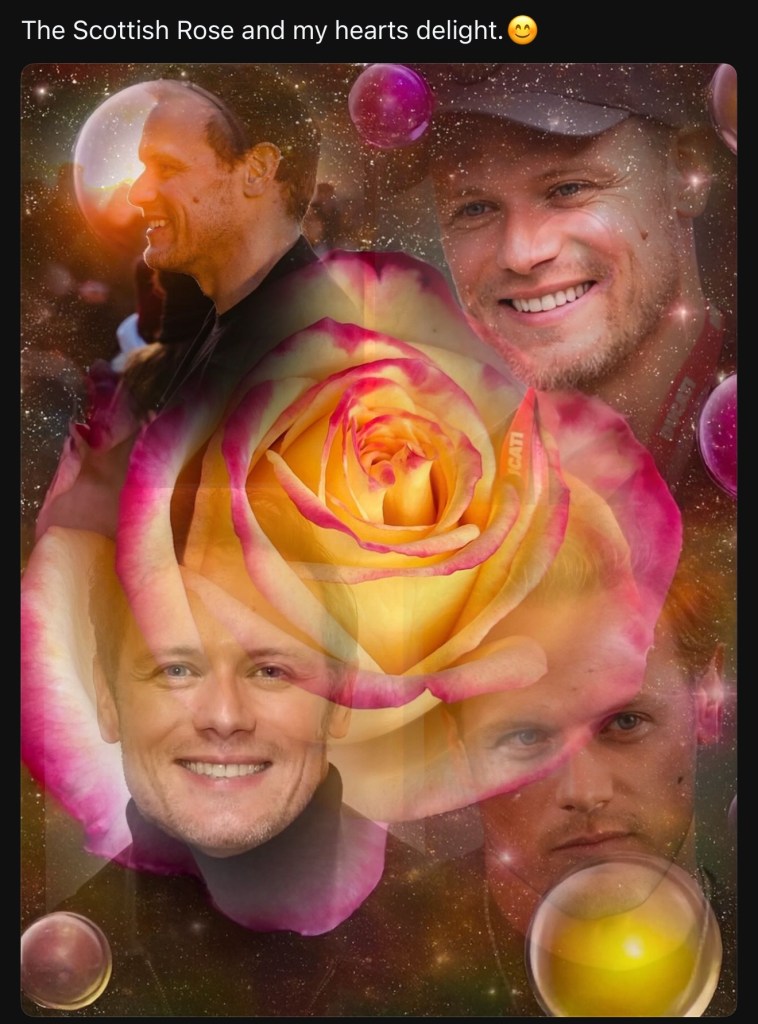
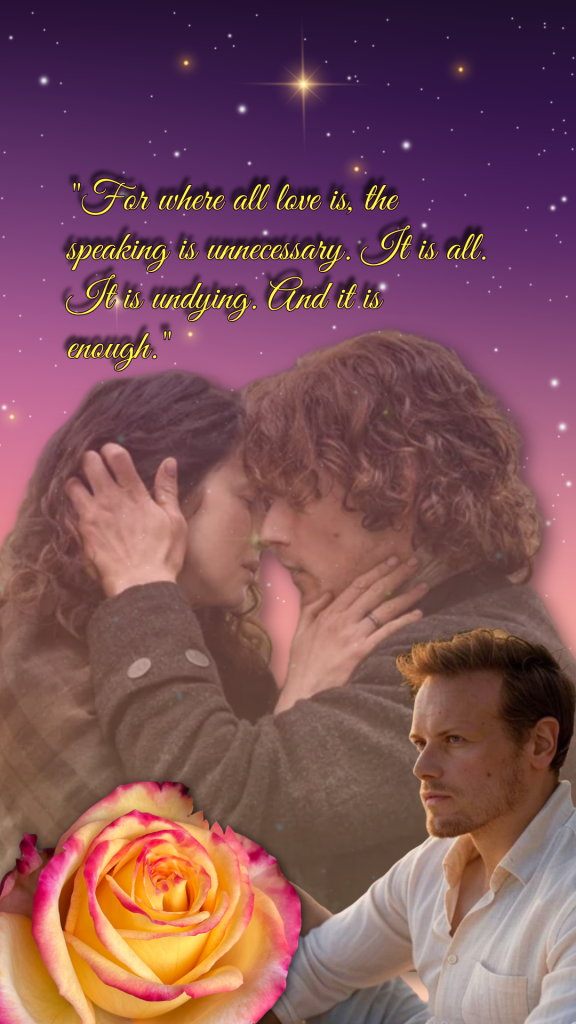
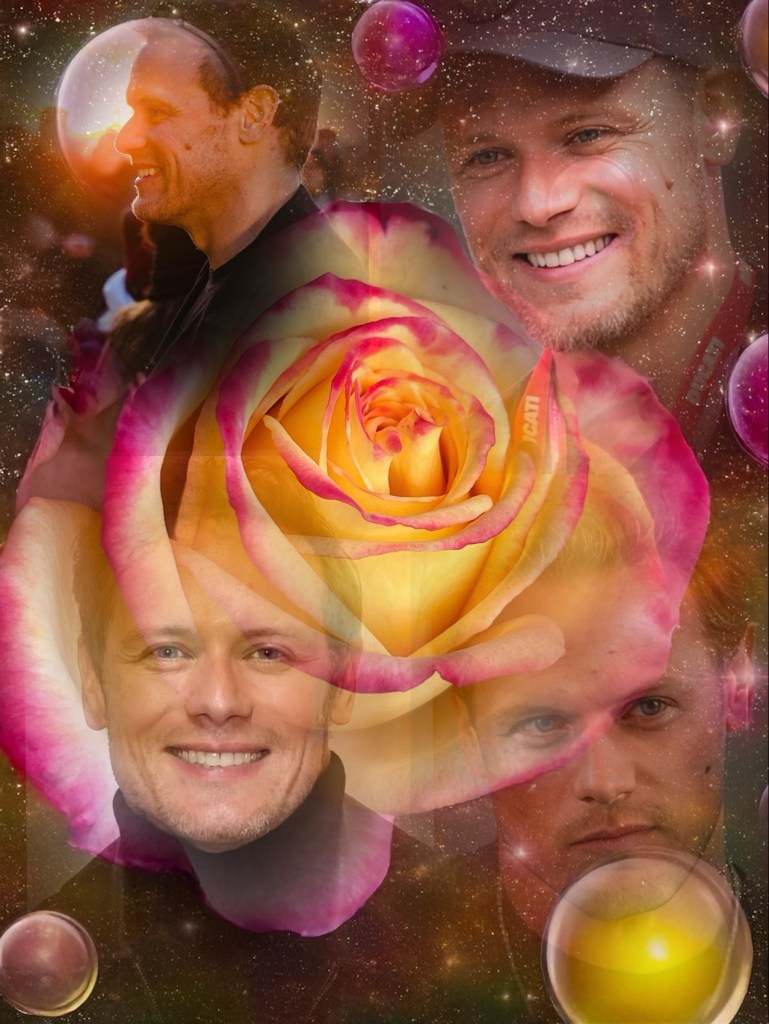
When I begin to create from one of his images, it doesn’t come from a structured plan or a need to produce something specific. It begins with a feeling that I can’t ignore. Sometimes that feeling is softness, something warm and steady that feels like it deserves to be protected and held gently. Other times it’s strength, not the kind that is loud or forceful, but the kind that is carried quietly over time without needing recognition. There are moments when it feels deeper than that—like a sense of responsibility, or the weight of continuing forward even when things aren’t easy. Without even realizing it, I start asking myself what that feeling would look like if it could be seen. That’s when the layers begin to form. Light might wrap around him because the presence feels warm and constant. Roses might appear because growth, resilience, and care feel like part of that emotional understanding. Scottish textures or landscapes might weave into the image because where someone comes from is part of their foundation, part of their identity, part of their shape. Nothing I create is random. Every detail comes from something I felt first. Because I’m not trying to recreate him—I’m responding to him, and in doing that, I’m continuing to celebrate what I see in a way that feels natural to me.
The way I experience all of this is deeply connected to how my mind works. Being autistic means I don’t move through the world in quick impressions or surface-level understanding. I notice patterns, I notice consistency, and I notice the way someone shows up over time—not just once, but again and again. That’s where a person’s shape becomes clear to me. It isn’t built from assumptions or imagination, but from repetition, from observation, from quietly witnessing how someone continues to carry themselves through their life and their work. And once that shape forms in my mind, it becomes something I hold onto in a very real and meaningful way. It also becomes something I naturally feel should be acknowledged more than it often is—because consistency like that isn’t ordinary.
I’ve also come to understand that there is a difference between truly appreciating someone and unintentionally taking from them. It can be easy, especially in a world that moves quickly, to cross that line—to assume, to create narratives, or to turn someone into something they never asked to be. That’s never what I want. For me, celebrating someone means staying grounded in what is real—what they have shown through their work, their actions, and their consistency. It means respecting what isn’t shared and understanding that who they are is not something I get to define. My art isn’t about shaping him into something new; it’s about reflecting what I see in a way that honors what already exists. It’s about appreciation that stays respectful, steady, and genuine.
There is something about consistency that stands out to me more than anything else. People can have moments where they shine, but it is something entirely different to continue showing up over time. To keep building, to keep creating, to keep evolving without losing the core of who you are requires a level of discipline and intention that isn’t always visible to others. And that is why, to me, someone like him isn’t just worth celebrating in big moments or milestones—he’s worth celebrating every day. Not in a way that overwhelms or crosses boundaries, but in a quiet, ongoing acknowledgment of what he continues to give through his work and presence. Because when someone chooses, over and over again, to show up with purpose, that kind of consistency becomes something meaningful enough to recognize daily.
So when I create—when I add light, texture, softness, and symbolism—I’m not trying to change him or add something that wasn’t already there. I’m responding to something I felt, something I noticed, something that took time to form in the way I see. This is my way of honoring that. My way of slowing a moment down and allowing it to expand into something more. My way of saying, quietly but clearly, that I see the shape of who he is through what he does—and that kind of presence, to me, is something worth recognizing, appreciating, and celebrating every single day.
And sometimes, the quietest way of seeing someone… is the most meaningful way of celebrating them.
Why red carpet photos and anonymous tips often create stories that were never there.
In the modern digital age, celebrity culture moves at extraordinary speed. A photograph taken in a crowded room can be uploaded within minutes, shared across social platforms, discussed in comment sections, and eventually turned into a rumor that thousands of people repeat.
What began as a normal moment can quickly become a story that was never intended to exist.
This phenomenon is especially common during premieres, press events, or industry gatherings where actors are photographed constantly. Cameras capture hundreds of candid interactions throughout the evening. But when a single frame is removed from its context and shared online, the interpretation of that moment can change dramatically.
Understanding how this cycle works helps explain why so many celebrity rumors begin with something very ordinary.
The Reality of Red Carpet and Industry Events
To someone watching from the outside, red carpet premieres can look glamorous and controlled. In reality, they are fast-moving, crowded environments where many interactions happen simultaneously.
Actors attending premieres or press events are rarely alone. Throughout the evening they are typically surrounded by a wide range of people connected to the project or event. These may include:
fellow cast members
producers and directors
studio executives
publicists and managers
brand representatives
photographers and videographers
friends and colleagues attending the event
These environments are busy, loud, and tightly scheduled. Publicists often guide actors through crowds while photographers call out directions. Conversations happen quickly and often very close together simply because it is difficult to hear over the noise of the room.
Because of this, small gestures are extremely common. Someone may touch another person’s back to guide them through a crowd. A colleague might lean in closely to speak. Friends greet each other with brief hugs or supportive gestures.
These are completely normal social behaviors in busy environments.
However, when one photograph captures only a fraction of that interaction, viewers may interpret it very differently from how the moment actually unfolded.
The Power of a Single Frame
Professional photography agencies such as Getty Images document public events extensively. Photographers often take hundreds or even thousands of photos in rapid succession.
These images capture brief moments such as:
greetings between colleagues
conversations during crowded events
quick hand gestures while speaking
a publicist guiding someone through a group
photographers directing a pose for the camera
Each photograph represents only a split second of time.
When viewers see a single isolated image without the surrounding sequence of photos, it becomes easy to assume a narrative. Human psychology naturally tries to fill in missing context, especially when people already have curiosity about a public figure.
A gesture that lasted two seconds can suddenly be interpreted as something far more significant.
The Rise of Anonymous Gossip Submissions
In recent years, social media has accelerated how quickly speculation spreads. Accounts dedicated to celebrity gossip frequently rely on anonymous submissions sent by followers who claim to have witnessed something involving a public figure.
One widely known example is DeuxMoi, which publishes anonymous tips about celebrity sightings and rumors.
These types of submissions usually follow a similar format:
“A friend saw…”
“Someone at the event said…”
“Spotted with a mystery person…”
It is important to recognize that most of these tips are:
anonymous
unverified
based on personal interpretation rather than confirmed information
Even the platforms that publish these submissions often include disclaimers explaining that the information has not been verified.
Despite this, once a rumor appears online it can spread rapidly. Other accounts repeat the story, screenshots circulate, and discussions grow around an event that may have been misinterpreted from the start.
Why Rumors Often Appear During Major Events
Rumors rarely appear at random. They tend to increase during periods when actors or public figures are receiving significant attention.
This often occurs during:
television season premieres
film festivals
press tours
award ceremonies
major product launches or business announcements
During these periods, media coverage increases and photographers capture more images. Fans are also paying closer attention to public appearances.
More attention naturally leads to more speculation.
A moment that might have gone unnoticed during a quiet time can suddenly become a topic of conversation simply because more people are watching.
Understanding the Difference Between Rumor and Journalism
Not all sources of information operate under the same standards.
Professional journalism follows editorial processes designed to verify information before publication. Established outlets such as Variety, The Hollywood Reporter, Reuters, BBC, and Associated Press rely on confirmation, sources, and editorial review before presenting claims as fact.
By contrast, rumor-based content often comes from places that prioritize speed and speculation over verification.
Examples of sources that frequently spread unverified rumors include:
anonymous gossip submission accounts
blind-item rumor blogs
unsourced screenshots circulating on social media
speculation threads without confirmation
These platforms may occasionally report something accurate, but they are not structured around verification in the same way professional journalism is.
For readers, recognizing the difference between these types of sources is essential.
Why Context Matters
One of the biggest challenges in modern media culture is the loss of context.
A photograph taken during a crowded event shows only a single perspective. It does not show the moments before or after. It does not capture the full conversation, the surrounding people, or the environment of the event.
Without that context, audiences may interpret what they see in ways that were never intended.
In many cases, rumors begin not because anyone deliberately created a false story, but because viewers simply misunderstood what they were seeing.
A More Thoughtful Approach to Celebrity Culture
Fans and readers play an important role in shaping the tone of online discussions about public figures.
When speculation begins circulating online, it can be helpful to pause and ask a few questions:
Where did this information originate?
Is the claim supported by a reliable source?
Could the moment simply be a normal interaction taken out of context?
Approaching celebrity culture with curiosity rather than assumption helps prevent rumors from spreading unnecessarily.
Respecting the Human Side of Public Figures
Actors, artists, and creators share their work with audiences, but their personal lives remain their own unless they choose to share them publicly.
A respectful fandom recognizes the difference between appreciating someone’s work and speculating about private aspects of their life.
Celebrating performances, storytelling, and creative achievements keeps conversations focused on the things that artists themselves choose to share with the world.
Sometimes the most thoughtful response to a rumor is simply to step back, look at the larger picture, and remember that behind every photograph is a real person living a real life beyond the frame.
Sources and References
Getty Images – editorial photography from entertainment events
Note: Anonymous gossip submissions and rumor-based accounts often publish unverified information and should not be treated as confirmed reporting
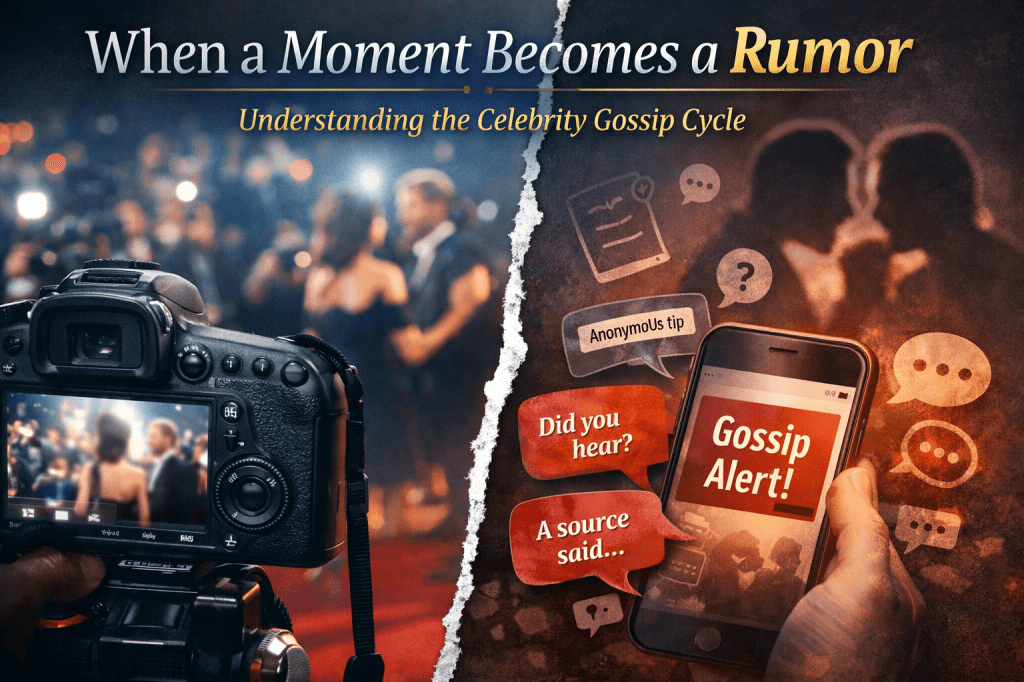
When a Moment Becomes a Rumor: Understanding the Celebrity Gossip Cycle
Why red carpet photos and anonymous tips often create stories that were never there.
In the modern digital age, celebrity culture moves at extraordinary speed. A photograph taken in a crowded room can be uploaded within minutes, shared across social platforms, discussed in comment sections, and eventually turned into a rumor that thousands of people repeat.
What began as a normal moment can quickly become a story that was never intended to exist.
This phenomenon is especially common during premieres, press events, or industry gatherings where actors are photographed constantly. Cameras capture hundreds of candid interactions throughout the evening. But when a single frame is removed from its context and shared online, the interpretation of that moment can change dramatically.
Understanding how this cycle works helps explain why so many celebrity rumors begin with something very ordinary.
The Reality of Red Carpet and Industry Events
To someone watching from the outside, red carpet premieres can look glamorous and controlled. In reality, they are fast-moving, crowded environments where many interactions happen simultaneously.
Actors attending premieres or press events are rarely alone. Throughout the evening they are typically surrounded by a wide range of people connected to the project or event. These may include:
fellow cast members
producers and directors
studio executives
publicists and managers
brand representatives
photographers and videographers
friends and colleagues attending the event
These environments are busy, loud, and tightly scheduled. Publicists often guide actors through crowds while photographers call out directions. Conversations happen quickly and often very close together simply because it is difficult to hear over the noise of the room.
Because of this, small gestures are extremely common. Someone may touch another person’s back to guide them through a crowd. A colleague might lean in closely to speak. Friends greet each other with brief hugs or supportive gestures.
These are completely normal social behaviors in busy environments.
However, when one photograph captures only a fraction of that interaction, viewers may interpret it very differently from how the moment actually unfolded.
The Power of a Single Frame
Professional photography agencies such as Getty Images document public events extensively. Photographers often take hundreds or even thousands of photos in rapid succession.
These images capture brief moments such as:
greetings between colleagues
conversations during crowded events
quick hand gestures while speaking
a publicist guiding someone through a group
photographers directing a pose for the camera
Each photograph represents only a split second of time.
When viewers see a single isolated image without the surrounding sequence of photos, it becomes easy to assume a narrative. Human psychology naturally tries to fill in missing context, especially when people already have curiosity about a public figure.
A gesture that lasted two seconds can suddenly be interpreted as something far more significant.
The Rise of Anonymous Gossip Submissions
In recent years, social media has accelerated how quickly speculation spreads. Accounts dedicated to celebrity gossip frequently rely on anonymous submissions sent by followers who claim to have witnessed something involving a public figure.
One widely known example is DeuxMoi, which publishes anonymous tips about celebrity sightings and rumors.
These types of submissions usually follow a similar format:
“A friend saw…”
“Someone at the event said…”
“Spotted with a mystery person…”
It is important to recognize that most of these tips are:
anonymous
unverified
based on personal interpretation rather than confirmed information
Even the platforms that publish these submissions often include disclaimers explaining that the information has not been verified.
Despite this, once a rumor appears online it can spread rapidly. Other accounts repeat the story, screenshots circulate, and discussions grow around an event that may have been misinterpreted from the start.
Why Rumors Often Appear During Major Events
Rumors rarely appear at random. They tend to increase during periods when actors or public figures are receiving significant attention.
This often occurs during:
television season premieres
film festivals
press tours
award ceremonies
major product launches or business announcements
During these periods, media coverage increases and photographers capture more images. Fans are also paying closer attention to public appearances.
More attention naturally leads to more speculation.
A moment that might have gone unnoticed during a quiet time can suddenly become a topic of conversation simply because more people are watching.
Understanding the Difference Between Rumor and Journalism
Not all sources of information operate under the same standards.
Professional journalism follows editorial processes designed to verify information before publication. Established outlets such as Variety, The Hollywood Reporter, Reuters, BBC, and Associated Press rely on confirmation, sources, and editorial review before presenting claims as fact.
By contrast, rumor-based content often comes from places that prioritize speed and speculation over verification.
Examples of sources that frequently spread unverified rumors include:
anonymous gossip submission accounts
blind-item rumor blogs
unsourced screenshots circulating on social media
speculation threads without confirmation
These platforms may occasionally report something accurate, but they are not structured around verification in the same way professional journalism is.
For readers, recognizing the difference between these types of sources is essential.
Why Context Matters
One of the biggest challenges in modern media culture is the loss of context.
A photograph taken during a crowded event shows only a single perspective. It does not show the moments before or after. It does not capture the full conversation, the surrounding people, or the environment of the event.
Without that context, audiences may interpret what they see in ways that were never intended.
In many cases, rumors begin not because anyone deliberately created a false story, but because viewers simply misunderstood what they were seeing.
A More Thoughtful Approach to Celebrity Culture
Fans and readers play an important role in shaping the tone of online discussions about public figures.
When speculation begins circulating online, it can be helpful to pause and ask a few questions:
Where did this information originate?
Is the claim supported by a reliable source?
Could the moment simply be a normal interaction taken out of context?
Approaching celebrity culture with curiosity rather than assumption helps prevent rumors from spreading unnecessarily.
Respecting the Human Side of Public Figures
Actors, artists, and creators share their work with audiences, but their personal lives remain their own unless they choose to share them publicly.
A respectful fandom recognizes the difference between appreciating someone’s work and speculating about private aspects of their life.
Celebrating performances, storytelling, and creative achievements keeps conversations focused on the things that artists themselves choose to share with the world.
Sometimes the most thoughtful response to a rumor is simply to step back, look at the larger picture, and remember that behind every photograph is a real person living a real life beyond the frame.
Sources and References
Getty Images – editorial photography from entertainment events
In three years, I hope to be living a life that feels fully mine—full of creativity, love, and growth. I imagine running my own photography business, freelancing and capturing the world through my lens. One dream is to visit Scotland and photograph its breathtaking landscapes—rolling hills, ancient castles, and misty lochs. I’d love to explore Dumfries and Galloway, the place that inspired Sam Heughan to become the actor he is today. It would be amazing to see the surroundings that shaped someone I admire so much.
I also imagine having an online travel magazine, which, alongside my photography business, would focus on causes I care about. I’d start with conservation projects—protecting Scotland’s wild cats and America’s wild mustangs—using my work to raise awareness and inspire others to care about the natural world.
I hope to meet a man who truly sees me—a partner who connects deeply and intimately. Someone who values honesty, closeness, and love, and who dreams of building a life together.
On a personal level, I hope to form habits that nourish my body and mind. I want to eat healthier, lose weight in a sustainable way, and eventually start a family. I imagine a life where health, happiness, creativity, and love coexist, and where each day brings a sense of purpose and connection.
In three years, I want to feel proud of the life I’ve created—a life that reflects who I am and who I’m becoming. And as I chase these dreams, knowing that someone like Sam Heughan has been inspired by the same places and culture I hope to explore makes it feel even more possible.
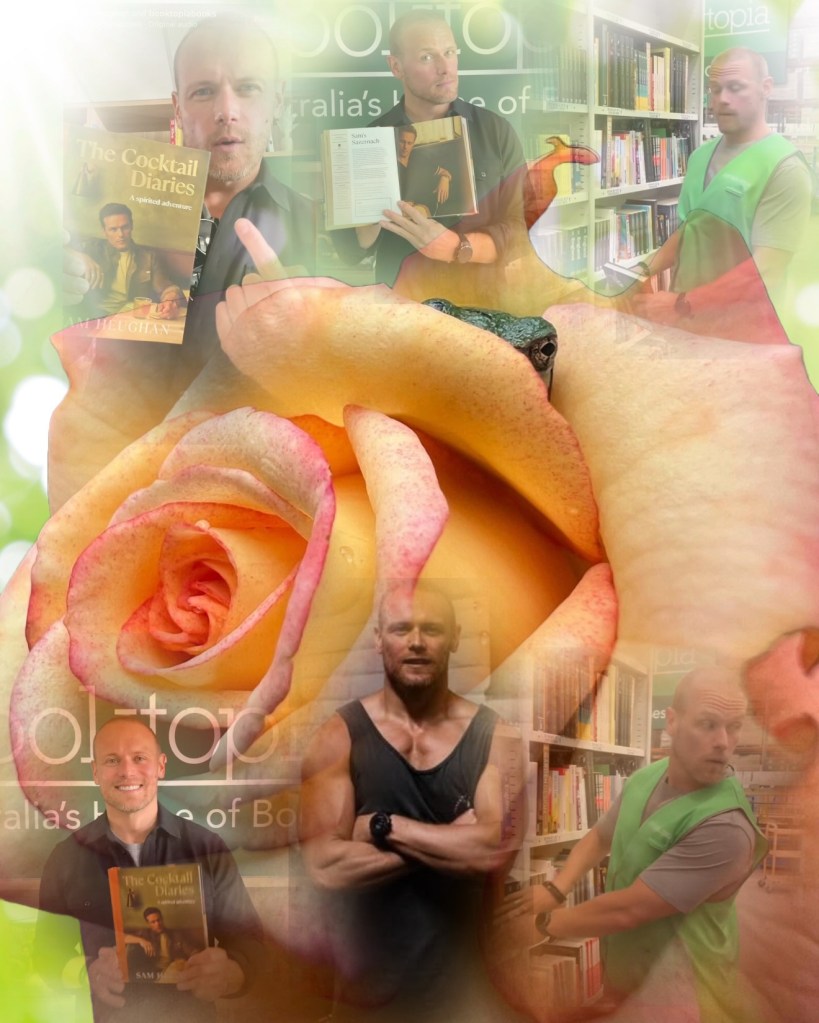
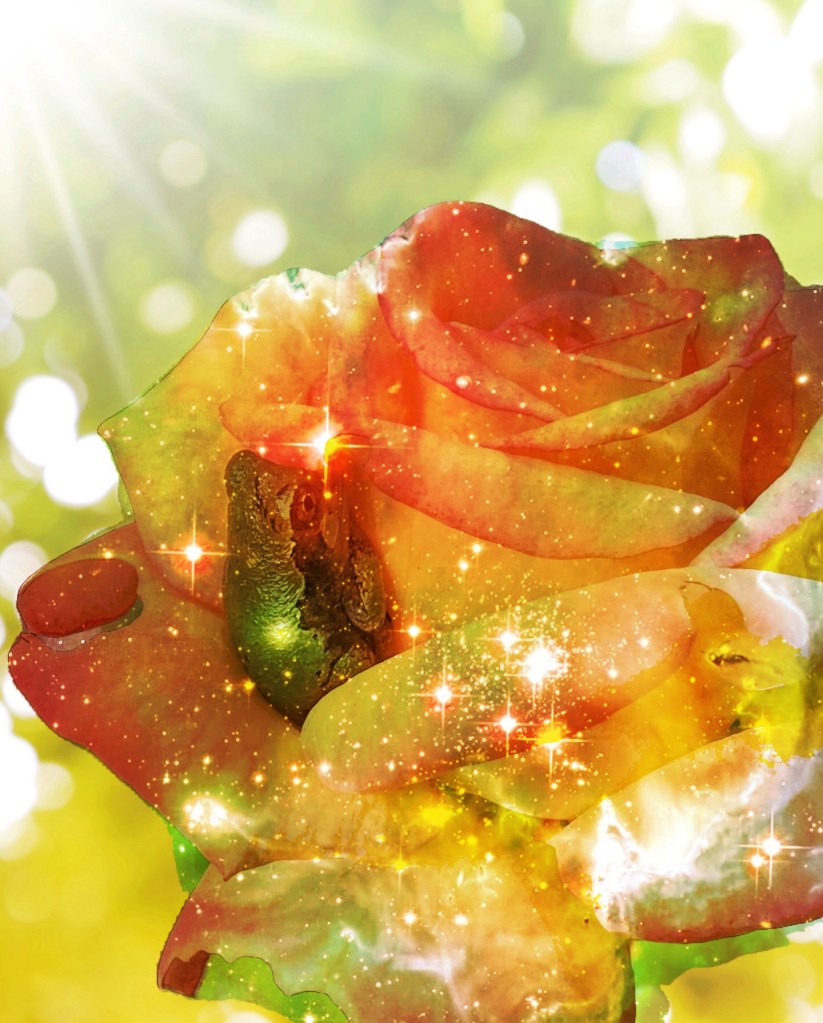
Once upon a time, in a vibrant garden where colors danced in the sunlight, there bloomed a rose unlike any other. This rose, with petals that shimmered in hues of orange and gold, held a secret deep within its heart—a tiny, enchanted frog named Liora.
Liora had lived in the rose for as long as she could remember, protected by the soft petals that surrounded her. She was no ordinary frog; she was a guardian of dreams, tasked with watching over the hopes and wishes of those who wandered into the garden. Each night, as the stars twinkled above, Liora would listen to the whispers of dreams carried by the gentle breeze.
One day, a young girl named Elara stumbled upon the garden. Drawn by the intoxicating fragrance of the magical rose, she approached, her heart heavy with unfulfilled dreams. She had always longed to be an artist, but fear held her back. As she gazed at the rose, Liora felt a spark of connection. The girl’s dreams resonated with the magic of the garden.
With a flick of her tiny tongue, Liora cast a spell of inspiration. The rose began to glow, and the air filled with sparkling lights that danced around Elara. She felt a rush of creativity and courage, as if the garden itself was urging her to embrace her passion.
Elara closed her eyes, and in that moment, she envisioned herself painting vibrant landscapes, capturing the beauty of the world around her. The rose shimmered brighter, and Liora knew that the girl’s dreams were taking flight.
When Elara opened her eyes, she felt transformed. The weight of doubt had lifted, replaced by a newfound determination. She thanked the rose, unaware of the tiny guardian within, and promised to return to the garden, to share her art and the magic it held.
As days turned into weeks, Elara visited the garden often, each time bringing her sketches and paintings. Liora watched with joy as the girl blossomed into the artist she was meant to be. The rose, once a mere flower, became a symbol of hope and inspiration for all who entered the garden.
And so, the enchanted rose and its tiny guardian continued to weave dreams into reality, reminding everyone that within the heart of a flower lies the power to inspire and create magic.
Some moments in life feel destined, as if the universe has been weaving their threads long before we notice. For me, the dream of meeting Sam Heughan isn’t just a fleeting hope—it’s the ultimate gift, one that would mean more to me than anything in this vast cosmos. Yet, alongside this dream comes a quiet worry: if our paths ever crossed, I’d be so afraid of saying the wrong thing, of stumbling over words that might not capture the depth of my admiration. This fear isn’t unique to Sam—it’s a constant concern, especially online, where I connect with others and words can so easily be misunderstood. But life is unpredictable, and you never know where its winding roads might lead, bringing souls together in unexpected ways. To meet Sam, despite these worries and the limitations of his public life, would be a chance to be ourselves, to share reflections on life, and to connect through stories—especially his tales of growing up in Scotland.
To me, Sam is far more than an actor or a public figure. His humanity is a rare and precious gift, a beacon of kindness and authenticity that shines in a world often dimmed by pretense. It’s not something to be taken for granted or reduced to eye candy—it’s a quality so unique, so special, that it demands to be cherished. His warmth, his quiet strength, and his genuine care for others make him someone whose presence feels like a treasure. I long for a moment where we could simply be ourselves, free from the pressures of fame or my own anxieties about saying the right thing. I want to hear his point of view, his reflections on life, and his stories of growing up in the rugged beauty of Scotland, knowing they’d resonate with my love for meaningful connection.
This dream isn’t about autographs or fleeting fan encounters. It’s about the joy of sharing a conversation, of hearing how the misty hills of Galloway or the historic streets of Edinburgh shaped him. I’ve always wanted to visit Scotland, drawn to its breathtaking landscapes and rich history—the ancient castles, the timeless folklore, the vibrant culture that holds centuries of stories in every stone. Sam’s roots in that land make him the perfect person to bring its magic to life through his own experiences. I imagine us talking about the wild beauty of the Highlands, the lessons he learned as a boy, and the moments that made him who he is. In return, I’d share my own thoughts, my dreams of exploring Scotland’s storied past, and my hope to connect without fear of misspeaking. Life’s unpredictability makes such a meeting feel possible, even if distant, a reminder that paths can cross when least expected.
Sam’s humanity means more to me because it’s so distinctly his own. It’s not just kindness—it’s a deliberate choice to live with grace, to uplift others, and to stay grounded despite the spotlight. His dedication to causes like fitness and charity, his quiet protection of his privacy, and his ability to share his heart without losing himself all speak to a character that’s singular and irreplaceable. Meeting him would be a chance to express my gratitude for how his example has inspired me to live more authentically, to seek connection over isolation, and to never take a genuine soul for granted. It would be a moment to honor his spirit, not as something superficial, but as a profound force that shapes how I see the world.
I picture our meeting as something simple yet profound—a quiet moment, perhaps over a warm coffee or a dram of his Sassenach Whisky, where we could talk about life’s joys and challenges. I’d ask about his childhood in Scotland, the adventures that shaped him, and the history he’s witnessed in a land so rich with tradition. I’d share my own reflections, my longing to walk Scotland’s moors, and my hope to speak from the heart without fear of saying the wrong thing. It would be a conversation rooted in mutual respect, where we could enjoy each other’s perspectives, free from the constraints of fame or my own worries about words. Even online, where I connect with others and often fret about missteps, I’d want this moment to feel real, unfiltered, and true.
Meeting Sam would be the greatest gift in the universe because it would celebrate a humanity that’s truly special—a reminder that some souls shine so brightly, they inspire us to be our best selves. Despite the limitations of distance, schedules, or the complexities of his public life, I wish for a moment where we could simply be, sharing stories and reflections that bridge our worlds. My worry about saying the wrong thing, whether in person or online, would fade in the warmth of his kindness, replaced by the joy of connection. His tales of Scotland would bring me closer to a place I’ve always dreamed of, while his unique spirit would remind me to cherish the rare moments that make life extraordinary. Life’s unpredictability gives me hope that such a meeting could happen, that our paths might cross in some serendipitous way.
To meet Sam Heughan would be to say, “Thank you for being you,” and to carry that moment in my heart forever, a testament to the power of a soul that’s one of a kind. It would be a gift beyond measure, not just for the connection, but for the chance to overcome my fears, to embrace the unknown, and to celebrate the beauty of two souls meeting, wherever life may lead.
What are the most important things needed to live a good life?
What does a good life look like for me? It’s like framing the perfect shot with my camera—catching the light just right, finding the angle that feels honest. It’s not about money or fame, but about living in a way that lets my heart sing, like I’m twirling under a Highland sky or laughing with someone who feels like home.
First, I need relationships where I can be my true self, no filters needed. Like those late-night talks with a friend, sharing cheesy love songs or a 2 a.m. snack, where I don’t worry about being “too much.” Those moments, where I can ramble about my autistic way of seeing the world—like how light dances on water—or dive into a story without feeling judged, are my lifeline. They’re the warmth that holds me together, and I want to fill my life with people who see the real me.
Then there’s my empathy, this quiet gift I’ve always had. As a kid, I’d hug strangers because I could feel their sadness; now, it’s how I connect with horses, their steady presence making me feel safe. A good life means embracing that instinct—listening deeply, offering comfort, building bridges. It’s not just about others; it’s about how alive I feel when I’m there for someone.
Creativity is my heartbeat. Photography lets me tell stories, freezing moments of light and emotion like a scene from Outlander. A good life has room for that—wandering with my camera, chasing golden hour, making something that’s mine. Even with my cybersecurity work, I need these moments, because they’re when I’m most myself.
Freedom to be me is everything. Masking to fit in is exhausting, like dimming a flame. A good life means finding spaces—friends, work, or just solo time—where my autistic self is enough. Where I can geek out about light patterns or romantic tales without feeling “weird.” That freedom is where I thrive.
I also want experiences that spark joy, not just things. A spontaneous adventure—like dancing in the rain or stargazing with someone special—beats any fancy gadget. Those heart-racing, rom-com-worthy moments are what I’ll carry forever. I want a life woven with them, whether it’s a far-off trip or a quiet laugh shared over coffee.
Balance is tough but crucial. My cybersecurity degree pays the bills, but my soul lives in photography and storytelling. A good life blends both—using my skills to support my dreams without letting them drown out what I love. It’s about small steps toward a life where I’m not just getting by but truly creating.
Finally, nature keeps me grounded. Horses, open fields, the hush of a forest—it’s where my intuition wakes up. A good life includes time there, whether I’m riding, walking, or just sitting somewhere green, feeling the earth’s pulse.
To build this life, I’ll start now: plan a photography day this month, have a heart-to-heart with a friend, and try one new way to be unapologetically me, like sharing a quirky idea at work. A good life grows from these moments, and I’m ready to nurture them.
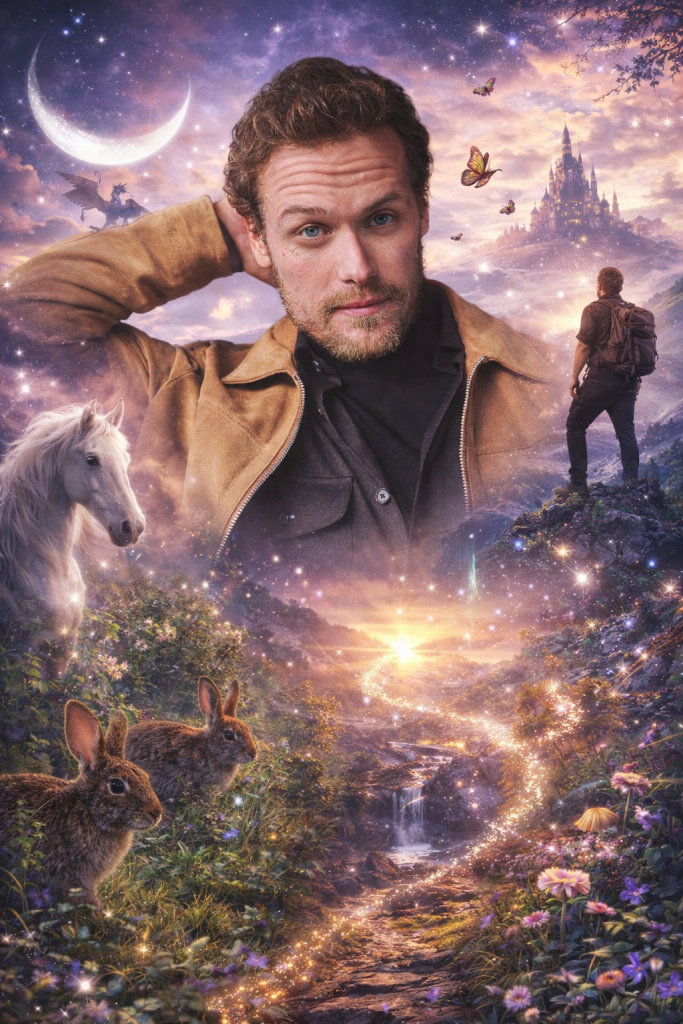
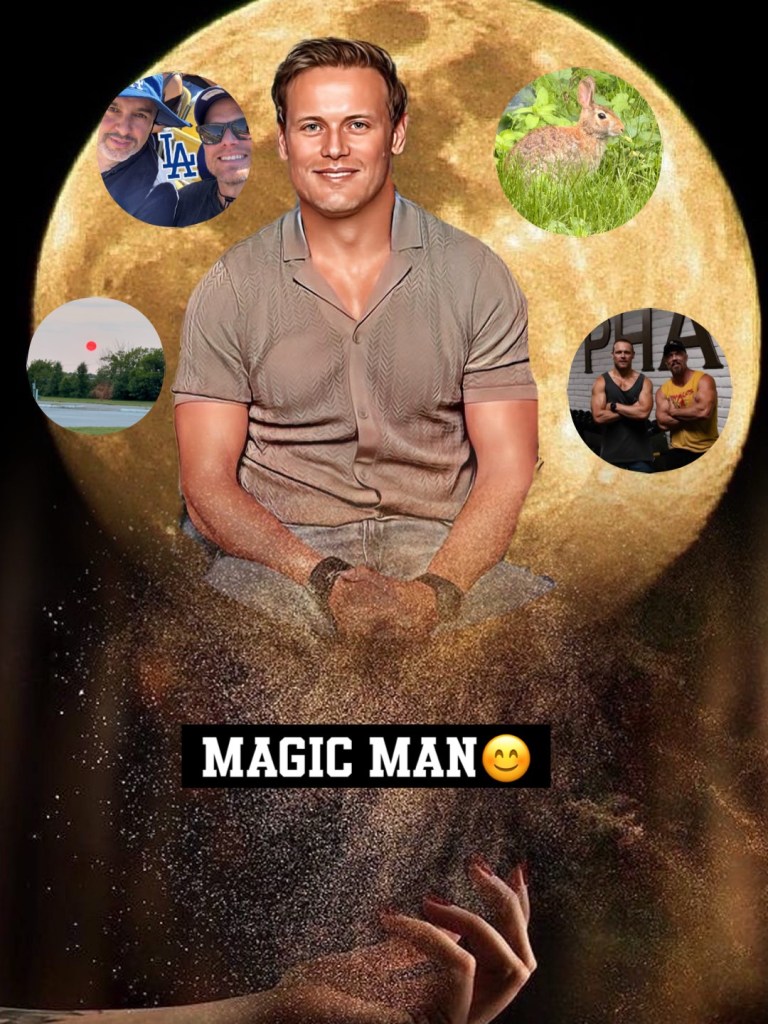
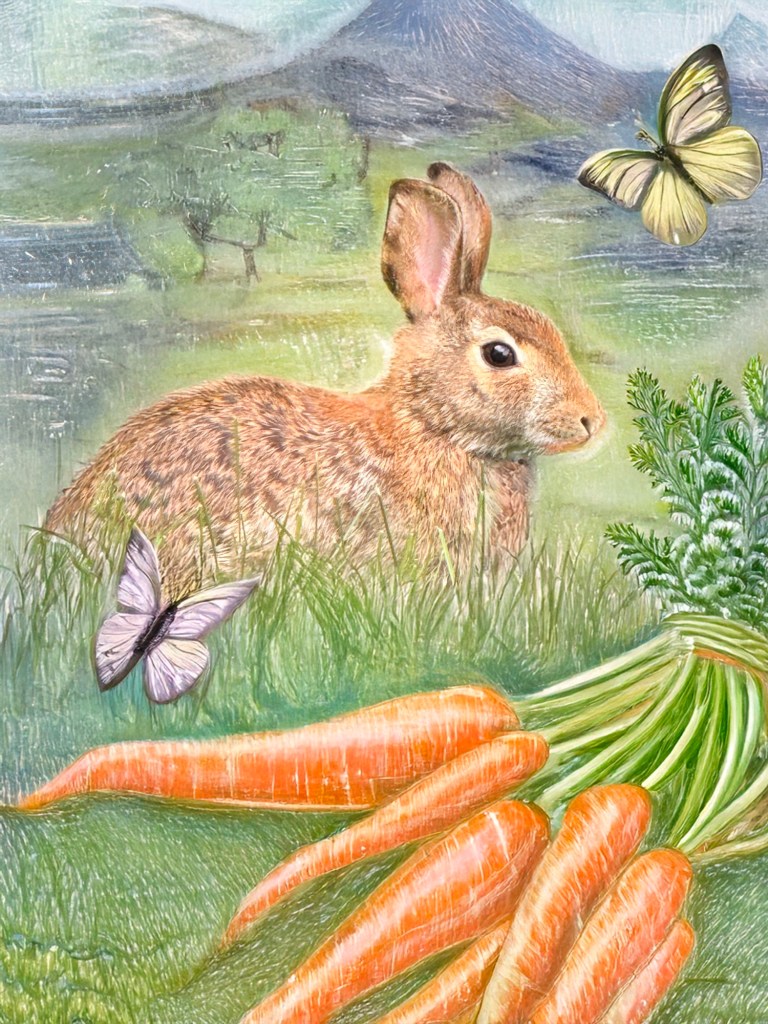
My newest creation.my rabbit photo and AI background I made to go with it.
I’m filled with excitement as I imagine a future where I can weave together my passion for cybersecurity, photography, and visual storytelling. Becoming a Cybersecurity Content Creator or Technical Writer feels like a perfect fit—it lets me merge my deep knowledge of cybersecurity with my love for crafting compelling narratives. As an autistic woman, I see the world through a unique lens, noticing intricate details and patterns that others might overlook. This perspective fuels my desire to create content that’s not only informative but also deeply human, making complex topics like phishing or encryption relatable through stories about everyday people, like a small business owner dodging a scam or a parent securing their online accounts.
At the same time, pursuing my passion for photography and graphic design through visual storytelling opens up another creative avenue. I envision producing blog posts, tutorials, or infographics that blend technical cybersecurity insights with striking visuals, using tools like Canva to design explainers that simplify concepts like two-factor authentication. My photography can capture the beauty of everyday moments—light on a building, a kind gesture—that I can weave into my cybersecurity narratives, making them visually and emotionally engaging. I dream of creating a series called “The Cybersecurity Storyboard,” where short animations or infographics tell relatable stories about online threats, like a character outsmarting a phishing scam, brought to life with vibrant, narrative-driven visuals.
The flexibility of freelancing or working independently is a huge draw, aligning with my need for a calm, self-directed environment. Starting small feels achievable—I can write a blog post, create a short video, or design a visual for my portfolio, sharing them on platforms like Medium, X, or Instagram to build my presence. Platforms like Upwork can help me land freelance gigs to gain experience. I know challenges like impostor syndrome or balancing technical accuracy with creativity might arise, but I’m ready to lean into my unique voice and use trusted sources to ensure precision.
This path feels like a way to make a real impact—empowering people to stay safe online while letting my creativity shine through storytelling, photography, and graphic design. I’m thrilled to take the first step, trusting that my perspective as an autistic woman will help me create something truly special in both cybersecurity and visual storytelling.
From the time I was a young kid, the weather has held me spellbound, a wild and awe-inspiring force that both captivates and humbles me. I can still recall the thrill of working on a middle school report about tornadoes, diving deep into their chaotic beauty and untamed power. My teacher raised an eyebrow, suggesting to my dad that I should’ve done it alone, but the truth is, I poured my heart into that project—my dad just helped me polish my ideas. That experience wasn’t just a school assignment; it lit a fire in me, sparking a lifelong reverence for Mother Nature, one of my greatest inspirations, a boundless muse whose storms, serenity, and raw beauty fuel my creativity and remind me of the deep, healing connection we share with the world around us.
When I first picked up a camera, my passion for nature found a new outlet. I dreamed of chasing storms, not just to capture their swirling formations but to preserve fleeting moments of nature’s raw, unfiltered spirit. Storms have a haunting duality—they can devastate, leaving heartbreak in their wake, yet their towering clouds and electric energy are undeniably beautiful. Through my lens, I see tornadoes as a reminder of how much we take for granted, urging us to pause and respect the forces that shape our world. Mother Nature doesn’t bow to our plans; she demands our attention, teaching us resilience and humility through her breathtaking artistry.
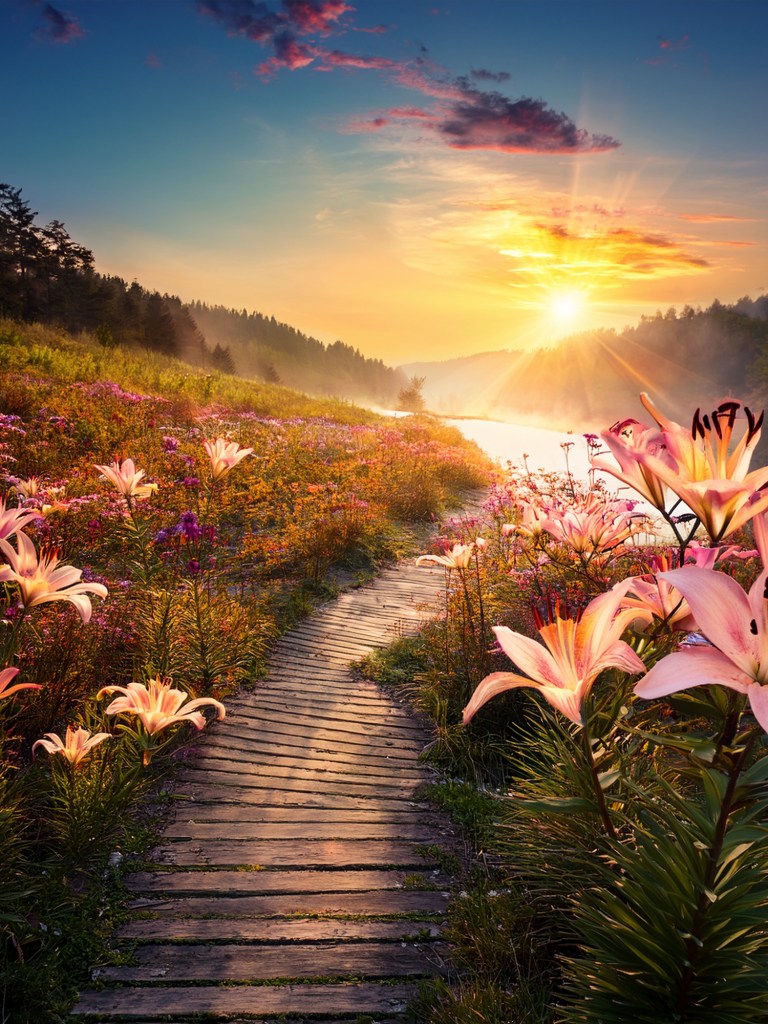
Beyond storms, nature in all its forms has always been my refuge. To me, nature is the greatest medicine a human being could ever have. Whether it’s the roar of thunder, the gentle rustle of leaves, or the quiet calm of a forest after rain, being immersed in the natural world feels like a reset for the soul. It heals, it grounds, it reminds me who I am. The nature of humanity and the natural world are intertwined in countless ways—through the air we breathe, the landscapes that shape our stories, and the moments of wonder that bind us to something greater. Every time I’m out there, camera in hand, I feel that connection, like I’m part of a larger story written by the earth itself.
Photography, for me, is more than a craft; it’s a way to tell stories that stir the heart, to capture the fleeting beauty of the world and share it with others. Inspired by those who live with purpose and authenticity, I want my work to reflect that same depth, to show the fierce elegance of a storm or the quiet grace of a sunrise. Mother Nature, as one of my muses, guides me to create with intention, to stay rooted in what’s real, and to honor the world’s beauty and power. Her lessons go beyond her storms—they’re in the way she calls us to live more fully, to respect her boundaries, and to find healing and meaning in every moment, no matter how fleeting.
Well, let’s take a look at my work experience so far. My only job has been in retail. I started as a custodial associate at Fry’s. After that, I worked as a courtesy clerk and cashier at Safeway. Then, I became a kids’ toy, lawn, and garden associate at Walmart, and I’m currently working in that role. It’s definitely a physically demanding job, and that’s why I want to find something I enjoy, like visual storytelling, to make a living from.
I enjoy spending my free time gardening, taking photographs, hiking, and engaging in other activities. However, I sometimes feel that the places we work for expect us to live there half the time, leaving less time for our families and self-care.


 Deep Thinking