What are 5 everyday things that bring you happiness?
“It’s about progress, not perfection—focusing on what you can do and being grateful along the way.” — Sam Heughan
What Are 5 Everyday Things That Bring You Happiness?
I’ve been thinking about this in a more personal way lately…
Not the big, life-changing kind of happiness.
But the small, everyday things that I truly enjoy just being me.
For me, happiness doesn’t come in loud moments.
It shows up quietly… in ways that feel deeper than words sometimes.
I enjoy being outside, especially when the light hits just right—like the world is trying to show you something beautiful if you’re willing to notice it.
I enjoy creating… taking a simple image and turning it into something meaningful, something that tells a story or holds a feeling.
I enjoy those quiet moments where my mind slows down, and everything feels a little less overwhelming… where I can just breathe and exist without pressure.
I enjoy music and voices that don’t just sound nice, but actually reach me—the kind that gives me chills or even brings tears to my eyes because it feels so real.
And I enjoy that deep, almost unexplainable connection I feel to places like Scotland… like something in my spirit recognizes it, even from far away.
Those are the things that bring me happiness.
They may seem small.
They may not stand out to everyone else.
But to me, they feel meaningful… real… grounding.
I think, in my own way, I experience things a little deeper than most.
And while that can feel overwhelming at times, it also means I get to see beauty in places that might otherwise be missed.
So maybe happiness isn’t always about finding something bigger…
Maybe it’s about honoring what already speaks to your heart.
As Sam Heughan has shared in interviews and through his work with My Peak Challenge, it’s about focusing on gratitude, staying present, and appreciating the journey rather than always chasing the next big thing. That mindset—finding meaning in growth, connection, and the everyday—feels like a quiet reminder that happiness isn’t always something ahead of us… sometimes it’s already here.
Love, to me, has never been just about the physical or surface-level attraction that so many people seem to focus on. It has always meant something much deeper. Love is when you meet someone on an emotional, mental, and spiritual level. It’s a connection that goes beyond what the eyes can see. It’s understanding, patience, and the quiet sense of peace you feel when you know someone truly sees you.
For as long as I can remember, meaningful things have always mattered more to me than grand gestures. I’ve never needed anything flashy or perfect. I’ve always been someone who lives for the small, intricate moments—the tone of someone’s voice, the way they listen, and the way they show up consistently even when life is busy. That kind of presence speaks louder than anything else.
I was never the person who rushed into the idea of marriage. In fact, for a long time, I didn’t even think much about it. When the moment came in my life where I thought that was the path I wanted, it didn’t turn out the way I had imagined. At first, that was hard to understand. It felt confusing, even painful. But over time, I began to realize something important.
Maybe my heart always knew.
Maybe deep down, there was a quiet voice telling me that the person I was with was not meant to be my forever. Sometimes we try to force something because it seems like the right thing at the time. We convince ourselves that if we try harder, love will grow into what we hope it will become. But real love doesn’t need to be forced. It flows naturally. It feels safe. It allows you to be fully yourself without fear.
Looking back now, I don’t see that chapter of my life as a failure. I see it as a lesson. It helped shape my understanding of what love is—and what it is not. It taught me that love is not about timelines, pressure, or meeting society’s expectations. It’s not about rushing into commitments because everyone else is doing it.
And once I became single again, I prayed to God. I told Him that I didn’t care what that person’s career would be, as long as it was not unethical or immoral. What mattered to me was the heart and character of that person. I prayed that if they had a busy life or a demanding career, then I would rather be the one who brings balance to it. Someone who could create a sense of home, comfort, and emotional support. Someone who could be a safe place at the end of a long day.
Because love, to me, is not about competing with someone’s purpose. It’s about strengthening it.
It’s about being a counterpart. A partner who understands that life comes in seasons—some busy, some quiet—and that both people need each other in different ways at different times. I believe there is something beautiful about being the one who brings warmth, steadiness, and peace into another person’s world, while they bring the same into yours.
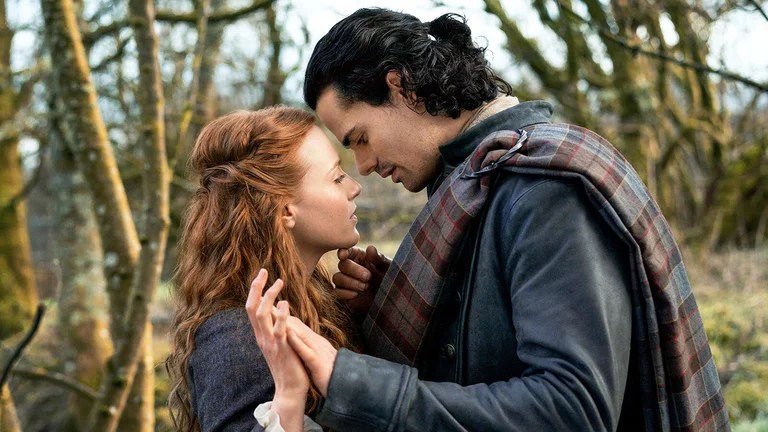
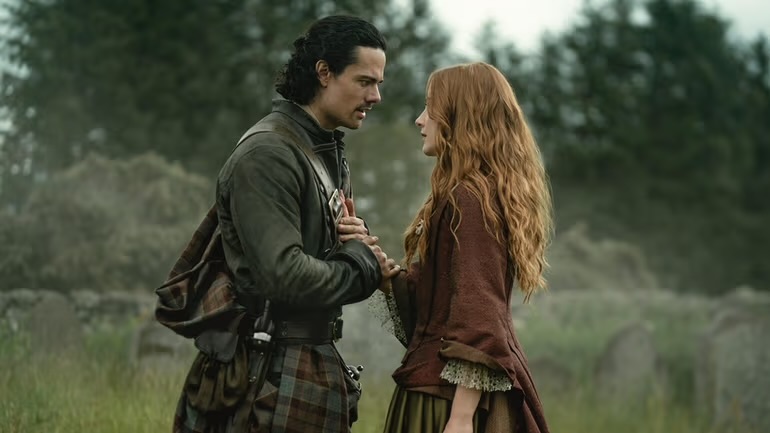
One of the reasons this kind of love means so much to me is because of the relationship in Outlander between the two main characters. Their love is not perfect, and it is not easy. They face distance, loss, trauma, time, and circumstances that would break most people. Yet through it all, they meet each other emotionally, mentally, and spiritually.
She challenges him. He protects her. They support each other’s purpose and growth, even when it means sacrifice. They do not try to control or limit each other. Instead, they strengthen one another. They are equals, partners, and safe places for each other in a chaotic world.
What moves me most is not just their romance, but their loyalty, patience, and the deep understanding they have. Even when they are separated, their bond never truly breaks. It reminds me that real love is rooted in trust and connection, not just proximity or convenience.
Their story also reflects something I believe deeply: that love is not about rushing. It unfolds in its own time. It grows stronger through adversity. It becomes deeper through communication, forgiveness, and mutual respect.
That kind of love inspires me. It gives me hope that somewhere, there is a connection that strong and meaningful. Not perfect, but real. Not forced, but natural. A love where both people feel seen, valued, and emotionally safe.
Love is about alignment.
It’s about finding someone who meets you where you are emotionally, mentally, and spiritually. Someone who values growth, communication, and honesty. Someone who understands that love is built over time through trust and mutual respect. Someone who feels like both home and adventure at the same time.
And sometimes, it takes going through the wrong situations to recognize the right one when it finally appears.
I believe our hearts are wiser than we give them credit for. Even when we don’t fully understand the path we’re on, our hearts are guiding us toward the person who will truly see us and walk beside us—not ahead of us, not behind us, but with us.
So to me, love is not something to chase or force. It’s something to recognize, nurture, and protect when it arrives.
And when it does, you’ll know. Not because it’s perfect, but because it feels real, grounded, and deeply connected in every way that truly matters.
There’s been a lot of conversation about whether Jamie Fraser could appear in Blood of My Blood. Some people took the response to that question as a firm “no,” while others assumed it meant something more.
But honestly, I don’t think it was either.
I believe it was a thoughtful and respectful answer meant to protect the story, the new cast, and the future of the Outlander world. This kind of response is not about distance. It is about leadership and trust in the creative process.
This Story Isn’t Just About One Character
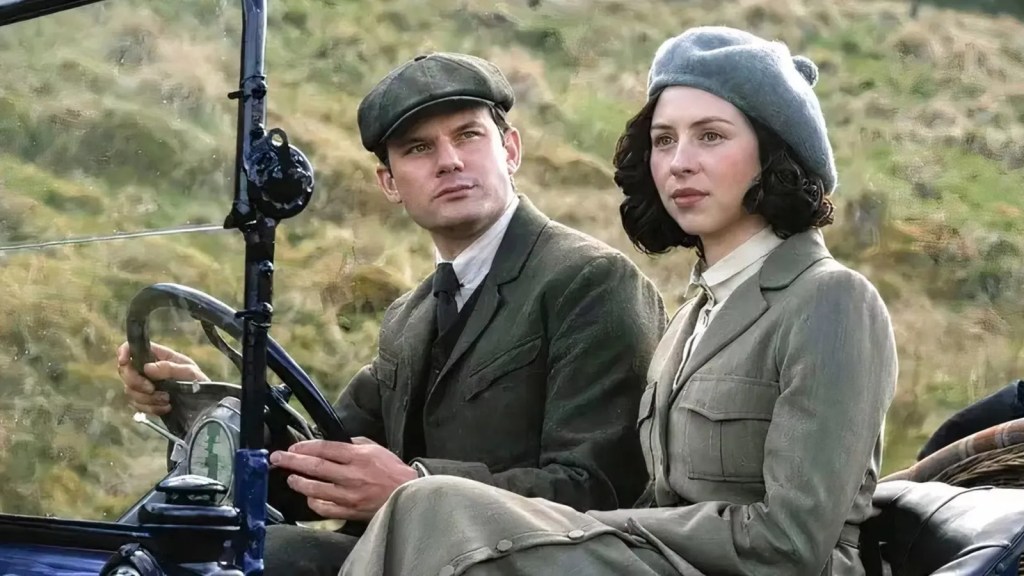
One important thing many fans forget is that Blood of My Blood is not only centered on Jamie’s parents, Brian Fraser and Ellen MacKenzie. The series is also exploring the early lives and relationships connected to Claire’s parents, Henry Beauchamp and Julia Moriston, and the world that shaped her.
This makes the prequel even more meaningful because it expands the Outlander universe in a natural and layered way. It allows viewers to understand the roots of both Jamie and Claire, and the generations that shaped the people we came to love.
Because of this, it would not feel natural for adult Jamie to suddenly become the focus. The purpose of a prequel is to give space to the people and stories that built the foundation.
That isn’t distance. That’s strong storytelling.
Respecting the New Cast and the Legacy
Years ago, audiences gave patience and trust to a new actor stepping into a beloved role. Now there is an opportunity to do the same for the actors bringing these earlier generations to life.
A prequel needs room to breathe. It needs the audience to connect with new faces, new emotions, and new journeys without constantly being pulled back to what we already know. If familiar characters appear too heavily, it can unintentionally shift attention away from the heart of the story.
Choosing to step back and let the new cast shine is not a lack of interest. It is a conscious and professional choice that strengthens the long-term legacy of the Outlander world. It also shows confidence that the story is bigger than any single character.
“We’ll See” Doesn’t Mean “No”
Another reality people sometimes forget is that no single actor controls these decisions. Writers, producers, networks, scheduling, and the direction of the story all play a role.
When someone says “we’ll see” or “if the story calls for it,” it usually means the door is open, but the moment has to be meaningful and earned.
If an appearance ever happened, it would most likely be something small and emotional. A cameo, narration, flashforward, or symbolic moment could honor the character while still protecting the focus of the prequel.
That kind of approach deepens the emotional connection rather than distracting from it.
A Gentle Reminder for the Fan Community
Miscommunication happens easily, especially online. One comment can turn into dozens of interpretations. That is why patience, understanding, and grace matter so much in any fan community.
Supporting the new cast, trusting the creative process, and focusing on the work itself creates a healthier and more respectful environment for everyone involved.
At the end of the day, true support means honoring the craft and the storytelling. It also means remembering that focusing on professional work and creative projects is what truly respects the people behind these stories. Any personal aspects they choose to share should always remain their choice.
Legacy is not about holding on tightly. It is about allowing something to grow and reach new generations.
And maybe that is the most beautiful part of this new chapter.
There is a difference between performance and passion.
One seeks attention. The other seeks connection.
What has always stood out to me about Sam Heughan is not volume or visibility, but intention. A steady through-line runs through everything he does — an unmistakable love of craft, and a genuine enjoyment in sharing that craft with others.
When we slow down and look at the work itself, a far clearer story emerges.
The Writer: Reflection as Craft
Writing is often misunderstood as output. In truth, it is process — one rooted in reflection, patience, and honesty. Writers do not share simply to be seen; they share to be understood.
Storytelling requires vulnerability. It asks the writer to trust the reader, and the reader to meet the work with curiosity rather than assumption. It is an act of offering something lived, shaped, and considered.
That sincerity — the willingness to reflect, to remember, to give form to experience — is where meaningful work begins.
The Maker: Pride in Process
To make something well takes time. It requires respect for tradition, attention to detail, and a willingness to learn slowly.
In Scotland especially, making is inseparable from sharing. Hospitality is cultural. What is crafted is meant to be poured, tasted, discussed, and enjoyed together.
Pride in process is not bravado. It is care.
And care shows — in patience, in presentation, and in the pleasure of inviting others into the experience.
The Actor: Discipline Over Display
The strongest performances rarely announce themselves. They live in nuance, restraint, and the discipline of disappearing into character rather than standing above it.
Longevity in acting does not come from chasing attention. It comes from choosing work that stretches, challenges, and respects story. From returning again and again to craft rather than spectacle.
The work lasts because it is rooted in intention, not noise.
The Through-Line: Sharing
When you step back and look at the full body of work — writing, acting, making — a single pattern becomes clear.
This is not self-promotion.
It is invitation.
Sharing stories.
Sharing culture.
Sharing what has been learned, made, and loved.
An open hand, not a raised voice.
The work is not asking to be admired.
It is asking to be shared.
Listening to the Work
We live in a world that rushes to interpret, label, and project. But craft reveals character over time, not in moments.
When we choose to listen — to observe what is consistently made and offered — clarity follows. The work speaks plainly when we allow it to.
And what it says, again and again, is this:
Making things well matters.
Sharing them generously matters.
The rest is noise.
Closing Reflection
The most enduring stories are built slowly — through care, consistency, and heart. When we focus on the work rather than the commentary around it, we return to what is real.
This week, I’ve really seen how my overthinking can twist my mind into relentless spirals, especially as someone mildly autistic. My brain, wired to chase patterns and pick apart details, amplifies every doubt and what-if, particularly when I bare my soul, yearning for those soul-deep connections that light up my world. My autism makes emotions feel like vivid bursts—when I’m vulnerable, I’m all in, chasing honesty because anything less feels empty. But when people let me down, the pain hits like a sharp note, echoing longer than I’d like.
I don’t have trust issues, but figuring out who’s genuine—whether it’s someone close or a fleeting online interaction—can feel like solving a maze blindfolded. My mind sifts through every word, pause, or profile, guarding against past stings, like when a connection turned out to be a mirage. This week, though, it got real—I realized my overthinking nearly cost me someone I value most. My autistic habit of overanalyzing made me hesitate, caught in fears of being too open or misreading their heart, almost pushing them away. It was a wake-up call. I’m learning that my openness, even with its risks, is what makes my relationships pulse with meaning. My autism fuels my raw sincerity, and that’s what keeps my bonds—like the one I nearly lost—alive, even if disappointment sometimes tags along.



 Deep Thinking