Storytelling has always been one of humanity’s most powerful ways of understanding itself. Long before screens and stages, stories were shared around fires and passed from generation to generation. They carried lessons about courage, love, resilience, and hope. Even today, storytelling continues to guide us through the emotional landscapes of life.
There are certain storytellers in this world who seem to understand something deeply human. They don’t simply step into roles and recite lines. Instead, they carry entire emotional landscapes with them — courage, heartbreak, love, resilience — and invite audiences to walk through those landscapes alongside them.
When a storyteller truly understands the human heart, the characters they bring to life begin to feel timeless. We recognize parts of ourselves within them. Our struggles, our hopes, our quiet strengths. In that way, storytelling becomes more than entertainment. It becomes a bridge between human experiences.
Stories allow us to travel through emotions we may not yet fully understand ourselves. They take us into valleys of grief, across mountains of courage, and along rivers of hope. Through these journeys, storytelling reminds us that the human experience is shared in ways we sometimes forget.
Actors who approach storytelling with empathy and dedication become guides through these emotional landscapes. Their work reminds us that storytelling is not simply about playing a role — it is about understanding the soul of a character and sharing that understanding with the audience.
One actor whose work reflects this kind of storytelling is Sam Heughan. Through the characters he has brought to life, he demonstrates how powerful storytelling can be when it is grounded in emotional truth and respect for the story being told. What makes performances like these stand out is not simply talent, but a genuine appreciation for the craft itself.
Great storytelling asks artists to step into many different lives and experiences. It requires curiosity about the world and compassion for the many ways people live, struggle, grow, and love. That kind of work leaves an impression on audiences because it reflects something honest about the human experience.
For me personally, storytelling has always felt deeply meaningful. As someone who experiences the world with an autistic mind, I often notice emotional details and moments of humanity that others might pass by quickly. Stories — whether in books, film, or art — help translate those emotions into something shared and understood. They create a sense of connection between people who may have never met but recognize pieces of themselves within the same story.
Perhaps that is why certain stories stay with us long after the screen fades to black or the curtain falls. They linger because they touched something real within us.
In a world that can sometimes feel loud and distracted, storytelling still holds a quiet power. It reminds us of courage, compassion, vulnerability, and hope — the very qualities that shape who we are.
And when storytellers approach their craft with sincerity, they create something lasting. Not just a performance, but a connection.
Because at its heart, storytelling has always been one of the ways humanity learns to understand itself.
Why red carpet photos and anonymous tips often create stories that were never there.
In the modern digital age, celebrity culture moves at extraordinary speed. A photograph taken in a crowded room can be uploaded within minutes, shared across social platforms, discussed in comment sections, and eventually turned into a rumor that thousands of people repeat.
What began as a normal moment can quickly become a story that was never intended to exist.
This phenomenon is especially common during premieres, press events, or industry gatherings where actors are photographed constantly. Cameras capture hundreds of candid interactions throughout the evening. But when a single frame is removed from its context and shared online, the interpretation of that moment can change dramatically.
Understanding how this cycle works helps explain why so many celebrity rumors begin with something very ordinary.
The Reality of Red Carpet and Industry Events
To someone watching from the outside, red carpet premieres can look glamorous and controlled. In reality, they are fast-moving, crowded environments where many interactions happen simultaneously.
Actors attending premieres or press events are rarely alone. Throughout the evening they are typically surrounded by a wide range of people connected to the project or event. These may include:
fellow cast members
producers and directors
studio executives
publicists and managers
brand representatives
photographers and videographers
friends and colleagues attending the event
These environments are busy, loud, and tightly scheduled. Publicists often guide actors through crowds while photographers call out directions. Conversations happen quickly and often very close together simply because it is difficult to hear over the noise of the room.
Because of this, small gestures are extremely common. Someone may touch another person’s back to guide them through a crowd. A colleague might lean in closely to speak. Friends greet each other with brief hugs or supportive gestures.
These are completely normal social behaviors in busy environments.
However, when one photograph captures only a fraction of that interaction, viewers may interpret it very differently from how the moment actually unfolded.
The Power of a Single Frame
Professional photography agencies such as Getty Images document public events extensively. Photographers often take hundreds or even thousands of photos in rapid succession.
These images capture brief moments such as:
greetings between colleagues
conversations during crowded events
quick hand gestures while speaking
a publicist guiding someone through a group
photographers directing a pose for the camera
Each photograph represents only a split second of time.
When viewers see a single isolated image without the surrounding sequence of photos, it becomes easy to assume a narrative. Human psychology naturally tries to fill in missing context, especially when people already have curiosity about a public figure.
A gesture that lasted two seconds can suddenly be interpreted as something far more significant.
The Rise of Anonymous Gossip Submissions
In recent years, social media has accelerated how quickly speculation spreads. Accounts dedicated to celebrity gossip frequently rely on anonymous submissions sent by followers who claim to have witnessed something involving a public figure.
One widely known example is DeuxMoi, which publishes anonymous tips about celebrity sightings and rumors.
These types of submissions usually follow a similar format:
“A friend saw…”
“Someone at the event said…”
“Spotted with a mystery person…”
It is important to recognize that most of these tips are:
anonymous
unverified
based on personal interpretation rather than confirmed information
Even the platforms that publish these submissions often include disclaimers explaining that the information has not been verified.
Despite this, once a rumor appears online it can spread rapidly. Other accounts repeat the story, screenshots circulate, and discussions grow around an event that may have been misinterpreted from the start.
Why Rumors Often Appear During Major Events
Rumors rarely appear at random. They tend to increase during periods when actors or public figures are receiving significant attention.
This often occurs during:
television season premieres
film festivals
press tours
award ceremonies
major product launches or business announcements
During these periods, media coverage increases and photographers capture more images. Fans are also paying closer attention to public appearances.
More attention naturally leads to more speculation.
A moment that might have gone unnoticed during a quiet time can suddenly become a topic of conversation simply because more people are watching.
Understanding the Difference Between Rumor and Journalism
Not all sources of information operate under the same standards.
Professional journalism follows editorial processes designed to verify information before publication. Established outlets such as Variety, The Hollywood Reporter, Reuters, BBC, and Associated Press rely on confirmation, sources, and editorial review before presenting claims as fact.
By contrast, rumor-based content often comes from places that prioritize speed and speculation over verification.
Examples of sources that frequently spread unverified rumors include:
anonymous gossip submission accounts
blind-item rumor blogs
unsourced screenshots circulating on social media
speculation threads without confirmation
These platforms may occasionally report something accurate, but they are not structured around verification in the same way professional journalism is.
For readers, recognizing the difference between these types of sources is essential.
Why Context Matters
One of the biggest challenges in modern media culture is the loss of context.
A photograph taken during a crowded event shows only a single perspective. It does not show the moments before or after. It does not capture the full conversation, the surrounding people, or the environment of the event.
Without that context, audiences may interpret what they see in ways that were never intended.
In many cases, rumors begin not because anyone deliberately created a false story, but because viewers simply misunderstood what they were seeing.
A More Thoughtful Approach to Celebrity Culture
Fans and readers play an important role in shaping the tone of online discussions about public figures.
When speculation begins circulating online, it can be helpful to pause and ask a few questions:
Where did this information originate?
Is the claim supported by a reliable source?
Could the moment simply be a normal interaction taken out of context?
Approaching celebrity culture with curiosity rather than assumption helps prevent rumors from spreading unnecessarily.
Respecting the Human Side of Public Figures
Actors, artists, and creators share their work with audiences, but their personal lives remain their own unless they choose to share them publicly.
A respectful fandom recognizes the difference between appreciating someone’s work and speculating about private aspects of their life.
Celebrating performances, storytelling, and creative achievements keeps conversations focused on the things that artists themselves choose to share with the world.
Sometimes the most thoughtful response to a rumor is simply to step back, look at the larger picture, and remember that behind every photograph is a real person living a real life beyond the frame.
Sources and References
Getty Images – editorial photography from entertainment events
Note: Anonymous gossip submissions and rumor-based accounts often publish unverified information and should not be treated as confirmed reporting
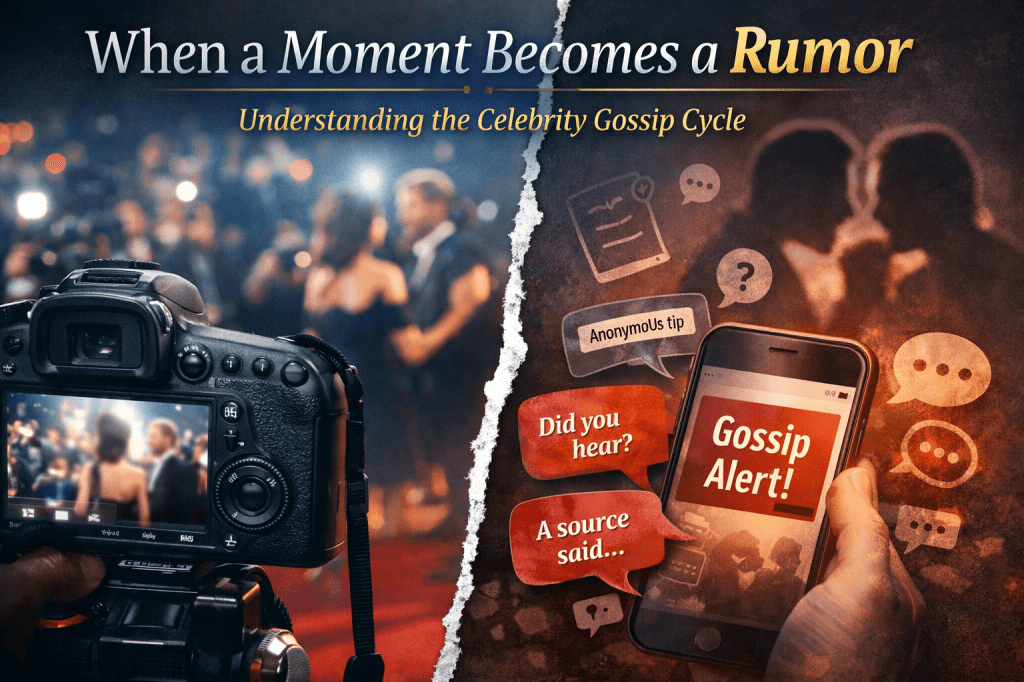
When a Moment Becomes a Rumor: Understanding the Celebrity Gossip Cycle
Why red carpet photos and anonymous tips often create stories that were never there.
In the modern digital age, celebrity culture moves at extraordinary speed. A photograph taken in a crowded room can be uploaded within minutes, shared across social platforms, discussed in comment sections, and eventually turned into a rumor that thousands of people repeat.
What began as a normal moment can quickly become a story that was never intended to exist.
This phenomenon is especially common during premieres, press events, or industry gatherings where actors are photographed constantly. Cameras capture hundreds of candid interactions throughout the evening. But when a single frame is removed from its context and shared online, the interpretation of that moment can change dramatically.
Understanding how this cycle works helps explain why so many celebrity rumors begin with something very ordinary.
The Reality of Red Carpet and Industry Events
To someone watching from the outside, red carpet premieres can look glamorous and controlled. In reality, they are fast-moving, crowded environments where many interactions happen simultaneously.
Actors attending premieres or press events are rarely alone. Throughout the evening they are typically surrounded by a wide range of people connected to the project or event. These may include:
fellow cast members
producers and directors
studio executives
publicists and managers
brand representatives
photographers and videographers
friends and colleagues attending the event
These environments are busy, loud, and tightly scheduled. Publicists often guide actors through crowds while photographers call out directions. Conversations happen quickly and often very close together simply because it is difficult to hear over the noise of the room.
Because of this, small gestures are extremely common. Someone may touch another person’s back to guide them through a crowd. A colleague might lean in closely to speak. Friends greet each other with brief hugs or supportive gestures.
These are completely normal social behaviors in busy environments.
However, when one photograph captures only a fraction of that interaction, viewers may interpret it very differently from how the moment actually unfolded.
The Power of a Single Frame
Professional photography agencies such as Getty Images document public events extensively. Photographers often take hundreds or even thousands of photos in rapid succession.
These images capture brief moments such as:
greetings between colleagues
conversations during crowded events
quick hand gestures while speaking
a publicist guiding someone through a group
photographers directing a pose for the camera
Each photograph represents only a split second of time.
When viewers see a single isolated image without the surrounding sequence of photos, it becomes easy to assume a narrative. Human psychology naturally tries to fill in missing context, especially when people already have curiosity about a public figure.
A gesture that lasted two seconds can suddenly be interpreted as something far more significant.
The Rise of Anonymous Gossip Submissions
In recent years, social media has accelerated how quickly speculation spreads. Accounts dedicated to celebrity gossip frequently rely on anonymous submissions sent by followers who claim to have witnessed something involving a public figure.
One widely known example is DeuxMoi, which publishes anonymous tips about celebrity sightings and rumors.
These types of submissions usually follow a similar format:
“A friend saw…”
“Someone at the event said…”
“Spotted with a mystery person…”
It is important to recognize that most of these tips are:
anonymous
unverified
based on personal interpretation rather than confirmed information
Even the platforms that publish these submissions often include disclaimers explaining that the information has not been verified.
Despite this, once a rumor appears online it can spread rapidly. Other accounts repeat the story, screenshots circulate, and discussions grow around an event that may have been misinterpreted from the start.
Why Rumors Often Appear During Major Events
Rumors rarely appear at random. They tend to increase during periods when actors or public figures are receiving significant attention.
This often occurs during:
television season premieres
film festivals
press tours
award ceremonies
major product launches or business announcements
During these periods, media coverage increases and photographers capture more images. Fans are also paying closer attention to public appearances.
More attention naturally leads to more speculation.
A moment that might have gone unnoticed during a quiet time can suddenly become a topic of conversation simply because more people are watching.
Understanding the Difference Between Rumor and Journalism
Not all sources of information operate under the same standards.
Professional journalism follows editorial processes designed to verify information before publication. Established outlets such as Variety, The Hollywood Reporter, Reuters, BBC, and Associated Press rely on confirmation, sources, and editorial review before presenting claims as fact.
By contrast, rumor-based content often comes from places that prioritize speed and speculation over verification.
Examples of sources that frequently spread unverified rumors include:
anonymous gossip submission accounts
blind-item rumor blogs
unsourced screenshots circulating on social media
speculation threads without confirmation
These platforms may occasionally report something accurate, but they are not structured around verification in the same way professional journalism is.
For readers, recognizing the difference between these types of sources is essential.
Why Context Matters
One of the biggest challenges in modern media culture is the loss of context.
A photograph taken during a crowded event shows only a single perspective. It does not show the moments before or after. It does not capture the full conversation, the surrounding people, or the environment of the event.
Without that context, audiences may interpret what they see in ways that were never intended.
In many cases, rumors begin not because anyone deliberately created a false story, but because viewers simply misunderstood what they were seeing.
A More Thoughtful Approach to Celebrity Culture
Fans and readers play an important role in shaping the tone of online discussions about public figures.
When speculation begins circulating online, it can be helpful to pause and ask a few questions:
Where did this information originate?
Is the claim supported by a reliable source?
Could the moment simply be a normal interaction taken out of context?
Approaching celebrity culture with curiosity rather than assumption helps prevent rumors from spreading unnecessarily.
Respecting the Human Side of Public Figures
Actors, artists, and creators share their work with audiences, but their personal lives remain their own unless they choose to share them publicly.
A respectful fandom recognizes the difference between appreciating someone’s work and speculating about private aspects of their life.
Celebrating performances, storytelling, and creative achievements keeps conversations focused on the things that artists themselves choose to share with the world.
Sometimes the most thoughtful response to a rumor is simply to step back, look at the larger picture, and remember that behind every photograph is a real person living a real life beyond the frame.
Sources and References
Getty Images – editorial photography from entertainment events
Seeing an actor in layers — and why the future of storytelling depends on it
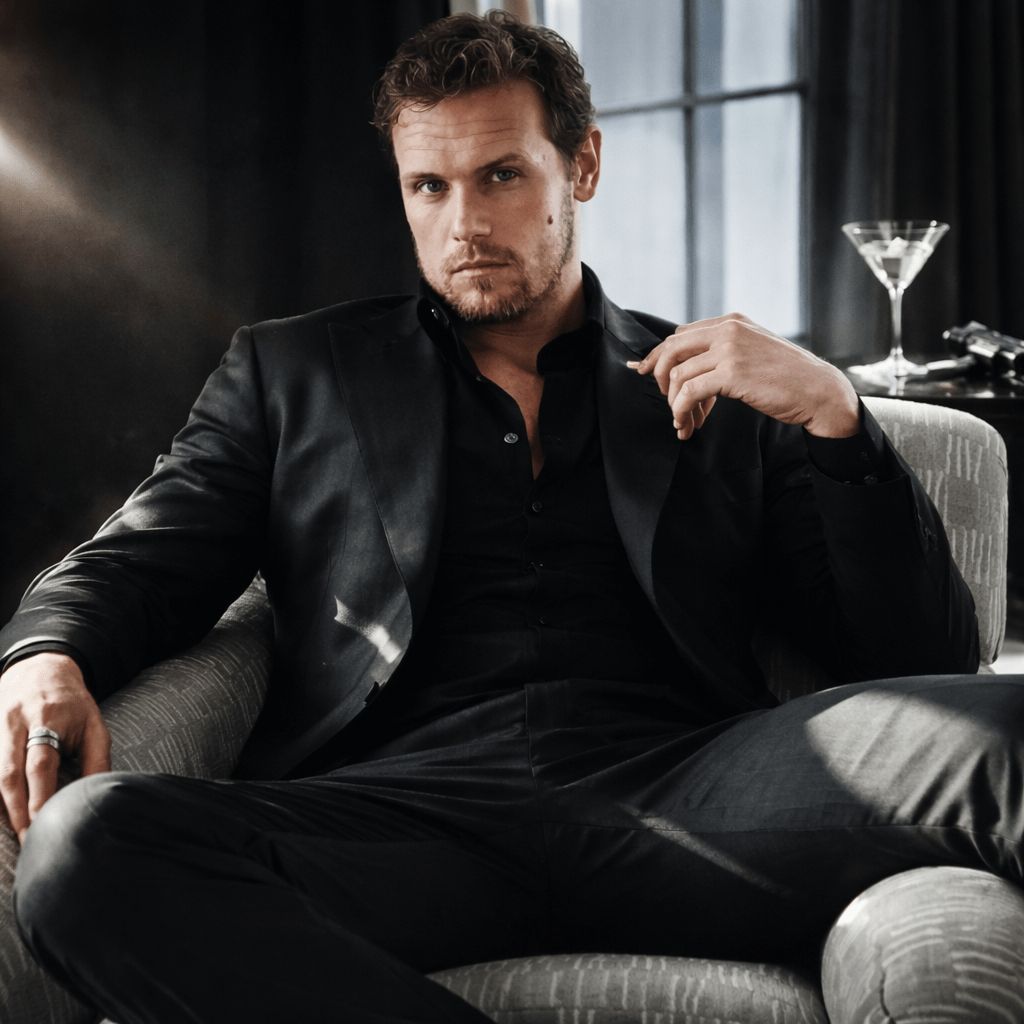
What if the future of Hollywood depends less on reboots and more on recognizing actors who bring depth, discipline, and originality to the screen? This is why I believe Sam Heughan represents that shift — not just for one role, but for the future of storytelling itself.
When conversations about the next James Bond begin, his name continues to surface. And while I would absolutely love to see him step into that iconic role, my perspective goes far beyond just one franchise. From my point of view, what matters most is that Hollywood begins to recognize his full range as a leading actor.
Because when I watch his work, I don’t just see one dimension. I see layers.
I see strength and vulnerability existing at the same time. I see resilience, but also quiet sensitivity. I see humor, intelligence, emotional depth, and a grounded presence that feels authentic instead of manufactured. These are the qualities that create connection with audiences, and connection is what keeps storytelling alive.
Yes, I believe he would bring something powerful and modern to a role like James Bond. He has the physicality, discipline, and emotional complexity to honor that legacy while evolving it for a new generation. But limiting the conversation to Bond alone almost feels too small. There is so much more he could bring to the screen.
I want to see him lead psychological thrillers, historical epics, and character-driven dramas that challenge both audiences and the industry. I want casting directors and producers to see the versatility he has worked hard to build over the years. I want Hollywood to look closer, not just at him, but at others like him who bring depth, preparation, and emotional intelligence to their craft.
Because this conversation is bigger than one person.
We need more actors who are willing to take risks. We need fresh ideas, new perspectives, and layered storytelling. Audiences today are craving originality. They want stories that feel human, not repetitive. The industry cannot rely on reboots and recycled formulas alone. Creativity grows when we invest in artists who are willing to evolve and bring something new.
Actors like Sam Heughan represent that shift.
They remind us that true presence comes from authenticity. They elevate the work of everyone around them and inspire audiences to feel more deeply. This is why I feel so strongly about sharing this message. Not simply as admiration, but as advocacy for meaningful storytelling.
I want this conversation to reach people around the world. I want his talent and versatility to be recognized on an even larger scale. And I hope Hollywood is paying attention.
Because we need more actors like him.
And when we support artists who bring depth, courage, and fresh ideas, we move storytelling forward for everyone.
Celebrity culture is a fascinating phenomenon. On one hand, celebrities inspire us, entertain us, and sometimes even feel like family because of how present they are in our daily lives. On the other, many fans cross an invisible line—shifting from admiration to a sense of entitlement, as though they own a piece of the celebrity’s life. But where does this feeling come from?
Parasocial Relationships
At the root is what psychologists call a parasocial relationship. Fans often consume interviews, social media posts, movies, and shows so regularly that it creates a powerful illusion of intimacy. It feels like we know these stars personally, when in reality, the connection is one-sided. This blurring of boundaries can lead fans to believe they have a stake in a celebrity’s choices—whether it’s who they date, how they dress, or what projects they pursue.
Media Access and Illusions of Intimacy
Social media accelerates this sense of closeness. Celebrities post selfies, stories, and behind-the-scenes moments that create the impression of authenticity and accessibility. For fans, it feels like an invitation into their private world. But curated glimpses don’t equal consent to full access. When fans mistake these digital fragments for a whole person, ownership tendencies grow.
Projection and Identification
Many fans project their own values, dreams, or struggles onto celebrities. They see them not just as performers, but as symbols—representations of what they wish for in themselves. This identification can morph into an expectation: if the celebrity changes, disappoints, or chooses differently, the fan feels personally betrayed, almost as though their investment is being disregarded.
The Commercial Factor
The entertainment industry itself sometimes feeds this mindset. Marketing campaigns encourage fans to “join the family,” “support the journey,” or “be part of the legacy.” While this language builds loyalty, it also blurs the line between admiration and ownership, convincing fans that their financial or emotional investment entitles them to personal influence.
Outlander and the Case of Sam Heughan as Jamie Fraser
Few fandoms illustrate this sense of ownership more vividly than Outlander. When Sam Heughan first stepped into the role of Jamie Fraser, he wasn’t just playing a character — he embodied a romantic ideal deeply rooted in Diana Gabaldon’s beloved novels. For many readers and viewers, Jamie was already a living, breathing figure in their imaginations. Sam’s portrayal only amplified that connection.
Fans didn’t just fall in love with the character; they projected Jamie’s traits onto Sam himself. Over time, this blurred the boundary between actor and role, creating the expectation that Sam should mirror Jamie’s loyalty, passion, and choices in his real life. It was as if Jamie Fraser stepped off the page and onto the red carpet — and fans wanted him to stay that way.
But here’s where I think the story turns into something even more beautiful: Sam is now moving from Jamie Fraser to Macbeth and to other creative projects he is envisioning. This evolution shows his passion as an artist and his courage to take on challenges beyond what fans already know him for. Rather than trying to hold him inside the box of Jamie Fraser forever, fans have the chance to genuinely support him by embracing his new work and enjoying what he continues to create.
Now, imagine this from another perspective: picture yourself being scrutinized by the public, with strangers feeling entitled to weigh in on your every choice. Imagine them demanding access to your private life, trying to shape it, or questioning it. Would you enjoy that? Of course not. In fact, you would likely try to protect yourself by hiding as much of your private life as possible. That is exactly the kind of pressure Sam and many actors live under — and it explains why keeping boundaries is not only natural, but necessary.
And take it a step further: imagine you have a partner you truly love, and they are bullied or ridiculed online simply because they are dating you. That’s what happens when fans cross the line and convince themselves that they, not the celebrity, should have a say in who someone loves. It’s not only cruel — it’s a sign of unhealthy obsession. People who behave this way often need to take a serious step back and consider their own mental health. No one has ownership over another person’s life, and certainly not over someone they’ve never truly known.
In a way, Outlander became the perfect example of parasocial attachment colliding with ownership. Sam gave the world Jamie Fraser, but many fans wanted Jamie forever — forgetting that Sam is a real man, not a fictional Highland warrior bound to anyone’s expectations. Supporting his artistry, rather than attempting to invade his privacy, is the healthiest and most respectful way to honor what he has given us.
Opening Our Eyes
This isn’t about scolding anyone — it’s about awareness. Many people don’t even realize how their words or behavior, especially online, can weigh heavily on another person’s shoulders. Celebrities may seem larger than life, but at the end of the day, they are still human beings who deserve kindness and respect just like anyone else.
And here’s a question worth reflecting on: if someone like Sam were to find true love, would people continue to bully, troll, or tear him down for it? Or would they love him enough to accept the fact that he is happy? That question doesn’t just apply to Sam Heughan — it applies to every actor and actress who faces the same struggle.
When we say we admire or love someone, it should mean we want the best for them — their happiness, their growth, their joy. Anything less isn’t love at all; it’s ownership in disguise.
✨ The real gift we can give our favorite actors isn’t control, but freedom — the freedom to live, to love, and to keep creating without fear of being torn apart for being human.
There are times when I close my eyes and imagine myself in Sam Heughan’s shoes. I wonder what it must feel like to live every day under the constant gaze of the public eye—where even the smallest details of your life are poked and prodded, not out of malice, but out of curiosity and the desire to step into a world that isn’t theirs to enter.
Privacy has become one of the biggest struggles in today’s world, and for someone like Sam Heughan, it is an ongoing challenge. He gives so much of himself through his work, his projects, and his generosity, but the man behind the spotlight still deserves the right to breathe, to love, and to live freely without intrusion.
It’s easy to forget that admiration doesn’t grant entitlement. The truth is, Sam—like all actors, artists, and public figures—should not have to sacrifice dignity or peace of mind in exchange for recognition. As much as people celebrate his talent, it’s equally important to honor what he chooses to keep for himself.
When I think of this, I realize that respecting the boundary between public and private is not just a courtesy. It is a responsibility, especially for those who call themselves supporters. That line between what is shared and what is sacred must always be protected.
I would also encourage his management team, along with others in similar positions, to draw that line firmly and to demand that tabloids, gossip websites, and careless articles stop twisting pieces of interviews for the sake of greed and clicks—but also to put a stop to endless speculations that serve no purpose, because there is no truth in them.
And to the jealous or obsessive fans: with all due respect, Sam Heughan deserves far better. Whoever he chooses to share his life with is his choice alone, and no one else’s business. He isn’t your husband or boyfriend, and it is not for anyone to dictate who he should love or date. Jealous behavior only reveals insecurity and blinds people to what truly matters. The truth is, Sam should be met with the deepest respect—not unhealthy obsession—because of all that he gives to others and the love he pours into his craft.
In today’s entertainment world, fame is rarely a simple blessing. For actors like Sam Heughan—and many others—success often comes with a shadow: gossip tabloids, speculative media, and obsessive fan culture. While their art inspires millions, the darker side of fame can feel like a thorn in their side, pricking at their dignity, privacy, and even their personal relationships.
The Tabloid Machine
Gossip outlets and entertainment magazines thrive on speculation. Instead of celebrating an actor’s work, they often chase sensational headlines designed to stir drama and keep readers hooked. With Sam, for instance, articles have sometimes focused less on his craft and more on speculation about his personal life. These constant invasions distort the truth, fuel baseless rumors, and add unnecessary stress to someone simply trying to live authentically.
Journalists, Speculators, and the Lack of Respect
The problem doesn’t stop with gossip tabloids. Journalists, media outlets, and online speculators often fail to respect boundaries. There is a desperate need for better training in ethical reporting—learning to recognize that public figures still have private lives deserving of respect. When actors like Sam deliberately keep aspects of their personal life private, it isn’t secrecy; it’s self-protection. Yet as long as the pressure and entitlement continue, many actors will feel they have no choice but to guard their relationships fiercely.
Obsession Masquerading as Fandom
It’s natural for fans to feel connected to actors whose work has touched them. But there’s a sharp line between admiration and obsession. Some individuals cross that line by feeling entitled to every detail of a celebrity’s private life—demanding to know who they’re dating, where they live, or even spreading negativity when those details aren’t shared. This sense of entitlement creates a hostile environment not only for the actor but also for anyone close to them.
The Hidden Partner’s Burden
When actors choose to keep a partner private, it’s usually a form of protection. Not out of shame or secrecy, but out of love and respect. A private partner can easily become a target of speculation, judgment, and online harassment fueled by gossip and jealous fans. Imagine stepping into a relationship where you are instantly judged not for who you are, but for how well strangers think you “measure up” to someone’s idealized fantasy. This can strain even the strongest bond.
Holding Media Accountable
This is where management teams and representatives need to step in. Gossip tabloids and magazines must be held accountable when they cross the line. If entertainment journalism refuses to practice restraint, then agents and managers of well-known figures have a responsibility to push back—challenging false narratives, demanding retractions, and setting stronger boundaries with outlets that repeatedly exploit personal lives for clicks.
The Need for Respect and Humanity
At the heart of it, celebrities are still human beings. They deserve to live, to love, and to protect their relationships without constant scrutiny. Supporting an actor also means respecting their boundaries. True fandom isn’t about control or entitlement—it’s about celebrating their art, appreciating their authenticity, and allowing them the same dignity we would want for ourselves.
A Call for Compassion
For Sam Heughan and countless others, privacy is not a luxury but a necessity. It’s time we, as a culture, rethink how we consume celebrity news. Do we want to be complicit in tearing down the very people whose art inspires us? Or do we want to be the kind of fans and media that uplift, respect, and protect them?
The answer should be simple.
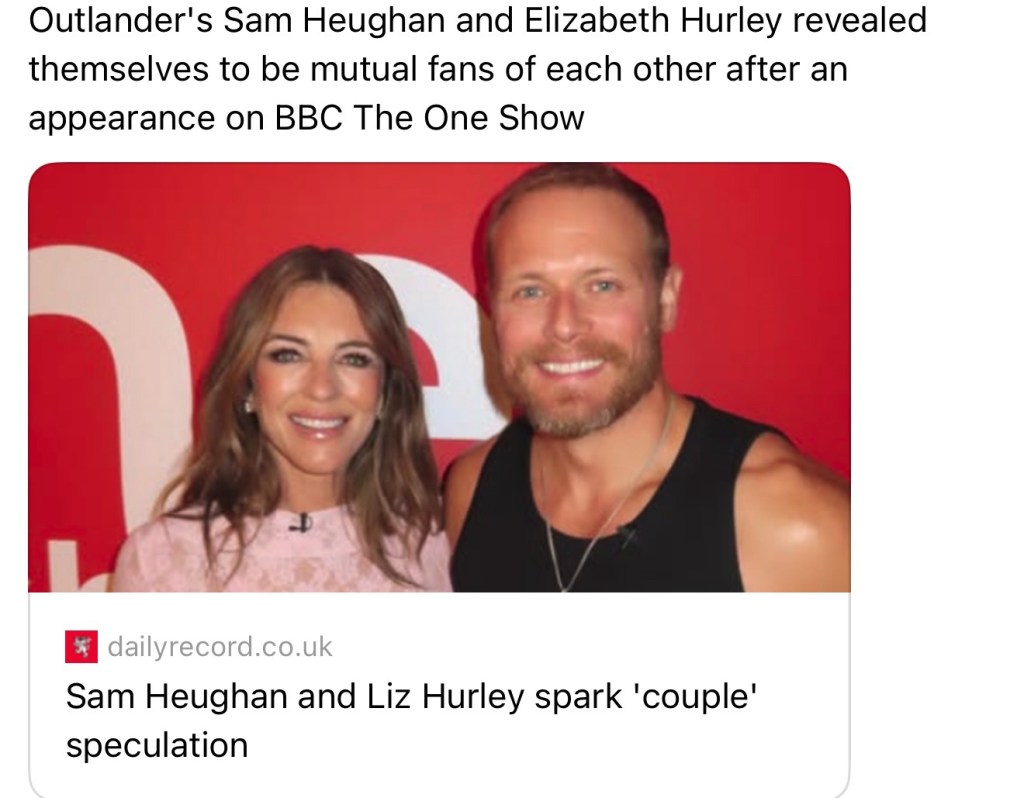
It was stated in the show that Liz has a boyfriend currently.Her and Sam have always been mutual fans of each other according to the both of them.Fans by now should know Sam well enough he would never put his private life in the spotlight and two of course he will compliment her as he is a very kind hearted human being and it was a mutual compliment not a romantic one.
In this fourth part of our series celebrating kindness toward Sam Heughan, we address how AI and gossip fuel harmful fantasies about his personal life, including his friendship with Outlander co-star Caitriona Balfe. Fans adore Sam’s portrayal of Jamie Fraser, but blurring the line between his on-screen role and real-life connections can hurt him, Caitriona, her family, and fans who perpetuate these narratives. While AI can be a useful tool when used responsibly, misuse can harm those living honest lives of hard work and genuine friendships. Let’s explore why kindness, not rumors, is the best way to honor Sam and his work.
The Role of AI: A Double-Edged Sword
Artificial intelligence can enhance fandom creativity, like generating fan art or boosting Outlander engagement, when used responsibly. However, AI can also amplify harmful gossip. Tools like fan fiction generators or social media algorithms create convincing stories, images, or videos that seem real. For example, a deepfake might depict Sam in a romantic scenario with Caitriona, sparking false rumors about their friendship. Such content spreads rapidly on platforms like X, blurring fact and fiction, and harming those like Sam and Caitriona who maintain honest lives and authentic friendships built on hard work.
The Harm to Sam Heughan and Caitriona Balfe
Sam’s magnetic performance in Outlander has won hearts, but gossip about his personal life, especially his strong friendship with Caitriona, invades his privacy. Fans misinterpret their on-screen chemistry, forcing Sam to address rumors or limit public interactions to avoid speculation. This takes an emotional and professional toll, overshadowing his talent. If Sam were to have a real-life partner in the future, she might face distress seeing these rumors, even if she’s prepared for public scrutiny. Fans must show respect to her, regardless of her readiness, to avoid causing harm. For Caitriona, these rumors intrude on her personal life, including her marriage and role as a mother, creating unfair pressure and disrespecting her family’s privacy, despite her solid friendship with Sam. Great chemistry between actors is vital for a show’s success—it’s a common, necessary part of Hollywood. But strong on-screen chemistry doesn’t mean they’re romantically involved.
The Deeper Harm to Fans
Fans who believe Sam’s friendship with Caitriona is romantic risk deeper harm. Clinging to this fantasy fosters unhealthy obsessions, leading to emotional investment in a false narrative. When reality—such as Caitriona’s family life or Sam’s personal choices, including a future partner—doesn’t align, disappointment breeds conflict within fan communities or even attacks on Caitriona’s family or Sam’s potential partner. Misused AI content and gossip exploit fans’ admiration for Sam, turning passion into toxicity and fracturing the Outlander fandom.
Promoting Kindness and Respect
We can celebrate Sam’s incredible work without crossing personal boundaries. Support his Outlander performances, upcoming projects, or create fan art that respects his privacy and his friendship with Caitriona. Likewise, honor Caitriona’s talent while respecting her family life. If Sam finds a real-life partner, fans must extend respect to her, especially if she’s prepared for public attention, to ensure she feels welcomed, not targeted. Use AI responsibly to enhance fandom creativity, not to spread harmful rumors. Be cautious of AI-generated content or gossip on X—verify sources before sharing. By fostering positive, respectful fan communities, we keep the Outlander fandom a welcoming space for all who admire Sam and his co-star.
Conclusion
Kindness is the foundation of true fandom. Let’s honor Sam Heughan and his friendship with Caitriona Balfe by celebrating their talent and chemistry, not fueling fantasies with misused AI or gossip. Great chemistry is essential for Outlander’s success, but it doesn’t mean romance. Sam, Caitriona, her family, and any future partner Sam may have—prepared or not—deserve a fandom rooted in respect. Join us in spreading positivity, and stay tuned for the next part of our series—or let’s build a healthier, happier Outlander community today.





 Deep Thinking