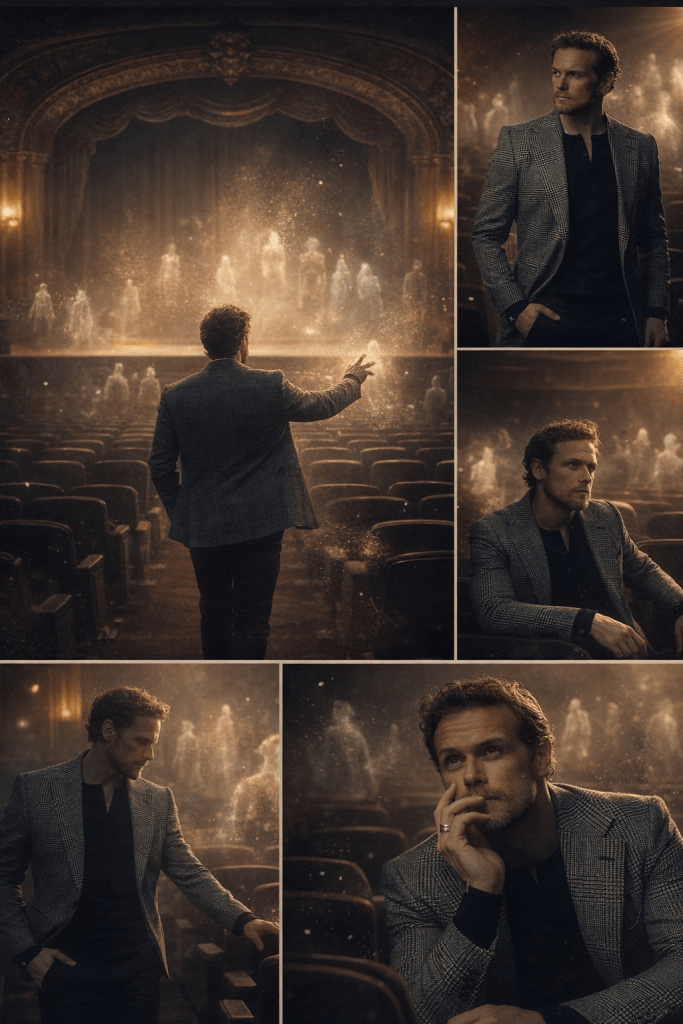
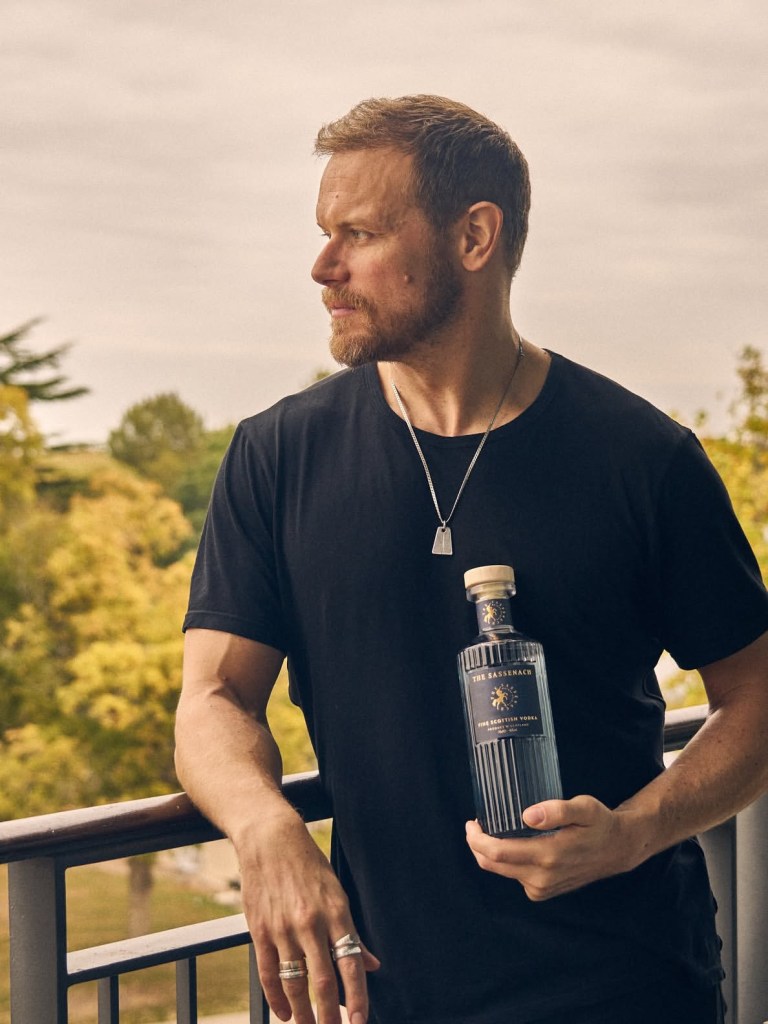
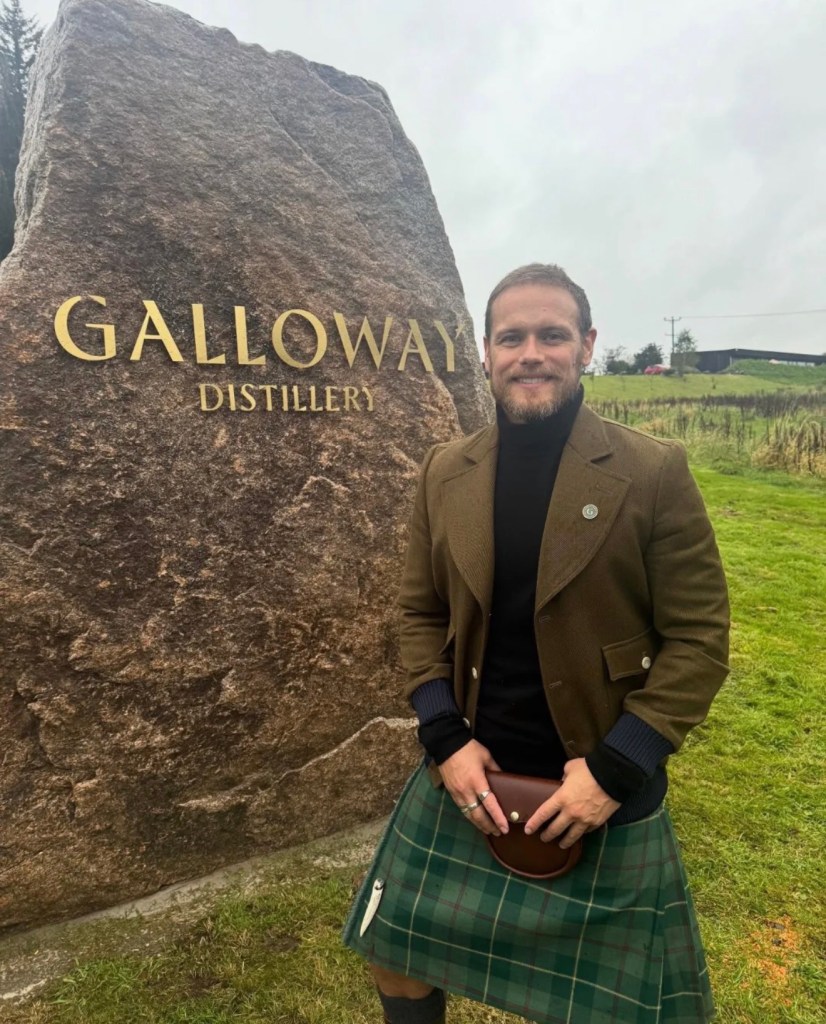
There is a difference between performance and passion.
One seeks attention. The other seeks connection.
What has always stood out to me about Sam Heughan is not volume or visibility, but intention. A steady through-line runs through everything he does — an unmistakable love of craft, and a genuine enjoyment in sharing that craft with others.
When we slow down and look at the work itself, a far clearer story emerges.
The Writer: Reflection as Craft
Writing is often misunderstood as output. In truth, it is process — one rooted in reflection, patience, and honesty. Writers do not share simply to be seen; they share to be understood.
Storytelling requires vulnerability. It asks the writer to trust the reader, and the reader to meet the work with curiosity rather than assumption. It is an act of offering something lived, shaped, and considered.
That sincerity — the willingness to reflect, to remember, to give form to experience — is where meaningful work begins.
The Maker: Pride in Process
To make something well takes time. It requires respect for tradition, attention to detail, and a willingness to learn slowly.
In Scotland especially, making is inseparable from sharing. Hospitality is cultural. What is crafted is meant to be poured, tasted, discussed, and enjoyed together.
Pride in process is not bravado. It is care.
And care shows — in patience, in presentation, and in the pleasure of inviting others into the experience.
The Actor: Discipline Over Display
The strongest performances rarely announce themselves. They live in nuance, restraint, and the discipline of disappearing into character rather than standing above it.
Longevity in acting does not come from chasing attention. It comes from choosing work that stretches, challenges, and respects story. From returning again and again to craft rather than spectacle.
The work lasts because it is rooted in intention, not noise.
The Through-Line: Sharing
When you step back and look at the full body of work — writing, acting, making — a single pattern becomes clear.
This is not self-promotion.
It is invitation.
Sharing stories.
Sharing culture.
Sharing what has been learned, made, and loved.
An open hand, not a raised voice.
The work is not asking to be admired.
It is asking to be shared.
Listening to the Work
We live in a world that rushes to interpret, label, and project. But craft reveals character over time, not in moments.
When we choose to listen — to observe what is consistently made and offered — clarity follows. The work speaks plainly when we allow it to.
And what it says, again and again, is this:
Making things well matters.
Sharing them generously matters.
The rest is noise.
Closing Reflection
The most enduring stories are built slowly — through care, consistency, and heart. When we focus on the work rather than the commentary around it, we return to what is real.
Every public figure eventually becomes the subject of microscopic scrutiny, and Sam is no exception. Recently, attention has fixated on a claim that he has a tattoo under his wrist. At first glance, it sounds trivial. In reality, it reveals something much deeper about how rumors form, why they stick, and how easily a person’s body becomes a canvas for other people’s assumptions.
This isn’t about whether tattoos are good or bad. It’s about truth, pattern recognition, and respect.
How the Rumor Attached Itself to Sam
The claim usually begins with a single photo or short clip from a public appearance—often a book signing or event where lighting is harsh and angles are unflattering. Someone notices a dark line, shadow, or irregularity near his wrist. The image is then zoomed in, cropped tightly, and reposted without its original context.
Once that happens, the conversation shifts from observation to interpretation. Instead of asking what the image actually shows, people begin asking what the “mark” means. That’s where speculation takes over.
Looking at Sam’s Public History
Sam has been photographed extensively over many years: press tours, interviews, red carpets, filming days, fan events, and candid moments. If there were a permanent tattoo under his wrist, it would appear consistently across time and settings.
It doesn’t.
In most clear, unedited images, his wrist appears completely normal. No repeated marking. No consistent shape. No permanence. Tattoos don’t behave selectively. They don’t show up for one photo and disappear for the next decade.
That inconsistency alone tells you everything you need to know.
Why Sam’s Wrist Can Look “Marked” in a Photo
There are many mundane reasons his wrist might look different in a single image:
Lighting can cast sharp shadows along tendons and veins, especially under stage lights or camera flashes.
Wrists have thin skin, so veins can appear darker depending on temperature, hydration, or muscle tension.
Temporary pen marks, wrist stamps, or makeup transfer are common during events.
Wardrobe tape or adhesive residue can leave faint lines.
Image compression, filters, or AI enhancement can introduce artificial contrast or lines that weren’t present in the original photo.
Old photos are often recycled, edited, or reposted with new narratives attached.
None of these equal a tattoo, yet all of them have been used to fuel this rumor.
Why Sam Becomes a Target for These Narratives
Sam is very deliberate about protecting his private life. He shares his work, his passions, and what he chooses—but he doesn’t offer unrestricted access to himself. That boundary makes some people uncomfortable.
When real information is unavailable by design, speculation rushes in to fill the space. A wrist becomes a clue. A shadow becomes a secret. The rumor isn’t about ink—it’s about control and curiosity colliding with privacy.
Confirmation Bias in Action
Once someone decides the tattoo exists, every image becomes “evidence.” Shadows are proof. Absence becomes suspicious. Clear photos showing nothing are dismissed. This is classic confirmation bias, and it’s amplified by social media algorithms that reward repetition over accuracy.
At that point, the discussion stops being about Sam and starts being about defending a belief.
The Line That Shouldn’t Be Crossed
Sam’s body is not a puzzle for strangers to solve. Being visible does not mean being owned. Scrutinizing wrists, hands, or physical details for hidden meaning crosses from interest into entitlement.
Respecting boundaries isn’t passive—it’s a conscious choice.
What People Miss the Most
If Sam had a wrist tattoo, it wouldn’t require detective work, zoom tools, or rumor accounts to confirm it. Facts don’t need help surviving. They don’t rely on blurry screenshots or secondhand whispers.
The need to keep proving something is often the strongest sign that it isn’t real.
The Reality
There is no confirmed tattoo under Sam’s wrist. What exists instead is a familiar pattern: assumption turns into repetition, repetition turns into belief, and belief turns into a narrative that overshadows reality.
Sam deserves to be seen clearly—not through speculation, but through truth.
I came across it the way many people do online — gradually, through repetition. The same claim kept appearing across fandom spaces, first on Tumblr and later echoed on Threads through screenshots and reblogs. At first, I assumed it was simply another fan account sharing personal interpretation.
What caught my attention wasn’t the claim itself — it was how often the exact same narrative resurfaced, even after people had already asked reasonable questions about it.
Different accounts repeated the story, but the language, framing, and conclusions were strikingly similar. Over time, it became clear that many of these discussions traced back to the same source.
That’s when I started paying closer attention.
The Account Where the Narrative Originated
As I observed the repetition, I began tracing where the story consistently led back to. The earliest and most persistent source was a Tumblr account operating under the handle p-redux.
I’m naming the account here for source transparency, not to target or harass an individual. Identifying the origin of a widely circulated claim is a basic part of responsible research — especially when that claim involves a real person’s private life.
While other accounts reposted or paraphrased the narrative, the same interpretations, images, and assumptions consistently traced back to this one source. When interest faded, the story would often reappear — slightly reframed, but emotionally unchanged.
Credible information spreads through independent confirmation.
This narrative spread through repetition of a single source.
That distinction matters.
The Original Story — and How I Watched It Evolve
When I first encountered the narrative, it was relatively simple and contained. The original story centered on one core claim, presented as if it were already settled — despite the absence of confirmation from official sources, reputable media, or anyone directly involved.
At that stage, the story relied heavily on interpretation:
select photos
brief public moments
assumptions stitched together as conclusions
Speculation was presented as certainty, with no clear distinction between opinion and fact.
What stood out to me over time was that this original version did not remain consistent.
As questions arose and skepticism grew, the narrative began to change. Timelines subtly shifted. New explanations appeared. Details were adjusted — not to clarify evidence, but to keep the story alive. When one version lost traction, another quietly replaced it.
The emotional conclusion stayed the same.
The surrounding details evolved.
Credible stories stabilize as facts emerge.
This one morphed.
Watching that evolution was a turning point. It showed that the narrative wasn’t guided by evidence — it was guided by persistence.
From Observation to Research
At first, I didn’t interact. I didn’t comment or challenge. I simply observed.
What became clear fairly quickly was that speculation was not framed as speculation. Interpretation was framed as fact — without sourcing, confirmation, or accountability.
Several red flags appeared:
claims stated with certainty
repeated reuse of the same visuals
assumptions treated as conclusions
an authoritative tone without transparency
Reliable information typically welcomes scrutiny.
This narrative resisted it.
What My Research Revealed
As I continued tracking the story, consistent patterns emerged.
1. The narrative never stabilized
Details changed over time. Explanations evolved. New angles appeared when old ones lost momentum. Instead of becoming clearer, the story became more fluid.
2. Visuals were used without verification
Photos and videos were repeatedly used as “evidence,” yet they were:
taken from public settings
cropped or zoomed
stripped of original context
interpreted rather than confirmed
In some cases, the same images were reused to support different versions of the story — immediately weakening their credibility.
Images alone are not proof.
3. The story functioned in loops
I documented a repeating cycle:
A claim gains attention
Interest fades
A new variation appears
The cycle restarts
Nothing is ever confirmed.
Nothing is ever resolved.
Truth does not behave this way.
How Photos Become Stripped of Context
Because visuals played such a large role in reinforcing this narrative, it’s important to explain how a real photo can still be misleading.
A photograph captures a moment — not the full story. Context includes where it was taken, when it was taken, who else was present, why the moment occurred, and how it fits into a larger event. When that context is removed, meaning changes.
This happens through:
Cropping, which removes surroundings and other people
Missing dates, allowing older images to appear recent
Unclear locations, shifting public spaces into imagined private ones
Proximity, mistaken for relationship
Captions, which replace facts with interpretation
Repetition, which creates false credibility
Screenshots, which remove traceability and accountability
A photo can be real — and still be used misleadingly.
Why This Became an Ethical Concern
At a certain point, this stopped being about accuracy and became about impact.
If the story were true, circulating it without confirmation would still be harmful — especially if someone intentionally chose privacy.
If it were not true, then repeating it:
misleads people
normalizes speculation
and erodes trust
Either outcome causes harm.
Silence is not a mystery to solve.
Privacy is not an invitation.
A Call for Platform Responsibility — Especially Tumblr
Based on what I observed and documented, this type of account activity is not harmless.
Unverified narratives about a real person’s private life — especially when they are repeatedly reshaped, insulated from accountability, and sustained through reinterpretation rather than evidence — create real harm.
For that reason, I strongly encourage social media platforms to intervene, and Tumblr in particular to remove this specific account, along with others that operate in similar ways.
Tumblr is where this narrative originated and where it has been repeatedly reinforced. Allowing a single-source, unsupported story to persist creates a ripple effect, as content is then screenshot, reposted, and reframed across other platforms.
This is not about silencing opinion.
It is about stopping the continued circulation of unsupported claims presented as fact.
When an account:
repeatedly targets a specific individual
relies on reinterpretation rather than verification
adapts its story instead of clarifying it
and avoids transparency while continuing to promote the claim
it moves beyond fandom discussion and into territory that carries real ethical and potential legal risk. Persistent false narratives can reasonably lead a public figure to consider legal action to protect their privacy, reputation, or safety.
Responsible moderation is not censorship.
It is harm prevention.
My Conclusion
After observing how this story emerged, how it evolved, and how it responded to scrutiny, I do not consider it credible.
Not because I wanted it to be false —
but because evidence never materialized, while deflection and adaptation continued.
Research is not belief.
It is pattern recognition, consistency, and accountability.
This story failed all three.
Why I’m Sharing This
I’m sharing this to raise awareness, not to create conflict.
Misinformation doesn’t always look malicious. Sometimes it looks confident. Sometimes it looks familiar. Sometimes it looks persistent.
But familiarity is not truth.
We all share responsibility online — especially in fandom spaces — to pause, verify, and consider the human cost of what we repeat.
Choosing not to spread unsupported narratives isn’t denial.
It’s discernment.
A Final Reflection on Respect, Kindness, and Reciprocity
I want to say this plainly, especially when it comes to Sam Heughan
As fans, supporters, and observers, I believe we all want the same thing for him:
a life that is treated with respect and protected with care.
He gives a great deal of himself — through his work, his presence, and the consistent kindness he shows toward fans. That generosity is rare, and it should never be taken for granted or exploited.
Privacy is not distance.
It is dignity.
If someone is constantly kind, patient, and giving, then the least we can do in return is offer that same kindness back — by respecting boundaries, rejecting harmful speculation, and choosing empathy over entitlement.
He is a timeless treasure not because of fame, but because of character.
And character deserves to be met with honor, decency, and restraint.
The internet has the power to connect, inspire, and educate, but with that power comes responsibility. When misinformation is allowed to spread unchecked—especially through coordinated rumor-driven groups—the harm does not remain online. It reaches real people, real families, and real lives. This conversation is not rooted in anger or hostility, but in concern, empathy, and a belief that social media platforms can do better when guided by integrity and care.
Free expression is a fundamental value of the digital world, but freedom of speech does not mean freedom from responsibility. There is an important distinction between sharing opinions, celebrating creative work, or engaging in respectful discussion, and presenting unverified or fabricated narratives as fact. Groups such as sis_brasil repeatedly blur this line by building stories on speculation, misinterpreted images, anonymous claims, and assumptions that are framed as truth without evidence. When this behavior continues unchecked, it stops being harmless fandom and becomes systemic misinformation.
The impact of misinformation is deeply human. Public figures, including Sam Heughan, are routinely denied basic privacy, while private individuals—who never chose public exposure—are pulled into narratives that can affect their emotional wellbeing, reputations, and sense of safety. Families and friends are often caught in the crossfire, and entire communities become divided by rumor and hostility. Behind every post is a person, and behind every false narrative is someone who must live with the consequences long after the content has circulated.
Holding social media platforms accountable is not censorship. It is governance. Most platforms already have policies addressing misinformation, harassment, defamation, and coordinated abuse. When accounts repeatedly violate these standards and continue to operate freely, it sends a message that engagement is valued more than integrity. Accountability means enforcing rules consistently, regardless of language, country, or audience size.
The global nature of the internet makes this issue impossible to ignore. A post created in one country can be translated, reposted, and amplified worldwide within minutes. Rumors gain legitimacy simply through repetition, not truth. Misinformation networks operate across borders, and moderation efforts must reflect that reality with equal awareness and consistency.
Mindful accountability does not require punishment-driven action. It requires thoughtful enforcement. Platforms can protect users by applying existing policies consistently, identifying repeated patterns of misinformation rather than isolated posts, safeguarding private individuals from public speculation, limiting the amplification of rumor-based content presented as fact, and providing transparency when coordinated misinformation is reported.
Responsibility also extends to the wider online community. As users, we can pause before sharing, verify before believing, report content responsibly, and choose empathy over entitlement. Admiration does not grant ownership over someone’s life. Healthy fandom is rooted in respect, not intrusion.
This is not a call driven by outrage. It is a request grounded in humanity. Social media platforms have reshaped how the world communicates, and with that influence comes an ethical obligation to protect people from harm. Kindness, mindfulness, and respect are not weaknesses in moderation—they are strengths. When truth is protected and dignity is upheld, the internet becomes what it was meant to be: a place of connection, not exploitation.
There comes a time when pretending becomes too heavy.
For years, I tried to fit into environments that were never designed for the way I think, feel, or interpret the world. I masked to make other people comfortable, filtered my thoughts to avoid being misunderstood, and dimmed parts of myself to avoid criticism.
But I’ve learned something essential:
Being myself is not a flaw — it’s freedom.
It’s the beginning of understanding who I am, what I value, and what I will no longer apologize for.
Who I Am: A Woman with Depth, Clarity, and Purpose
I’m someone who feels deeply and sees the world in layers most people miss.
I’m honest, intuitive, loyal, and thoughtful.
I analyze, reflect, and speak with sincerity — not to impress, but because I value truth.
My inner world is vibrant and detailed.
My connections are meaningful, not casual.
My empathy is strong, even when others misinterpret it.
These traits once made me feel “different,” but now I see them for what they truly are: strengths that guide the way I think, create, love, and advocate.
Seeing the World Through My Autistic Lens
My autistic lens is one of the most defining parts of who I am.
It’s not something I hide or downplay anymore — it’s how I navigate the world with depth, clarity, and purpose.
Autistic perception is not limited; it is heightened.
I notice what others overlook.
I sense tone and intention quickly.
I value honesty over convenience.
I focus on meaning, not small talk.
I form connections based on sincerity, not performance.
Where others skim, I observe.
Where they assume, I analyze.
Where they avoid truth, I address it directly.
This lens helps me see human behavior with an accuracy that many underestimate.
It helps me recognize authenticity in others — and it helps me see through superficiality or dishonesty instantly.
The World Doesn’t Always Understand — and That’s Okay
Some people misunderstand my directness or depth.
Some gossip indirectly about me because they don’t understand a mind that doesn’t chase approval.
Some are uncomfortable with someone who speaks truth in a world built on polite avoidance.
But misunderstanding isn’t failure — it’s misalignment.
And misalignment is a signal, not a judgment.
If someone refuses to understand how I think or communicate, that is their choice.
But I won’t shrink myself to make misunderstandings comfortable.
And What I Deeply Respect About Sam Heughan Is That…
What I deeply respect about Sam Heughan is that he embodies the same kind of authenticity I value in myself and others. He carries himself with humility and integrity in an industry where both qualities are often sacrificed for attention. He doesn’t rely on noise or scandal to remain relevant — he lets his work, his character, and his values speak for him.
I respect that he protects his privacy with dignity.
I respect that he avoids unnecessary drama.
I respect that he doesn’t exploit his personal life for online engagement.
I respect that he stays grounded, no matter how loud the world can get around him.
As someone who values sincerity, Sam’s clarity stands out.
He creates with intention.
He communicates with warmth, but also boundaries.
He honors his roots, his homeland, and his identity in a way that feels deeply genuine.
And as an autistic woman who sees the world with heightened detail, I feel a natural respect for people who move with authenticity. Sam is one of those rare public figures whose actions align with his values. He doesn’t pretend to be anything he’s not. He simply is — and that alone sets him apart.
He inspires not by force, but by example.
He engages not through ego, but through kindness.
He leads not with superiority, but with humility.
I advocate for respecting him — his privacy, his name, his boundaries — not because I idolize him, but because I recognize genuine character when I see it.
Good people deserve to be protected from misinformation and invasive behavior.
And at the heart of it, what I respect most is this:
Sam Heughan stays true to himself.
And in a world full of noise, that is a rare, powerful thing.
Learning to Love the Woman I’m Becoming
Every challenge, misunderstanding, or moment of doubt has shaped me into someone stronger.
I’m learning to trust myself.
I’m learning to set boundaries.
I’m learning to honor my lens instead of suppressing it.
I’m learning that I don’t need to conform to be worthy.
I am growing into a woman who values peace, authenticity, aligned connections, and emotional truth.
I am becoming someone I’m proud of — and that journey is only just beginning.
Conclusion: I’m Not Hiding Anymore
I am Kimberly.
A woman with depth, clarity, compassion, and courage.
A woman who speaks up when something isn’t right.
A woman who protects what matters to her.
A woman who respects authenticity in herself — and in people like Sam Heughan, who embody it with grace.
Recently, I came across a post on X suggesting that people like me “suck the joy out of being a fan” simply because I choose to celebrate someone with respect, dignity, and truth. It also implied that correcting misinformation is unnecessary — as if truth somehow ruins the fun. That kind of thinking didn’t upset me; it showed me how disconnected some people are from what healthy admiration should look like.
For me, admiration is not shallow or performative. When I appreciate someone, I feel it deeply and intentionally. Their work, their character, their values — these are things that genuinely inspire me. My joy doesn’t come from chaos, overstepping boundaries, or indulging in rumors. It comes from a place of sincerity, honesty, and emotional clarity.
And I’ll be honest: I am not afraid to speak my mind and say, “This isn’t okay,” when I see behavior that crosses lines or spreads misinformation. I won’t stay silent when people dehumanize someone, twist narratives for entertainment, or act entitled to someone’s private life. I won’t pretend that harmful behavior is harmless. Calling something out isn’t about policing others — it’s about protecting the truth and standing up for basic decency. If something feels wrong, invasive, or misleading, then it isn’t okay, and I have every right to say so. Respect doesn’t come from silence; it comes from courage.
Correcting misinformation doesn’t “kill the vibe.” It safeguards the truth. False narratives change how people are seen, and they often create toxic dynamics that harm the very person being celebrated. Saying, “Actually, that’s not accurate,” isn’t being controlling — it’s choosing honesty over fantasy. It’s choosing integrity over convenience. It’s choosing respect over entertainment at someone else’s expense.
Respect, dignity, and privacy are not the enemies of joy; they are its foundation. Celebration doesn’t require invading someone’s personal world. Admiration does not require entitlement. People who think boundaries ruin the experience confuse access with appreciation. You don’t need to cross lines to celebrate someone’s work or presence in the world.
As a high-functioning autistic woman, I don’t experience admiration lightly. I feel things with intensity, clarity, and sincerity. I notice details others gloss over. I understand nuances people ignore. And I value truth over popularity, respect over noise, and humanity over spectacle. None of that has anything to do with “sucking joy” out of fandom — it’s about honoring someone in the deepest, healthiest way I know.
If someone needs disrespect, rumors, or invasive behavior to feel “joy,” then their joy was never grounded to begin with. Joy that depends on ignoring boundaries isn’t real joy — it’s escapism disguised as celebration. And escapism built on someone else’s privacy is not something I will ever support.
Everyone is free to celebrate in their own way. But no one should shame someone for choosing dignity, truth, and emotional responsibility. I’m not trying to control anyone. I’m simply choosing the version of admiration that aligns with compassion, integrity, and respect for humanity. If that offends someone, then their discomfort is not mine to carry.
At the end of the day, joy without respect is shallow. Joy with respect lasts. I will continue to celebrate in a way that honors truth, protects against misinformation, and recognizes that the person being admired deserves privacy. Respect doesn’t diminish joy — it protects it. And that is the only kind of joy I’m interested in being part of.
Do you have a favorite place you have visited? Where is it?
I’ve never truly had one single “favorite place” in this world—not in the traditional sense. But if I had to choose somewhere to visit, somewhere that feels like it would become my favorite the moment my feet touched its soil, it would be Scotland.
Scotland has lived in my heart for as long as I can remember. Its history doesn’t just sit in books—it breathes. Ancient castles weathered by time, Highlands rising like silent guardians, and lochs shimmering with stories older than memory… there’s a sacredness to it all. Even as a teenager, Scotland tugged at my heartstrings as if it had been calling me long before I ever understood why.
The Meaning of Roots
In particular, I dream of exploring and writing about Dumfries & Galloway—the region where Sam Heughan was born. There is something deeply symbolic about standing in the landscapes that shaped a person whose spirit, kindness, and grounded authenticity I admire so much. The way he speaks about his roots with reverence and pride makes that corner of Scotland feel even more meaningful.
It’s not about celebrity.
It’s about honoring place—honoring the land that helps shape the soul of a human being who carries Scotland’s essence with such grace.
Turning Inspiration Into Purpose
Part of my dream is to take all of that beauty, history, and emotional depth and translate it into storytelling—through photography, writing, and exploration. I hope one day I can contribute, even in my own small way, to causes that preserve what truly matters:
Conservation of old castles
Protection of wildlife
Preservation of historical places
Support for communities who guard their cultural heritage
But my heart doesn’t stop at Scotland’s borders. I want to do the same here in America—supporting conservation, wildlife protection, and the preservation of places that anchor us to our history and identity.
Causes That Matter
And maybe, through my passions, I can help support causes that touch humanity at its core:
Autism awareness and acceptance
Blood cancer research and support
Advocacy for women and men healing from narcissistic abuse, whose silent wounds deserve understanding, protection, and a path toward emotional freedom
These are the causes that remind me why compassion matters, why storytelling matters, and why using our gifts—no matter how small—can create ripples of change.
Holding Onto the Flame
Even if my dreams don’t unfold exactly as I imagine, the hope behind them still matters. Dreams are like small flames—they flicker, they spark, and they keep glowing until the moment finally arrives.
For me, it’s not just about reaching Scotland.
It’s about the purpose, the heart, and the hope that guide the journey.
In every fandom, there are moments when excitement gets ahead of respect — especially when the artist is someone as kind, generous, and deeply admired as Sam Heughan. Over time, I’ve watched situations unfold online where fans misunderstand what “support” truly looks like, and I think it’s important to talk about this with honesty and a gentle heart. This isn’t about policing anyone or pretending to speak for Sam. It’s not about claiming to know him personally or acting as if anyone owns him. It’s simply about respect — the very same value Sam shows in the way he carries himself every day.
Respect is more than admiration. Admiration is a feeling, but respect is a behavior. It shows up in the choices we make: giving him space, not crowding him, not touching him without permission, and not trying to force interactions. It also means not assuming things about his private life, not spreading rumors, and giving him the grace to have nights when he’s simply too exhausted to come out after Macbeth. Respect means understanding that he is a human being first, an actor second, and not someone fans are entitled to on demand.
When I stand up for Sam or remind others to be respectful, I’m not fighting for him or speaking on his behalf. What I’m doing is helping create a healthier environment — one grounded in kindness and boundaries. It’s educating, not attacking. It’s clarifying, not arguing. It’s protecting his peace, not controlling his world. Sam has always handled his life and his career with patience, humility, and grace. He cannot correct every rumor or online narrative, and expecting him to would be unfair. Fans who promote kindness are not doing anything wrong; they’re simply helping maintain the kind of atmosphere he himself encourages.
At stage door, this matters even more. When Sam offers his time for autographs or photos, it’s a gift — not an obligation. Macbeth demands everything from him physically, mentally, and emotionally. Some nights he may give energy he doesn’t even have, and other nights he may need to go straight home to rest. Respect means allowing him to make that choice without backlash. It means not pushing, not grabbing his arm or shoulder, not overwhelming him, and letting him share meaningful moments with each fan one at a time. Those moments are special because they’re voluntary, not owed.
Online, the same principle applies. Platforms like X and Threads can bring out the best and worst in fandoms. I see people analyzing photos, inventing stories about his relationships, accusing him of “ignoring” fans, or attacking other supporters just because they disagree. Respect means not feeding rumors, not guessing his personal life, not dragging unrelated women into gossip, and not harassing his team or fellow fans. Sam has said before that speculation hurts him, so if we truly support him, we should be mindful of the part we play in controlling that.
Some people misunderstand when fans like me step in to remind others to be respectful. They assume it comes from obsession or entitlement. But it comes from the opposite — from understanding boundaries and wanting to protect the dignity of someone I admire. I speak up because I’ve seen how cruel rumors can get, how quickly misinformation spreads, and how easily people forget that Sam is a real person with real feelings. If a little clarity helps someone think twice, then it’s worth saying.
At the heart of it all, respecting Sam isn’t complicated. It means treating him like a human being, not a character or commodity. It means allowing him privacy, letting him set boundaries, and not assuming access simply because we admire him. It means choosing kindness even when others don’t. If the fandom embraced this, we’d have a healthier, safer, more positive space — one Sam would genuinely be proud of.
Before anything else, I want people to understand this clearly: I’m not fixated on the “Stephanie French/Bullock” rumor. My perspective comes from the fact that I went through graphic design classes and learned exactly how photos can be manipulated, altered, and reconstructed in ways that look convincing at first glance. Because of that training, I approach these images the way any designer or editor would — not emotionally, but analytically.
When I evaluate the “Stephanie” pictures, I apply the same methods I was taught in class: checking lighting consistency, checking shadow direction, comparing camera angles and perspective, inspecting edges for cutouts, analyzing color and exposure levels, examining grain and depth of field, looking for mismatched focal planes, and spotting composite overlays. These are not opinions; they are objective signs used in professional photo analysis.
Once you apply that skillset to the images in question, one thing becomes undeniably clear: the subjects in those photos did NOT originate from the same real-life moment. They are not reacting to the same light source, the same shadows, the same lens distortion, or the same depth of focus. These mismatches are the exact signature of a digitally constructed composite. This isn’t speculation — it’s visible, measurable, and repeatable for anyone trained in design or photography.
To reinforce this point even further, you have to compare these questionable images to verified, authentic, publicly documented photos from major events such as Sam Heughan’s distillery opening and Richard Rankin’s wedding. Both events were highly public and heavily photographed. They generated professional photos, press coverage, fan pictures, media articles, and extensive social media documentation. These images are easy for anyone to find.
And here is the airtight, fact-based conclusion: in all verified, authentic photos from these real events, the woman and child seen in the manipulated “Stephanie” images do NOT appear — not once. This conclusion is based entirely on public, reputable, verifiable sources. If this woman and child had actually been photographed with Sam during such widely covered events, the media would have reported on it immediately. That’s exactly how the press works. Their complete absence in real photography is not an opinion — it is a verifiable fact.
And as I always say: I don’t buy into any story unless it comes from Sam Heughan himself. If Sam hasn’t said it, hasn’t confirmed it, and hasn’t acknowledged it, then it’s not a trustworthy story. The safest, most accurate approach is to rely on real sources, not edited images or rumor accounts.
It’s also important to understand that modern photo manipulation tools are incredibly advanced. With current AI capabilities, anyone can cut out subjects, blend lighting, adjust shadows, merge separate images, recreate scenes, create artificial proximity, and build entirely false visual narratives. Programs like Adobe Photoshop, Midjourney, DALL·E, and mobile editing apps are designed to make these manipulations quick and convincing.
So no — I’m not overthinking anything. I am simply applying the skills I learned: look for inconsistencies, compare with authentic sources, check lighting and grain, verify before believing rumors, and stick to credible evidence. When you follow those principles, the conclusion becomes clear:
There is no credible evidence that the “Stephanie French/Bullock” story is real — and every circulating image shows clear, identifiable signs of manipulation. This is the truth supported by analysis, not gossip.
There are many unforgettable moments in Outlander, but the wedding episode remains the most important one to me. Not just because it’s romantic or iconic — but because it captures something rare, something honest, something deeply human. It isn’t simply a plot point; it’s the emotional heartbeat of Jamie and Claire’s relationship.
And part of why it hits me so deeply is because of the way my autistic mind experiences emotional storytelling. I don’t process love or connection casually — I feel things in layers, in textures, in patterns. I notice the subtleties other people often rush past: the tone of a voice, the softness in a glance, the pacing of a breath, the way silence carries meaning. I connect with sincerity, truthfulness, and the unspoken emotional undercurrents that make a relationship feel real.
This episode is rich with exactly those details.
The Bond Before the Vows
The connection between Jamie and Claire wasn’t rushed, loud, or chaotic. It grew quietly… naturally… in a way that made sense to me. Their early interactions had structure, honesty, and steadiness — things I value deeply because they make emotional connection feel safe and grounded.
The way they moved around each other, the small gestures, the trust that slowly took shape — all of that resonated with how I process relationships. I don’t attach to grand gestures. I attach to consistency, emotional clarity, and moments that feel anchored in truth.
The Ceremony: Simplicity, Safety, Presence
Their wedding wasn’t about spectacle. It didn’t overwhelm the senses. It wasn’t loud or crowded or chaotic. It was intimate, simple, and focused — a space where two people stood in front of each other without noise or distraction. That kind of environment speaks to me deeply.
The ceremony felt safe.
It felt calm.
It felt emotionally real.
Marriage, to me, is not an event — it’s a commitment built on understanding, trust, and emotional honesty. And that’s exactly what this scene honored.
Their Wedding Night: Depth, Vulnerability, and Sensory Meaning
And then their wedding night…
That’s where the episode becomes exceptional.
For me, intimacy only feels meaningful when it has emotional purpose — when it’s not rushed, not confusing, and not chaotic. Their night together was exactly that:
Slow.
Tender.
Layered.
Emotionally anchored.
Every touch made sense.
Every pause mattered.
Every look communicated something real.
Their intimacy was not about lust — it was about connection. Two people learning each other on deeper emotional and sensory levels. The scene wasn’t fast or overwhelming; it unfolded like a conversation without words. And that speaks directly to how my autistic mind understands closeness: through intention, gentleness, and emotional clarity.
I don’t respond to “surface passion.”
I respond to sincerity.
To emotional pacing.
To meaning in every movement.
And that is what made their wedding night so powerful. It wasn’t about bodies — it was about hearts learning each other. Vulnerability turning into trust. Curiosity transforming into closeness. A moment where connection was built one breath at a time.
Why This Episode Matters So Much to Me
This episode shows what real love and intimacy should feel like:
Not rushed.
Not performative.
Not overwhelming.
Not built on assumption.
But honest, intentional, and deep — built on shared understanding.
It’s the kind of emotional storytelling that aligns perfectly with the way I process the world: through the details, the sincerity, the pacing, and the quiet moments that carry more truth than anything loud ever could.
The Outlander wedding episode didn’t just tell a story — it spoke to my way of feeling, understanding, and connecting.
It remains the most important episode to me because it reflects a kind of love that feels safe, grounded, and soul-deep…
the kind of love that doesn’t demand performance, but invites presence.