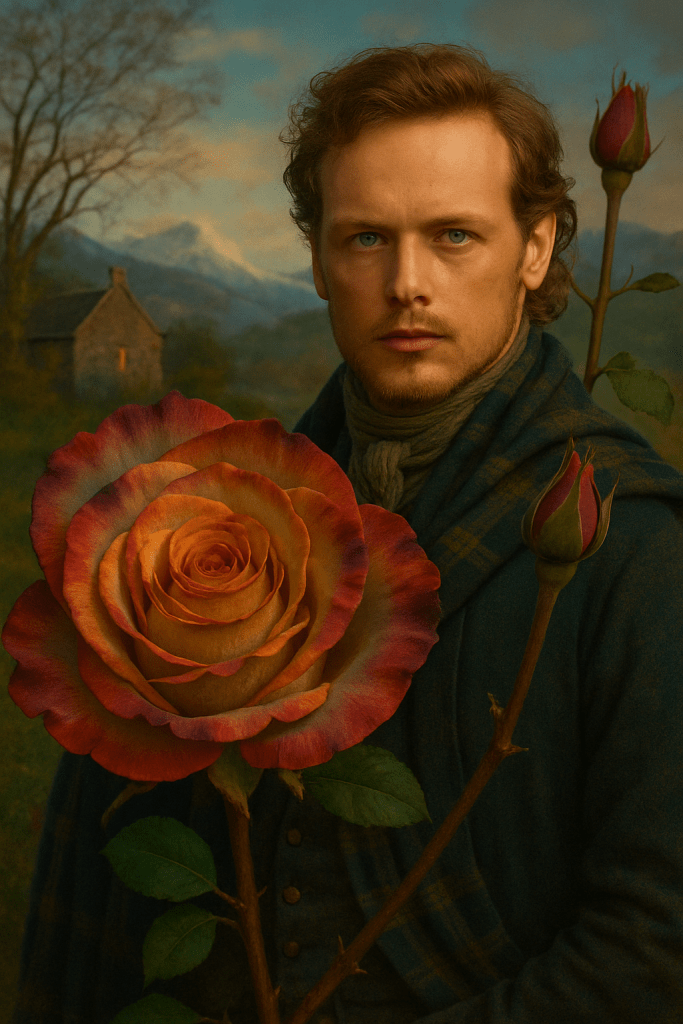
In three years, I hope to be living a life that feels fully mine—full of creativity, love, and growth. I imagine running my own photography business, freelancing and capturing the world through my lens. One dream is to visit Scotland and photograph its breathtaking landscapes—rolling hills, ancient castles, and misty lochs. I’d love to explore Dumfries and Galloway, the place that inspired Sam Heughan to become the actor he is today. It would be amazing to see the surroundings that shaped someone I admire so much.
I also imagine having an online travel magazine, which, alongside my photography business, would focus on causes I care about. I’d start with conservation projects—protecting Scotland’s wild cats and America’s wild mustangs—using my work to raise awareness and inspire others to care about the natural world.
I hope to meet a man who truly sees me—a partner who connects deeply and intimately. Someone who values honesty, closeness, and love, and who dreams of building a life together.
On a personal level, I hope to form habits that nourish my body and mind. I want to eat healthier, lose weight in a sustainable way, and eventually start a family. I imagine a life where health, happiness, creativity, and love coexist, and where each day brings a sense of purpose and connection.
In three years, I want to feel proud of the life I’ve created—a life that reflects who I am and who I’m becoming. And as I chase these dreams, knowing that someone like Sam Heughan has been inspired by the same places and culture I hope to explore makes it feel even more possible.
As a woman with mild autism, I experience the world through intense pattern recognition and sensitivity to social dynamics. Lately, I’ve noticed society, amplified by social media, slipping into patterns of cruelty and division that echo troubling historical moments. The way people treat each other feels like a step backward, and here’s why.
Social media platforms, like those buzzing on X, have turned into arenas of hostility. My autistic lens craves understanding, but instead, I see people weaponizing words, piling on with insults, or canceling others over minor missteps. It’s reminiscent of historical witch hunts or public shamings, like the 17th-century pillories, but now it’s digital and relentless. Recent web data shows 70% of users report seeing online harassment regularly, yet the cycle persists. Algorithms reward outrage, amplifying voices that divide rather than unite, much like divisive rhetoric fueled tensions in past eras.
Offline, the trend continues. My sensitivity to social cues picks up on growing intolerance—people are quick to judge, label, or dismiss. Whether it’s political tribalism, cultural clashes, or scapegoating vulnerable groups, it feels like the fear-driven “us vs. them” mentality of times like the Red Scares or pre-war xenophobia. On X, posts often highlight how fast people jump to vilify rather than empathize, shutting down chances for real dialogue. This isn’t progress; it’s a return to when division trumped compassion.
Even casual interactions feel colder. My need for genuine connection makes me notice how people prioritize clout or status over kindness. Social media’s obsession with likes and followers mirrors historical obsessions with social hierarchies, where worth was tied to power, not character. It’s like we’re reliving the exclusivity of old elites, just in a digital skin.
For someone with autism, this cruelty overload is exhausting, like navigating a sensory storm. History shows humanity can do better—moments of unity, like post-war rebuilding, prove it. Social media could foster empathy if we used it to listen, not attack. Let’s break this cycle before it pulls us further back.
As an autistic woman, love feels like a vivid, intricate tapestry—beautiful, overwhelming, and sometimes hard to unravel. For me, it’s not just an emotion; it’s a sensory experience, a rhythm that can either ground me or throw me off balance. Being autistic shapes how I give and receive love in ways that don’t always align with what people expect. My brain processes everything deeply—every touch, every word, every quiet moment—so love isn’t just a feeling, it’s a full-body immersion. Sometimes that intensity is a gift, letting me connect with someone in a way that feels almost cosmic. Other times, it’s a challenge, because the world’s unspoken rules about love can feel like a language I’m still learning to speak.
I’m extremely patient and easygoing, even when life throws lemons at me—and trust me, it’s tossed plenty. That patience isn’t something I had to force; it’s just part of who I am. Maybe it’s the autism, giving me this ability to sit with discomfort and not let it derail me, or maybe it’s the way I’ve learned to adapt to a world that doesn’t always make space for me. Though I’ve adapted to changes in my life, some of it was hard to swallow and hard to understand—especially when I was married for eight years and my spouse never once told me he loved me, even as I poured those words out to him. That silence was a lemon I couldn’t sweeten, no matter how patient I tried to be. I’d say “I love you,” hoping it would spark something, anything—a mirror to my own heart. But the absence of those words felt like a void, a rejection I couldn’t decode. As an autistic person, I crave clarity, and that lack of reciprocation left me spinning, questioning if love was even there.
Unlike some autistic folks, I don’t have sensory issues with touch—just when things get fast. I love the warmth of a hug, the weight of a hand in mine, the quiet intimacy of closeness. It’s soothing, grounding, a way to feel tethered to someone I care about. But when the pace picks up—when emotions or actions come rushing at me like a tidal wave—it’s too much. I enjoy being able to process things at my own pace, to let love unfold slowly, like a flower I can study petal by petal. That’s when touch feels safe and meaningful; I can savor it, let it sink in without my senses scrambling to keep up. In that marriage, the silence wasn’t just about words—it was the speed of disconnection, the way things moved too fast or not at all, leaving me no room to breathe or understand.
That’s why love languages mean so much to me. They’re like a map, a way to navigate the chaos and communicate what I need—and what I want to give—without getting lost in translation. Words of affirmation, especially, are a lifeline; hearing “I love you” or “I’m here” in clear, direct terms cuts through the noise in my head and anchors me. In those eight years, I didn’t get those words, and it left a hole—one I didn’t even know how to name until I learned how much they mattered. Acts of service or quality time, though, can speak just as loudly when they’re deliberate and steady, giving me the space to process them my way. I don’t need love to be flashy or rushed—I need it to match my rhythm, to let me catch my breath and feel it fully.
As a woman, there’s this added layer—society often expects me to be nurturing or intuitive in ways that don’t always come naturally. I might not pick up on subtle hints or flirt in the “typical” way, but my love is fierce and deliberate. I bring that same patience and ease to relationships, letting things grow at their own pace, not forcing what doesn’t fit—even when it’s taken years to understand why some things never did. I adapted to that marriage and kept loving through the silence because I could handle the slow burn of uncertainty. But I thrive when love meets me where I am when it’s steady enough for me to process and deep enough to feel real.
Love languages give me a structure to express that, to say “This is how I love you” without having to mask who I am. They let my partner see me—not just the autistic me or the woman me, but the whole, messy, authentic me who can laugh off life’s lemons while still feeling their sting, who can adapt to silence but blooms when given space to process at my own pace. And when someone speaks my love language back—whether it’s a quiet “I love you,” a gentle touch that lingers just right, or a moment of undivided time—it’s like they’re saying, “I see you, and I’m choosing to meet you where you are.” After eight years of missing that, I know now it’s not just a want—it’s a need. That’s everything.
How do significant life events or the passage of time influence your perspective on life?
Life’s major events and the slow march of time have deeply influenced my worldview. Each experience, whether it’s a personal milestone or a collective societal shift, has added layers to my understanding of life’s tapestry.
I’ve come to see the world through a lens of optimism, where the beauty in simplicity stands out against the backdrop of our often chaotic lives. Moments of quiet, like a walk at dusk or the sight of a rose in a town square, have become profound teachers, showing me the value of hope and introspection. These experiences make me advocate for conversations filled with grace and understanding, much like the delicate exchange between poets, rather than the harshness of confrontation.
As years have passed, I’ve learned the art of patience. The urgency to react or judge quickly has faded, replaced by a desire to understand the broader picture and the intricate details of human experiences. Time has taught me that growth and change are not immediate but are processes that require reflection, empathy, and sometimes, the courage to stand still amidst the rush.
This perspective also highlights the resilience of the human spirit. I see now that even in division or adversity, there’s an underlying strength in individuals and communities that can lead to unity and progress. It’s this belief in the potential for goodness and the power of time to heal and teach that guides my interactions and my outlook on life.
In essence, I’ve learned to navigate life with a blend of optimism, patience, and a deep appreciation for the journey itself, understanding that every moment, significant or fleeting, contributes to who we are and who we might become.
Today, I wanted to take a moment to reflect on a trait that I truly value in myself: being a great listener. In a world that often feels chaotic and overwhelming, there are so many people out there who just need someone to listen to them. Being that person who offers a compassionate ear can be incredibly powerful. When someone feels heard, it can lift a tremendous weight off their shoulders and provide a sense of relief and connection.
However, as I ponder on this, I realize that it’s not just one trait that defines us or makes us valuable. It’s the beautiful tapestry of multiple qualities that we possess. Kindness, compassion, generosity, and the ability to bring joy to others are all equally important. Each of these traits contributes to who we are and how we impact the world around us.
So, while I am proud of being a great listener, I also recognize the importance of celebrating all the other wonderful traits we hold dear. Let’s take a moment to appreciate and value the many facets of our personalities. After all, it’s the combination of these qualities that makes us unique and capable of making a positive difference in the lives of others.
To be imperfect means to embrace the unique qualities and flaws that make us human. It signifies understanding that perfection is an unattainable ideal and that our imperfections are what give us character and depth. Being imperfect means making mistakes, learning from them, and growing. It involves accepting ourselves as we are, with all our strengths and weaknesses, and recognizing that our imperfections can lead to personal growth, creativity, and deeper connections with others. Ultimately, to be imperfect is to be authentically human, celebrating the journey of life with all its ups and downs.
Embracing imperfection can significantly contribute to personal growth by fostering self-acceptance and resilience. When we acknowledge that it’s okay to make mistakes, we develop a healthier relationship with ourselves, characterized by self-love and compassion. This mindset allows us to view imperfections and errors as valuable learning opportunities, enhancing our skills and strategies over time. By letting go of the pursuit of perfection, we reduce stress and open ourselves up to creativity and innovation. Authenticity flourishes as we accept our true selves, leading to deeper, more genuine relationships. Additionally, recognizing our own flaws cultivates empathy and compassion towards others, fostering a supportive community. Ultimately, embracing imperfection empowers us to take risks, try new things, and live a more relaxed and fulfilling life.
Imagine a world where helping each other is second nature. In this world, we’d feel more connected, turning neighbors into friends and reducing loneliness. Communities would be safer and more nurturing.
Economically, sharing resources and opportunities would lift many out of poverty and reduce inequality. Small businesses would thrive, and education and healthcare would be more accessible.
Our environment would benefit too. Communities would unite to protect natural resources, leading to more sustainable practices like community gardens and renewable energy projects.
On a personal level, helping others brings fulfillment and purpose. Acts of kindness inspire more kindness, creating a compassionate and empathetic society. Our mental and emotional well-being would improve, as helping others reduces stress and increases happiness.
In this vision, we’d see stronger communities, economic prosperity, environmental sustainability, and better well-being. Let’s strive to make this a reality, one act of kindness at a time
What ways can you encourage others and their goals.
Encouraging others and supporting their goals is something I find incredibly rewarding. I try to show genuine interest by really listening to their ideas and offering positive feedback that highlights their strengths. I love being supportive, whether it’s through giving advice, sharing resources, or celebrating their milestones, no matter how small. I often share useful materials like books or contacts that might help them, and I try to set an example by pursuing my own goals with determination. I encourage a growth mindset by helping them see challenges as opportunities for growth, and I make an effort to be patient, offering encouragement even when progress seems slow. I help them stay focused on their goals, offer to be an accountability partner, and remind them to take care of themselves. I also try to introduce them to helpful contacts, share inspiring success stories, and always express my belief in their abilities. By doing these things, I hope to provide meaningful encouragement and support to others as they work towards their goals.
What change, big or small, would you like your blog to make in the world?
It’s just wishful thinking, but I hope my blog can reach people all around the world, including famous actors like Chris Pine and many others. I enjoy writing because I want to make a difference in someone’s life, whether they’re famous or not. My goal is for my blog to circulate globally and hopefully help someone, regardless of their status. One of the many things I’ve learned about Chris Pine is that he loves helping people and enjoys making a positive impact. If I could find a way to help others through my writing, graphic design, photography, or community involvement, that would be amazing. This includes my blog as a platform for making a difference.


 Deep Thinking