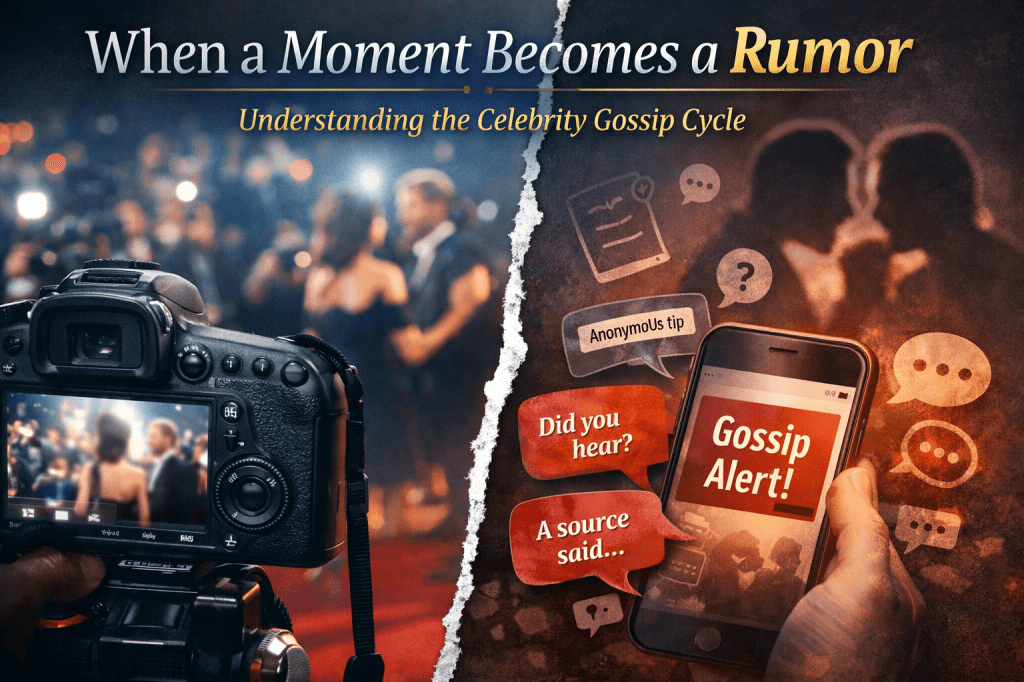
Why red carpet photos and anonymous tips often create stories that were never there.
In the modern digital age, celebrity culture moves at extraordinary speed. A photograph taken in a crowded room can be uploaded within minutes, shared across social platforms, discussed in comment sections, and eventually turned into a rumor that thousands of people repeat.
What began as a normal moment can quickly become a story that was never intended to exist.
This phenomenon is especially common during premieres, press events, or industry gatherings where actors are photographed constantly. Cameras capture hundreds of candid interactions throughout the evening. But when a single frame is removed from its context and shared online, the interpretation of that moment can change dramatically.
Understanding how this cycle works helps explain why so many celebrity rumors begin with something very ordinary.
The Reality of Red Carpet and Industry Events
To someone watching from the outside, red carpet premieres can look glamorous and controlled. In reality, they are fast-moving, crowded environments where many interactions happen simultaneously.
Actors attending premieres or press events are rarely alone. Throughout the evening they are typically surrounded by a wide range of people connected to the project or event. These may include:
- fellow cast members
- producers and directors
- studio executives
- publicists and managers
- brand representatives
- photographers and videographers
- friends and colleagues attending the event
These environments are busy, loud, and tightly scheduled. Publicists often guide actors through crowds while photographers call out directions. Conversations happen quickly and often very close together simply because it is difficult to hear over the noise of the room.
Because of this, small gestures are extremely common. Someone may touch another person’s back to guide them through a crowd. A colleague might lean in closely to speak. Friends greet each other with brief hugs or supportive gestures.
These are completely normal social behaviors in busy environments.
However, when one photograph captures only a fraction of that interaction, viewers may interpret it very differently from how the moment actually unfolded.
The Power of a Single Frame
Professional photography agencies such as Getty Images document public events extensively. Photographers often take hundreds or even thousands of photos in rapid succession.
These images capture brief moments such as:
- greetings between colleagues
- conversations during crowded events
- quick hand gestures while speaking
- a publicist guiding someone through a group
- photographers directing a pose for the camera
Each photograph represents only a split second of time.
When viewers see a single isolated image without the surrounding sequence of photos, it becomes easy to assume a narrative. Human psychology naturally tries to fill in missing context, especially when people already have curiosity about a public figure.
A gesture that lasted two seconds can suddenly be interpreted as something far more significant.
The Rise of Anonymous Gossip Submissions
In recent years, social media has accelerated how quickly speculation spreads. Accounts dedicated to celebrity gossip frequently rely on anonymous submissions sent by followers who claim to have witnessed something involving a public figure.
One widely known example is DeuxMoi, which publishes anonymous tips about celebrity sightings and rumors.
These types of submissions usually follow a similar format:
- “A friend saw…”
- “Someone at the event said…”
- “Spotted with a mystery person…”
It is important to recognize that most of these tips are:
- anonymous
- unverified
- based on personal interpretation rather than confirmed information
Even the platforms that publish these submissions often include disclaimers explaining that the information has not been verified.
Despite this, once a rumor appears online it can spread rapidly. Other accounts repeat the story, screenshots circulate, and discussions grow around an event that may have been misinterpreted from the start.
Why Rumors Often Appear During Major Events
Rumors rarely appear at random. They tend to increase during periods when actors or public figures are receiving significant attention.
This often occurs during:
- television season premieres
- film festivals
- press tours
- award ceremonies
- major product launches or business announcements
During these periods, media coverage increases and photographers capture more images. Fans are also paying closer attention to public appearances.
More attention naturally leads to more speculation.
A moment that might have gone unnoticed during a quiet time can suddenly become a topic of conversation simply because more people are watching.
Understanding the Difference Between Rumor and Journalism
Not all sources of information operate under the same standards.
Professional journalism follows editorial processes designed to verify information before publication. Established outlets such as Variety, The Hollywood Reporter, Reuters, BBC, and Associated Press rely on confirmation, sources, and editorial review before presenting claims as fact.
By contrast, rumor-based content often comes from places that prioritize speed and speculation over verification.
Examples of sources that frequently spread unverified rumors include:
- anonymous gossip submission accounts
- blind-item rumor blogs
- unsourced screenshots circulating on social media
- speculation threads without confirmation
These platforms may occasionally report something accurate, but they are not structured around verification in the same way professional journalism is.
For readers, recognizing the difference between these types of sources is essential.
Why Context Matters
One of the biggest challenges in modern media culture is the loss of context.
A photograph taken during a crowded event shows only a single perspective. It does not show the moments before or after. It does not capture the full conversation, the surrounding people, or the environment of the event.
Without that context, audiences may interpret what they see in ways that were never intended.
In many cases, rumors begin not because anyone deliberately created a false story, but because viewers simply misunderstood what they were seeing.
A More Thoughtful Approach to Celebrity Culture
Fans and readers play an important role in shaping the tone of online discussions about public figures.
When speculation begins circulating online, it can be helpful to pause and ask a few questions:
- Where did this information originate?
- Is the claim supported by a reliable source?
- Could the moment simply be a normal interaction taken out of context?
Approaching celebrity culture with curiosity rather than assumption helps prevent rumors from spreading unnecessarily.
Respecting the Human Side of Public Figures
Actors, artists, and creators share their work with audiences, but their personal lives remain their own unless they choose to share them publicly.
A respectful fandom recognizes the difference between appreciating someone’s work and speculating about private aspects of their life.
Celebrating performances, storytelling, and creative achievements keeps conversations focused on the things that artists themselves choose to share with the world.
Sometimes the most thoughtful response to a rumor is simply to step back, look at the larger picture, and remember that behind every photograph is a real person living a real life beyond the frame.
Sources and References
- Getty Images – editorial photography from entertainment events
- Variety – entertainment journalism and reporting
- The Hollywood Reporter – industry news coverage
- Reuters – global entertainment reporting
- BBC – arts and entertainment journalism
- Associated Press – verified news reporting
Note: Anonymous gossip submissions and rumor-based accounts often publish unverified information and should not be treated as confirmed reporting
When a Moment Becomes a Rumor: Understanding the Celebrity Gossip Cycle
Why red carpet photos and anonymous tips often create stories that were never there.
In the modern digital age, celebrity culture moves at extraordinary speed. A photograph taken in a crowded room can be uploaded within minutes, shared across social platforms, discussed in comment sections, and eventually turned into a rumor that thousands of people repeat.
What began as a normal moment can quickly become a story that was never intended to exist.
This phenomenon is especially common during premieres, press events, or industry gatherings where actors are photographed constantly. Cameras capture hundreds of candid interactions throughout the evening. But when a single frame is removed from its context and shared online, the interpretation of that moment can change dramatically.
Understanding how this cycle works helps explain why so many celebrity rumors begin with something very ordinary.
The Reality of Red Carpet and Industry Events
To someone watching from the outside, red carpet premieres can look glamorous and controlled. In reality, they are fast-moving, crowded environments where many interactions happen simultaneously.
Actors attending premieres or press events are rarely alone. Throughout the evening they are typically surrounded by a wide range of people connected to the project or event. These may include:
- fellow cast members
- producers and directors
- studio executives
- publicists and managers
- brand representatives
- photographers and videographers
- friends and colleagues attending the event
These environments are busy, loud, and tightly scheduled. Publicists often guide actors through crowds while photographers call out directions. Conversations happen quickly and often very close together simply because it is difficult to hear over the noise of the room.
Because of this, small gestures are extremely common. Someone may touch another person’s back to guide them through a crowd. A colleague might lean in closely to speak. Friends greet each other with brief hugs or supportive gestures.
These are completely normal social behaviors in busy environments.
However, when one photograph captures only a fraction of that interaction, viewers may interpret it very differently from how the moment actually unfolded.
The Power of a Single Frame
Professional photography agencies such as Getty Images document public events extensively. Photographers often take hundreds or even thousands of photos in rapid succession.
These images capture brief moments such as:
- greetings between colleagues
- conversations during crowded events
- quick hand gestures while speaking
- a publicist guiding someone through a group
- photographers directing a pose for the camera
Each photograph represents only a split second of time.
When viewers see a single isolated image without the surrounding sequence of photos, it becomes easy to assume a narrative. Human psychology naturally tries to fill in missing context, especially when people already have curiosity about a public figure.
A gesture that lasted two seconds can suddenly be interpreted as something far more significant.
The Rise of Anonymous Gossip Submissions
In recent years, social media has accelerated how quickly speculation spreads. Accounts dedicated to celebrity gossip frequently rely on anonymous submissions sent by followers who claim to have witnessed something involving a public figure.
One widely known example is DeuxMoi, which publishes anonymous tips about celebrity sightings and rumors.
These types of submissions usually follow a similar format:
- “A friend saw…”
- “Someone at the event said…”
- “Spotted with a mystery person…”
It is important to recognize that most of these tips are:
- anonymous
- unverified
- based on personal interpretation rather than confirmed information
Even the platforms that publish these submissions often include disclaimers explaining that the information has not been verified.
Despite this, once a rumor appears online it can spread rapidly. Other accounts repeat the story, screenshots circulate, and discussions grow around an event that may have been misinterpreted from the start.
Why Rumors Often Appear During Major Events
Rumors rarely appear at random. They tend to increase during periods when actors or public figures are receiving significant attention.
This often occurs during:
- television season premieres
- film festivals
- press tours
- award ceremonies
- major product launches or business announcements
During these periods, media coverage increases and photographers capture more images. Fans are also paying closer attention to public appearances.
More attention naturally leads to more speculation.
A moment that might have gone unnoticed during a quiet time can suddenly become a topic of conversation simply because more people are watching.
Understanding the Difference Between Rumor and Journalism
Not all sources of information operate under the same standards.
Professional journalism follows editorial processes designed to verify information before publication. Established outlets such as Variety, The Hollywood Reporter, Reuters, BBC, and Associated Press rely on confirmation, sources, and editorial review before presenting claims as fact.
By contrast, rumor-based content often comes from places that prioritize speed and speculation over verification.
Examples of sources that frequently spread unverified rumors include:
- anonymous gossip submission accounts
- blind-item rumor blogs
- unsourced screenshots circulating on social media
- speculation threads without confirmation
These platforms may occasionally report something accurate, but they are not structured around verification in the same way professional journalism is.
For readers, recognizing the difference between these types of sources is essential.
Why Context Matters
One of the biggest challenges in modern media culture is the loss of context.
A photograph taken during a crowded event shows only a single perspective. It does not show the moments before or after. It does not capture the full conversation, the surrounding people, or the environment of the event.
Without that context, audiences may interpret what they see in ways that were never intended.
In many cases, rumors begin not because anyone deliberately created a false story, but because viewers simply misunderstood what they were seeing.
A More Thoughtful Approach to Celebrity Culture
Fans and readers play an important role in shaping the tone of online discussions about public figures.
When speculation begins circulating online, it can be helpful to pause and ask a few questions:
- Where did this information originate?
- Is the claim supported by a reliable source?
- Could the moment simply be a normal interaction taken out of context?
Approaching celebrity culture with curiosity rather than assumption helps prevent rumors from spreading unnecessarily.
Respecting the Human Side of Public Figures
Actors, artists, and creators share their work with audiences, but their personal lives remain their own unless they choose to share them publicly.
A respectful fandom recognizes the difference between appreciating someone’s work and speculating about private aspects of their life.
Celebrating performances, storytelling, and creative achievements keeps conversations focused on the things that artists themselves choose to share with the world.
Sometimes the most thoughtful response to a rumor is simply to step back, look at the larger picture, and remember that behind every photograph is a real person living a real life beyond the frame.
Sources and References
- Getty Images – editorial photography from entertainment events
- Variety – entertainment journalism and reporting
- The Hollywood Reporter – industry news coverage
- Reuters – global entertainment reporting
- BBC – arts and entertainment journalism
- Associated Press – verified news reporting
Note: Anonymous gossip submissions and rumor-based accounts often publish unverified information and should not be treated as confirmed reporting.

 Deep Thinking