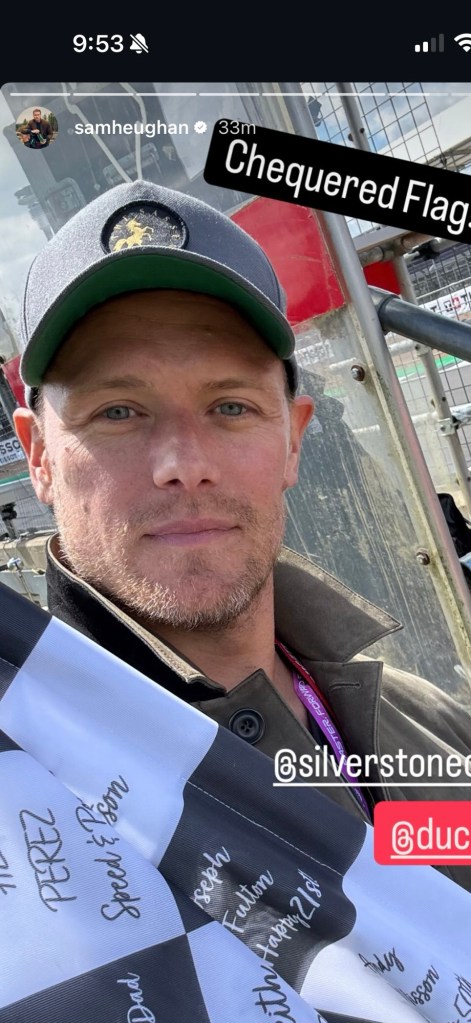
Sam Heughan’s striking appearance may catch the eye, but it’s his inner beauty—his heart, mind, and soul—that truly defines his radiance. While physical attractiveness can spark initial interest, it’s a fleeting and superficial measure of a person’s worth. True beauty lies in the depth of someone’s character: the kindness they show, the wisdom they share, and the compassion they extend to others.
When we focus only on appearances, we risk missing the essence of who someone is—their passions, values, and the unique light they bring to the world. A beautiful face may fade with time, but a beautiful soul grows richer, touching lives in meaningful ways. By valuing the heart, mind, and soul over external looks, we cultivate deeper connections and a more authentic understanding of others. Let’s look beyond the surface and celebrate the qualities that make each person truly extraordinary.
As a woman with mild autism, I’ve spent a lot of time thinking about why some people call a “wife guy” soft, like it’s a bad thing. To me, that label feels like a misunderstanding of what strength really is. When I was married, my husband wasn’t a “wife guy.” He didn’t make me feel seen or valued—there was no warmth in his actions, no effort to show I mattered. I felt underappreciated, alone, like I was carrying the weight of our relationship by myself. It left me disconnected, sometimes even worthless, as if I wasn’t deserving of the kind of love I saw in stories like Jamie and Claire’s in Outlander. Their bond, so fierce and unshakable, felt like a dream I could never touch.
The world can be a lot for me, with its unwritten rules and social noise. That’s why I crave clarity and honesty in relationships. A “wife guy” who openly loves his wife—whether he’s sharing sweet moments on X or just talking about her with pride—feels like a safe harbor. He’s not hiding his heart or playing tough to impress anyone. That’s not soft in a weak way; it’s soft like the calm of a forest after a chaotic day, something I can trust. When people criticize that as weakness, it feels like they’re stuck in old ideas about men needing to be cold or distant. I don’t get that. My ex’s detachment didn’t make him strong—it made me feel invisible.
Maybe it’s because I see things differently, but a man who’s secure enough to celebrate his wife, even if others judge him, seems brave to me. He’s choosing love over ego, connection over pretense. After feeling so unseen in my marriage, I long for a love like Jamie’s for Claire—one that’s fierce, loyal, and unafraid to show it. That kind of “soft” is what makes me feel worthy, like I’m enough. It’s the kind of strength that makes a relationship feel like home, something I’ve always wanted but never had.
When I hear Sam’s Scottish accent, a tender spark of joy blooms in my chest. As a mildly autistic woman, I’m drawn to sounds that resonate, and Sam’s voice—those rolling “r”s, the soft, lilting cadence—feels made for me. It’s as if my brain sways to his words in a quiet, blissful dance. His accent is sensory magic. It’s a melody my soul craves, a soothing pattern that calms and uplifts. When Sam speaks, in interviews or clips, it’s a warm, familiar embrace—never overwhelming, always just right. The emotions in his voice tug my heart. There’s a sincere warmth, a tender strength that feels like a safe harbor. I cherish every detail—the stretched vowels, the gentle rise and fall of his tone—each a gift my brain holds close. It’s tied to how my mind works. I love patterns, and Sam’s accent, so distinctly Scottish, is thrilling to unravel. It’s a world of highlands and heart I sink into, a quiet passion that makes me feel alive. Sam’s voice is a treasure, weaving through my autistic soul. It’s not just words—it’s how they make me feel known, like home. His accent is a tender, joyful gift I’ll always adore.
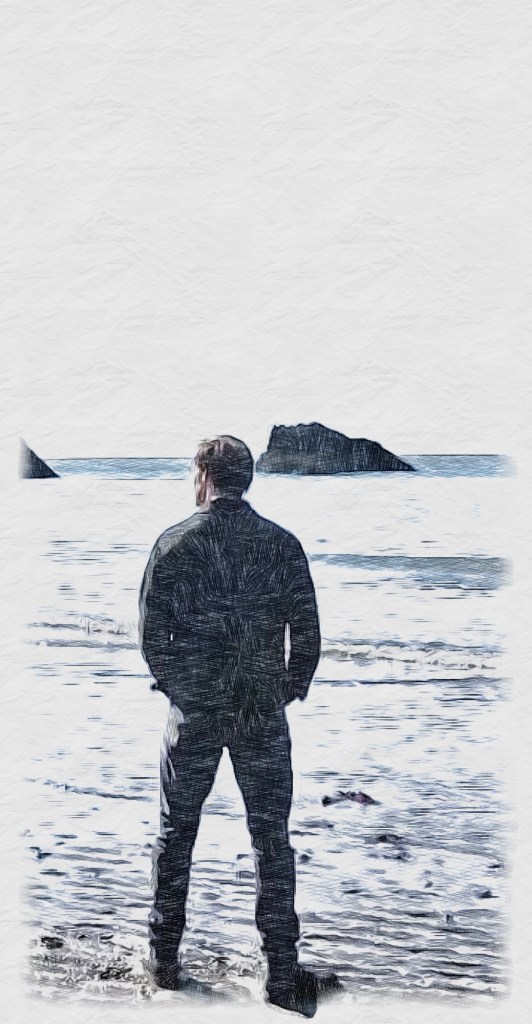
As a high-functioning autistic woman, I find myself captivated by the quiet poetry of this moment—Sam Heughan standing on this windswept beach, his silhouette a testament to the kind of man I believe every soul should aspire to be. In him, I see a depth that resonates with my own way of experiencing the world—a man whose heart beats with the rhythm of the ocean before him, vast, steady, and achingly tender. I often process emotions through patterns and intensities others might not notice, and in Sam, I sense a kindred spirit who feels as deeply as I do. His presence here, gazing at the horizon with a reverence that mirrors the way I find solace in the predictable ebb and flow of the waves, speaks to a love for the world that is both fierce and gentle—a love I’ve always longed to find in another. To me, he embodies the kind of romantic hero I’ve dreamed of since I was a girl: a man whose strength lies not in loud gestures, but in the quiet loyalty and honesty he offers, values I hold dear because they create the safe, authentic connections I crave. I’ve always believed, as I’ve shared before, that small, genuine interactions can bloom into something profound, like a seed germinating when the time is right, and Sam seems to live this truth in every step he takes. He stands as a beacon of what it means to be truly honorable—a gentleman whose warmth could steady my often-overwhelming world, and whose respect for the beauty of a woman’s love, care, and truth over superficiality aligns with the way I yearn for relationships that are real and unmasked. In him, I see a man who could understand the way I love with every fiber of my being, and I hold him in the highest respect for being a living reminder that such hearts exist, even in a world that sometimes feels too chaotic for a soul like mine to navigate.
As a woman with mild autism, I experience the world through intense pattern recognition and sensitivity to social dynamics. Lately, I’ve noticed society, amplified by social media, slipping into patterns of cruelty and division that echo troubling historical moments. The way people treat each other feels like a step backward, and here’s why.
Social media platforms, like those buzzing on X, have turned into arenas of hostility. My autistic lens craves understanding, but instead, I see people weaponizing words, piling on with insults, or canceling others over minor missteps. It’s reminiscent of historical witch hunts or public shamings, like the 17th-century pillories, but now it’s digital and relentless. Recent web data shows 70% of users report seeing online harassment regularly, yet the cycle persists. Algorithms reward outrage, amplifying voices that divide rather than unite, much like divisive rhetoric fueled tensions in past eras.
Offline, the trend continues. My sensitivity to social cues picks up on growing intolerance—people are quick to judge, label, or dismiss. Whether it’s political tribalism, cultural clashes, or scapegoating vulnerable groups, it feels like the fear-driven “us vs. them” mentality of times like the Red Scares or pre-war xenophobia. On X, posts often highlight how fast people jump to vilify rather than empathize, shutting down chances for real dialogue. This isn’t progress; it’s a return to when division trumped compassion.
Even casual interactions feel colder. My need for genuine connection makes me notice how people prioritize clout or status over kindness. Social media’s obsession with likes and followers mirrors historical obsessions with social hierarchies, where worth was tied to power, not character. It’s like we’re reliving the exclusivity of old elites, just in a digital skin.
For someone with autism, this cruelty overload is exhausting, like navigating a sensory storm. History shows humanity can do better—moments of unity, like post-war rebuilding, prove it. Social media could foster empathy if we used it to listen, not attack. Let’s break this cycle before it pulls us further back.
As a high-functioning autistic woman, I uniquely experience the world. The chaos surrounding us often feels overwhelming, yet I see beyond it to a world filled with purpose—a place where I can cultivate kindness, joy, gentleness, peace, and compassion. To me, each person is a universe of details, all vital and beautiful, deserving of recognition and care.
In an era where information rushes by, political divides grow, and social media creates echo chambers, the essence of kindness, compassion, and authenticity has never been more essential. I resonate deeply with Chris Pine’s advocacy for using intellect alongside compassion to bring peace to our society. Love and respect are crucial, and I believe we should encourage them in every interaction. Though I may not agree with Chris Pine’s view on limiting social media totally, I agree with him that people need to be reminded to be mindful of what they put out there and that even words can still affect others. When it comes to beautiful souls like him, I believe he and others shouldn’t miss out on bringing balance to the best of both worlds because the digital world and the real world should benefit from each other, not hurt each other.
The Essence of Kindness
Kindness, for me, is more than just actions; it’s a state of being. It involves recognizing and embracing the diversity of human experience with patience and empathy. It’s about truly listening to understand, not just to reply, and acknowledging the emotions of others. Simple acts like holding a door or offering a smile can have profound effects, and forgiving others helps mend not only personal but communal rifts.
Compassion When We’re Divided
Compassion extends beyond kindness; it’s about actively alleviating the suffering I see. In a world where divisions are stark, I strive to bridge these gaps with empathy. Understanding why people hold their views or face their challenges is how I open up dialogues. Supporting those in need, whether through advocacy or presence, is how I practice compassion. Educating myself about others’ lives informs my responses, pushing aside prejudice for genuine understanding.
Authenticity: Staying True to Myself
In an age where digital personas can be perfected, authenticity is my refuge. Living authentically means embracing my own and others’ imperfections, and resisting the pressure to conform. I challenge untruthful narratives, even when it’s difficult, because staying true to myself aligns my actions with my values, not just societal or media expectations.
Battling the Propaganda Wave
Propaganda is one of the greatest threats to the values I hold dear. Whether it’s through biased news or sensational social media content, it fosters division and misinformation. Critical thinking is my defense, questioning the origins, motives, and validity of what I encounter. Promoting media literacy and seeking out diverse perspectives are ways to fight back against manipulation.
Uniting for a Better Tomorrow
The call is for unity. I advocate for conversations that lead to understanding, not further division. We should focus on what unites us, not what separates us. Building community through shared experiences or movements reflects our collective yearning for harmony and equity.
Creating a Non-Toxic Society and Digital Environment
We need to detoxify our society, including the digital spaces we inhabit. Social media, while connecting us, can also breed skepticism and doubt. We must find a healthy balance because technology isn’t going away. It should be a tool for joy, career development, and meaningful engagement, not a source of negativity. By fostering trust and positivity, we can transform technology into a force for good.
In conclusion, while the world might seem chaotic, the principles of kindness, compassion, and authenticity guide my journey through this complexity. By embodying these values, I aim to not just navigate but enrich the world, moving from isolation to connection, from doubt to belief, and from falsehood to truth. Together, we can forge a brighter future.
“I’m in my early 40s now, and I often find myself dreaming about settling down with someone who’s just as down-to-earth as I am. I’ve always been pretty patient, even with all the curveballs life has thrown my way. But these past few years? They’ve been a real test. I was with a guy for three years before we tied the knot, and we stayed married for eight. We moved to Ohio, but somewhere along the line, we just lost our connection, and I found myself in a marriage where love was missing. Before all that, I lost my dad in a horrible car accident, which broke my heart in ways I can’t even describe. And then, I had to part with one of my dogs because no one listened when I said he needed a fenced yard. He got into a scuffle with a neighbor’s dog, though thankfully, the neighbor was kind about it, understanding it was an accident.
After my marriage ended, I had to start over quicker than I’d planned. With a job in retail and the economy being what it is, I knew I’d have a hard time. I tried to explain this to my ex-mother-in-law, but she went ahead and bought a house for me to rent from her without asking if it was what I wanted. I was grateful for her help, but it also left me feeling pretty alone and misunderstood.
Before all that, I fell for a scam that took away money I’d worked hard for, landing me in debt. My uncle was there for me, helping me file for bankruptcy under
. I still kick myself for being so naive, but I guess I was just desperate for some support. There’s this deep longing inside me to find someone who loves me for who I am, who wants to build a life and maybe a family with me. I’ve had people tell me I should lose weight, and there’s even been worry that any kids I might have could inherit autism.
I’m not perfect, far from it, and I’ve made plenty of mistakes. But through it all, I’ve learned how vital it is to be genuine, honest, and open. When you meet someone, there should be this deep connection, an understanding, and a bond that goes beyond words.
I’m not usually one to spill my guts like this, but I think it’s important for people to know we’re all human, we all screw up. Sharing our stories, whether face-to-face or online, helps us connect, and reminds us we’re not each other’s enemies.
My hope now is that when I move to California to be near my family, I’ll meet that one guy who captures not just my heart but my soul and mind too. I want someone who’ll sweep me off my feet like the wind, someone I can protect as much as he protects me. I crave the simplicity of life with him, the quiet moments untouched by the world’s chaos. I yearn for those deep, meaningful conversations that I feel I can’t live without. I might be old-fashioned at heart, even if I’m pretty good with tech. I just hope that man out there isn’t too scared to find me, even when I’m not looking.”
As an autistic woman, love feels like a vivid, intricate tapestry—beautiful, overwhelming, and sometimes hard to unravel. For me, it’s not just an emotion; it’s a sensory experience, a rhythm that can either ground me or throw me off balance. Being autistic shapes how I give and receive love in ways that don’t always align with what people expect. My brain processes everything deeply—every touch, every word, every quiet moment—so love isn’t just a feeling, it’s a full-body immersion. Sometimes that intensity is a gift, letting me connect with someone in a way that feels almost cosmic. Other times, it’s a challenge, because the world’s unspoken rules about love can feel like a language I’m still learning to speak.
I’m extremely patient and easygoing, even when life throws lemons at me—and trust me, it’s tossed plenty. That patience isn’t something I had to force; it’s just part of who I am. Maybe it’s the autism, giving me this ability to sit with discomfort and not let it derail me, or maybe it’s the way I’ve learned to adapt to a world that doesn’t always make space for me. Though I’ve adapted to changes in my life, some of it was hard to swallow and hard to understand—especially when I was married for eight years and my spouse never once told me he loved me, even as I poured those words out to him. That silence was a lemon I couldn’t sweeten, no matter how patient I tried to be. I’d say “I love you,” hoping it would spark something, anything—a mirror to my own heart. But the absence of those words felt like a void, a rejection I couldn’t decode. As an autistic person, I crave clarity, and that lack of reciprocation left me spinning, questioning if love was even there.
Unlike some autistic folks, I don’t have sensory issues with touch—just when things get fast. I love the warmth of a hug, the weight of a hand in mine, the quiet intimacy of closeness. It’s soothing, grounding, a way to feel tethered to someone I care about. But when the pace picks up—when emotions or actions come rushing at me like a tidal wave—it’s too much. I enjoy being able to process things at my own pace, to let love unfold slowly, like a flower I can study petal by petal. That’s when touch feels safe and meaningful; I can savor it, let it sink in without my senses scrambling to keep up. In that marriage, the silence wasn’t just about words—it was the speed of disconnection, the way things moved too fast or not at all, leaving me no room to breathe or understand.
That’s why love languages mean so much to me. They’re like a map, a way to navigate the chaos and communicate what I need—and what I want to give—without getting lost in translation. Words of affirmation, especially, are a lifeline; hearing “I love you” or “I’m here” in clear, direct terms cuts through the noise in my head and anchors me. In those eight years, I didn’t get those words, and it left a hole—one I didn’t even know how to name until I learned how much they mattered. Acts of service or quality time, though, can speak just as loudly when they’re deliberate and steady, giving me the space to process them my way. I don’t need love to be flashy or rushed—I need it to match my rhythm, to let me catch my breath and feel it fully.
As a woman, there’s this added layer—society often expects me to be nurturing or intuitive in ways that don’t always come naturally. I might not pick up on subtle hints or flirt in the “typical” way, but my love is fierce and deliberate. I bring that same patience and ease to relationships, letting things grow at their own pace, not forcing what doesn’t fit—even when it’s taken years to understand why some things never did. I adapted to that marriage and kept loving through the silence because I could handle the slow burn of uncertainty. But I thrive when love meets me where I am when it’s steady enough for me to process and deep enough to feel real.
Love languages give me a structure to express that, to say “This is how I love you” without having to mask who I am. They let my partner see me—not just the autistic me or the woman me, but the whole, messy, authentic me who can laugh off life’s lemons while still feeling their sting, who can adapt to silence but blooms when given space to process at my own pace. And when someone speaks my love language back—whether it’s a quiet “I love you,” a gentle touch that lingers just right, or a moment of undivided time—it’s like they’re saying, “I see you, and I’m choosing to meet you where you are.” After eight years of missing that, I know now it’s not just a want—it’s a need. That’s everything.
How do significant life events or the passage of time influence your perspective on life?
Life’s major events and the slow march of time have deeply influenced my worldview. Each experience, whether it’s a personal milestone or a collective societal shift, has added layers to my understanding of life’s tapestry.
I’ve come to see the world through a lens of optimism, where the beauty in simplicity stands out against the backdrop of our often chaotic lives. Moments of quiet, like a walk at dusk or the sight of a rose in a town square, have become profound teachers, showing me the value of hope and introspection. These experiences make me advocate for conversations filled with grace and understanding, much like the delicate exchange between poets, rather than the harshness of confrontation.
As years have passed, I’ve learned the art of patience. The urgency to react or judge quickly has faded, replaced by a desire to understand the broader picture and the intricate details of human experiences. Time has taught me that growth and change are not immediate but are processes that require reflection, empathy, and sometimes, the courage to stand still amidst the rush.
This perspective also highlights the resilience of the human spirit. I see now that even in division or adversity, there’s an underlying strength in individuals and communities that can lead to unity and progress. It’s this belief in the potential for goodness and the power of time to heal and teach that guides my interactions and my outlook on life.
In essence, I’ve learned to navigate life with a blend of optimism, patience, and a deep appreciation for the journey itself, understanding that every moment, significant or fleeting, contributes to who we are and who we might become.
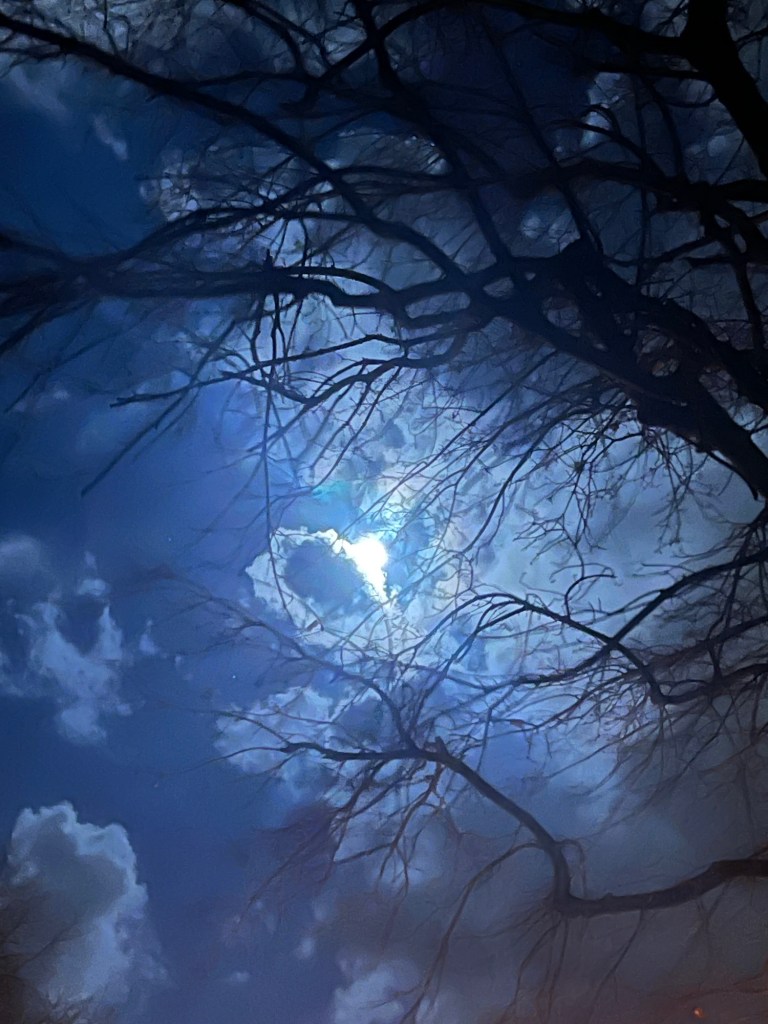
In the heart of a quiet forest, under the watchful gaze of a luminous moon, the night unfolded its mysterious tale. The bare branches of ancient trees reached skyward, their silhouettes stark against the deep blue canvas of the night. Wisps of clouds drifted lazily, occasionally veiling the moon’s glow, casting fleeting shadows that danced across the forest floor.
This was a night where secrets whispered through the leaves, and the air was thick with the promise of magic. The moon, a solitary guardian, illuminated a path known only to those who dared to wander beneath its silver light. It was said that on nights like this, the forest came alive with stories of old, tales of forgotten realms and hidden wonders.
As the wind sighed through the branches, it carried with it the echoes of ancient songs, inviting the brave and the curious to listen closely. For in the stillness of the night, beneath the tangled web of branches, the forest held its breath, waiting for the next chapter of its timeless story to unfold.


 Deep Thinking