There’s something I’ve been sitting with for a while now… something that feels important to say, not just as a fan, but as a human being trying to understand another human being more deeply.
I keep seeing people talk about how Sam Heughan seems “different” in interviews after Outlander wrapped. Quieter. More reserved. Not quite the same energy people remember.
And I think the question people are asking is:
What changed?
But the question I keep coming back to is:
What if nothing is wrong at all?
What if what we’re seeing… is what it actually looks like when someone steps out of years of intensity and finally has space to just be?
Because from my perspective—as someone who is autistic and has spent years working in retail, constantly navigating a fast-paced, overwhelming environment—I understand what it means to live in a state of being “on” almost all the time.
And I don’t think people fully realize what that does to a person over time.
When you’re “on,” you’re not just doing tasks.
You’re managing your tone, your facial expressions, your reactions.
You’re filtering yourself in real time.
You’re reading people, adjusting to them, keeping things smooth—even when internally, you might feel overstimulated, exhausted, or completely drained.
For me, that’s what masking looks like.
It’s smiling when I’m overwhelmed.
It’s staying calm when everything around me feels chaotic.
It’s pushing through noise, pressure, expectations—because that’s what’s required to function in that space.
And after doing that day after day… year after year…
You don’t just clock out and instantly feel like yourself again.
There’s a delay.
There’s a kind of emotional and mental echo that lingers.
And sometimes, when you finally step out of that constant state of performance… you don’t feel like the version of yourself people are used to seeing.
You feel quieter.
More inward.
More careful.
Not because you’ve lost who you are—
But because you’re finally in a space where you don’t have to project it all the time.
And that’s where I think the misunderstanding happens.
People are used to seeing a version of someone that exists within a role, within a system, within a certain expectation. In his case, that role carried years of emotional storytelling—love, loss, trauma, strength—all expressed outwardly, over and over again.
That takes something out of you.
Not in a negative way, but in a very real, human way.
So when that role ends, or even shifts, there’s a natural period of recalibration.
A return.
But returning to yourself isn’t always loud or obvious.
Sometimes it looks like pauses.
Like quieter answers.
Like someone choosing not to give as much of themselves away all at once.
And from the outside, that can be mistaken as distance.
But from the inside?
It can feel like relief.
I’ve had moments like that in my own life—especially after long stretches of working in environments where I had to constantly adapt just to be understood.
Moments where I didn’t feel like the “version” of me people expected.
And I’ve realized something important through that:
That version wasn’t the only version of me.
It was just the one people were most familiar with.
So when I see him now, I don’t see someone who’s “not himself.”
I see someone who may be shedding layers that were necessary for a time… but not meant to be carried forever.
I see someone protecting their energy.
I see someone allowing space for a more natural rhythm.
And I think… if more people understood what it feels like to live in that constant state of giving, adapting, and performing—whether it’s on a set or on a retail floor—they might pause before labeling that shift as something negative.
Because not every change is a loss.
Sometimes it’s a return.
Sometimes it’s healing.
And sometimes… it’s the first real breath someone has taken in a long time.
So before we say someone seems different… or not like themselves…
Try standing in his shoes for a moment.
Not as a fan.
Not as someone watching from the outside.
But as someone who knows what it feels like to carry expectations, to adapt constantly, and to slowly find your way back to yourself when the weight lifts.
Because from that place…
You might not see someone who’s changed in a way that should be questioned.
You might see someone who’s finally allowing themselves to exist without having to perform it.
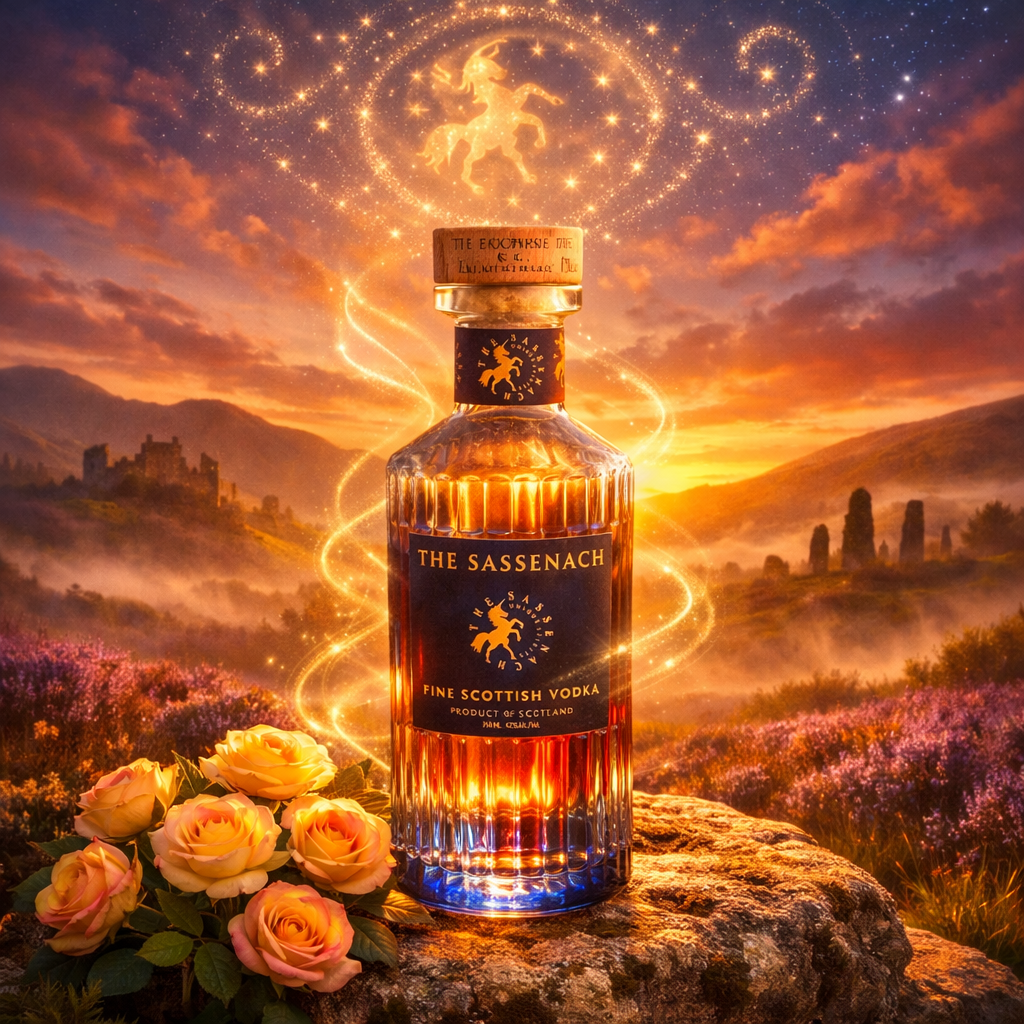
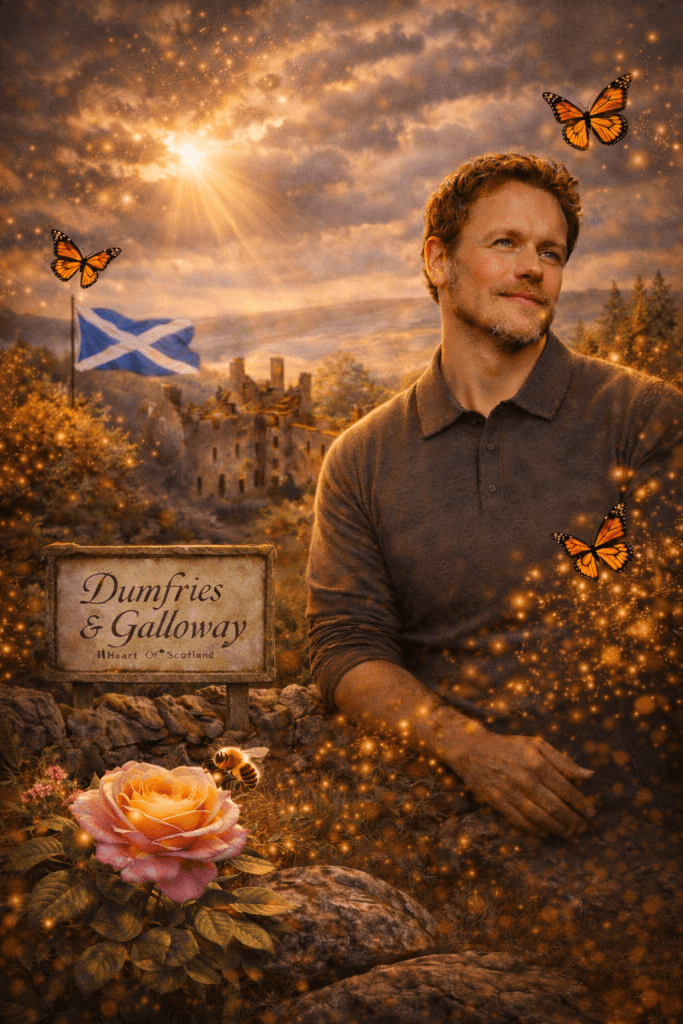
There’s something truly meaningful unfolding in Dumfries and Galloway through the development of the Galloway Distillery—a project rooted in home, purpose, and long-term vision. Created by Sam Heughan as a return to his roots, the distillery is becoming more than a place that produces spirits—it’s evolving into a full experience designed to bring people into this often overlooked region of southern Scotland. Sassenach Spirits continues to grow through this space, with whisky, gin, and vodka all being developed on-site, alongside plans for expanded visitor areas, gatherings, and a destination that invites people to stay, explore, and connect with the land itself. And I have to ask you—when was the last time you chose a place not because it was trending, but because it felt like it had a story waiting for you to step into it?
What’s happening right now is already bringing that vision to life. The distillery is actively welcoming visitors with guided tours, tastings, and immersive experiences that allow people to step into the craft and understand the process firsthand, with ongoing bookings and events continuing into 2026. But it doesn’t stop there—because once you’re there, what would you explore next? Would you wander through the quiet strength of old castles, stand where history still lingers in the stones, or take in the landscape that feels untouched in a way that’s hard to find anymore? This is what Dumfries and Galloway offers—not just a visit, but a feeling you carry with you. And I would genuinely encourage you to make plans to go, to experience the distillery, and to explore everything surrounding it—because this part of southern Scotland isn’t just a place on a map… it’s a story that’s ready to be lived, if you’re willing to step into it.
There’s been a growing conversation lately around the idea that Jamie Fraser’s emotional depth has somehow been diminished in the show, while Claire has been elevated in a way that overshadows him. I’ve taken time to really think about that perspective, not just react to it, and the more I sit with it, the more I realize that what people are responding to isn’t always the story itself—it’s how they’re interpreting what they’re seeing. From my point of view, Jamie’s emotional presence has never been removed. It’s simply being expressed in a way that requires a different kind of attention.
Jamie has never been a character who exists through constant verbal expression. His emotional strength has always been rooted in restraint, in the way he carries himself, and in the quiet intensity of his actions. That kind of depth doesn’t always translate in obvious ways on screen, especially in a visual format where time is limited and storytelling has to be more condensed. What may feel like something missing to some viewers can actually be a shift in how that emotion is being communicated. Instead of long internal reflections like in the books, the show often relies on subtle cues—facial expressions, pauses, and physical presence—to convey what he’s feeling. That doesn’t erase his emotional depth; it asks the audience to engage with it differently.
It’s also important to remember that this is an adaptation, not a direct replication of the books. Television comes with structural limitations that don’t allow every moment, thought, or layer from the source material to be included. Scenes are shortened, combined, or sometimes removed entirely in order to maintain pacing and fit within episode constraints. That doesn’t mean the essence of the character is lost—it means the storytelling has been translated into a different medium. Emotional beats that were once spelled out in detail may now exist in a more condensed or visual form, which can easily be overlooked if someone is expecting the same delivery as the books.
When it comes to Claire, I don’t see her presence as something that takes away from Jamie. The story has always been largely told through her perspective, so naturally her voice can feel more prominent at times. That isn’t a new shift—it’s part of the foundation of the narrative. Claire’s strength, independence, and emotional expression don’t diminish Jamie; they create balance. Their relationship has always been built on that dynamic—two strong individuals meeting each other fully, rather than one existing in the shadow of the other. Allowing Claire to take up space doesn’t reduce Jamie’s importance; it reinforces the partnership that defines their connection.
I also think there’s a distinction that often gets overlooked between the story itself and how audiences talk about it. Some of the frustration people are expressing seems to come more from how certain viewers interpret or prioritize the characters, rather than what the show is actually presenting. And even that experience isn’t universal. The tone of the conversation changes depending on where you’re engaging with it. On platforms like Instagram and Threads, I tend to see more balanced and thoughtful discussions that appreciate both Jamie and Claire for what they bring to the story. On X, however, the conversation can lean more negative, and that can create the impression that a particular viewpoint is more dominant than it actually is. In reality, it’s often just the loudest voices shaping the perception.
At some point, I think it’s important to acknowledge that no adaptation—or any form of storytelling coming out of Hollywood—is ever going to satisfy every expectation. These are creative decisions being made by people who are working within real constraints while trying to bring a story to life in a meaningful way. It’s not always going to look exactly how each individual viewer imagined it, and it’s not designed to. Part of appreciating storytelling, especially something as layered as this, is allowing space for interpretation without assuming that a difference in delivery means something has been taken away.
For me, Jamie Fraser was never diminished. His emotional depth is still present, still intentional, and still one of the most compelling parts of the story. The difference is not in his character—it’s in how closely we’re willing to look.
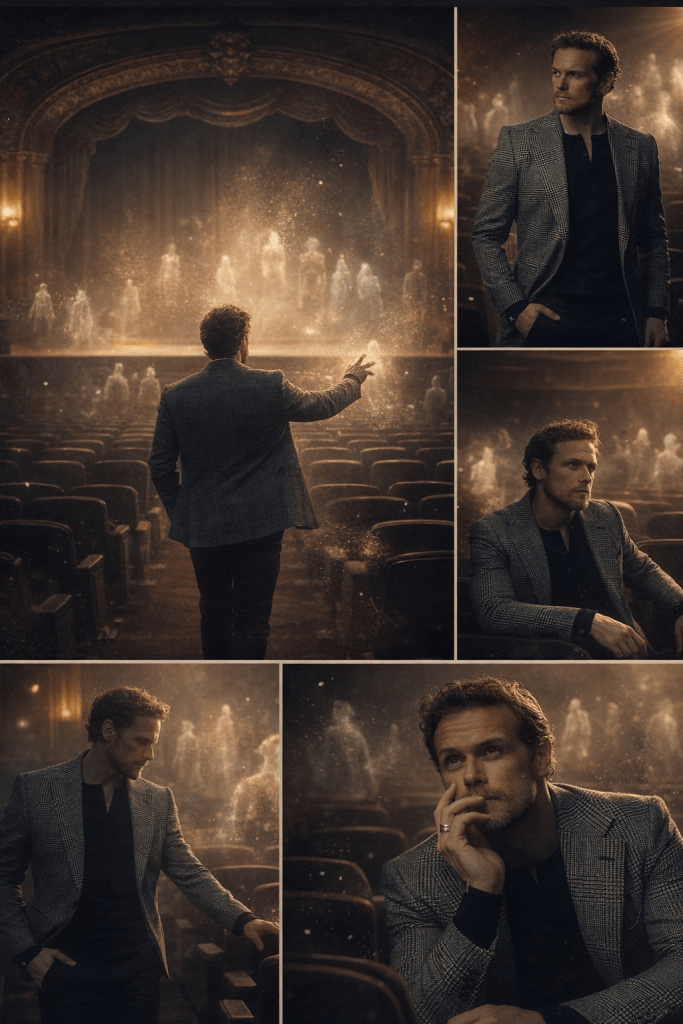
There’s something that happens for me when I sit with an image long enough—something quiet, something that doesn’t rush or demand attention. It’s not just about looking at what’s in front of me; it’s about allowing myself to feel it fully, without distraction. Over time, without forcing it, something begins to take form in my mind that I’ve come to understand as a person’s shape. Not the outline of their body or the surface of how they appear, but something much deeper—the way they exist through time. It’s the way they carry themselves, the way they return to their work, the way they continue forward even when life asks more of them than most people see. It builds slowly, layer by layer, until it becomes something I can feel clearly, even if I can’t always explain it perfectly. And when I look at Sam Heughan, that shape feels steady. It feels grounded, consistent, and earned over time in a way that doesn’t need to be loud to be understood—and that kind of presence, to me, is something that deserves to be recognized every day, not just in passing moments.
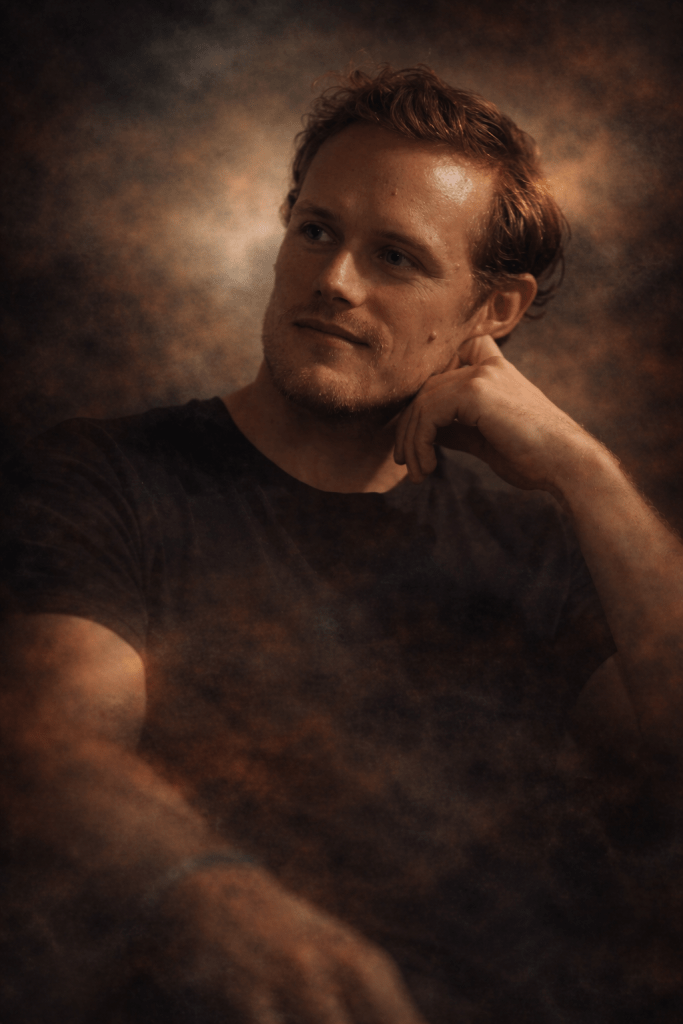
When I look at his photos, I don’t just see a single captured moment frozen in time. I feel everything that surrounds it—the years that led to that expression, the discipline it takes to remain consistent in an industry that is constantly shifting, and the quiet strength it requires to stay rooted in who you are while being seen by so many people. There’s something about that kind of presence that doesn’t need to announce itself. It reveals itself in small, almost unspoken ways—in the eyes that carry experience, in the posture that reflects both confidence and responsibility, and in the stillness that doesn’t feel empty, but rather full of something lived and understood. These are the details my mind naturally holds onto, not because I am searching for them, but because I feel them without trying. And it’s those quiet, consistent details that make me feel like appreciation shouldn’t be occasional—it should be something steady, just like the effort behind them.
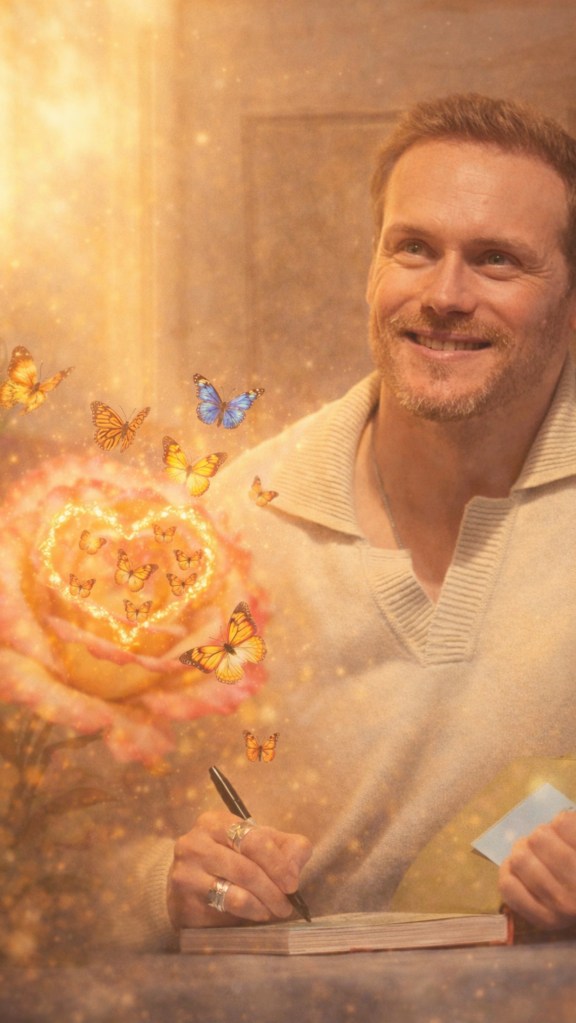
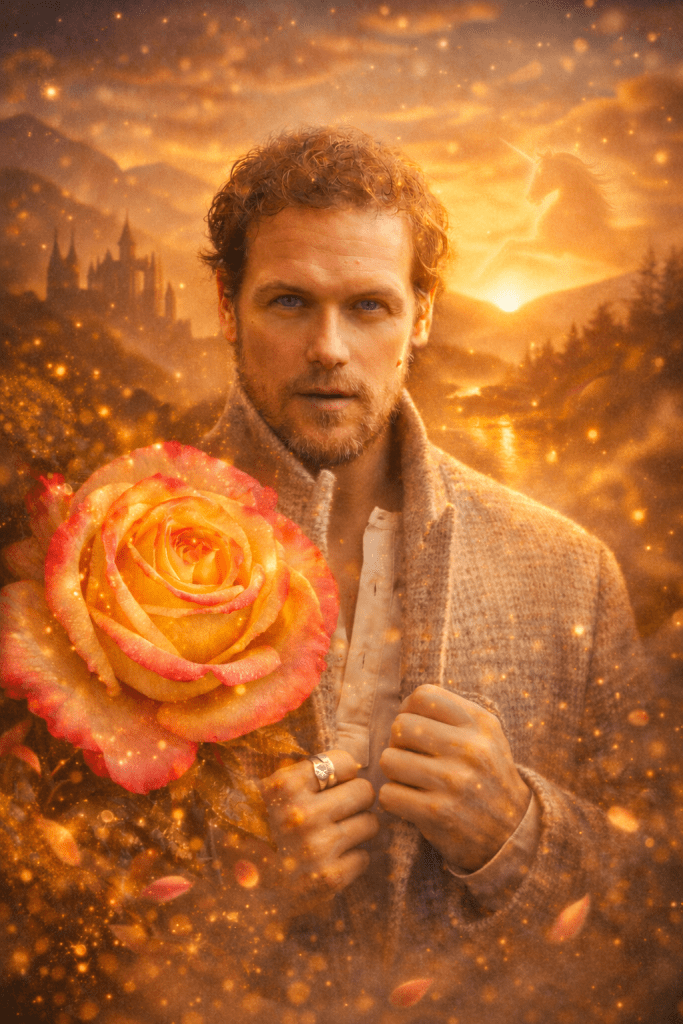
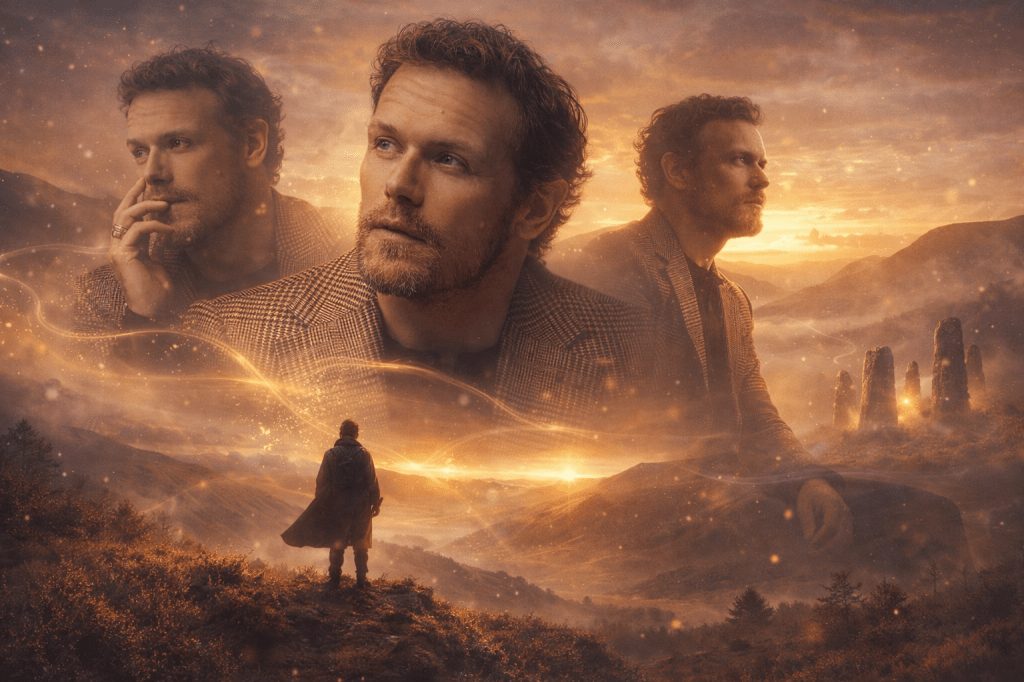
I’ve never approached an image with the thought of whether it should be left as it is or changed into something else. When I see something, I feel it almost immediately, and that feeling doesn’t stay still inside of me. It moves, it expands, and it becomes something that asks to be expressed. It’s not because the original image is lacking anything—in fact, it’s because it already holds so much that I can’t experience it as just a single moment. To me, it becomes layered, almost alive, something that continues beyond what was captured. Creating from it is not about altering it, but about meeting it where it already exists for me internally. And in that process, it becomes another way for me to acknowledge and celebrate what I see—not just once, but in a way that continues.
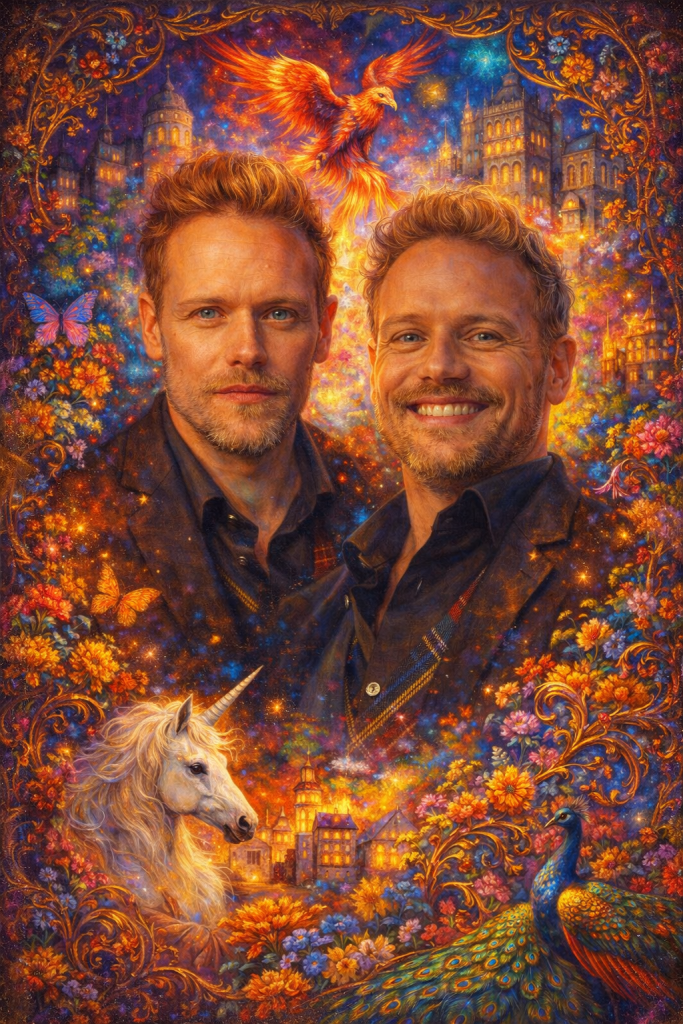
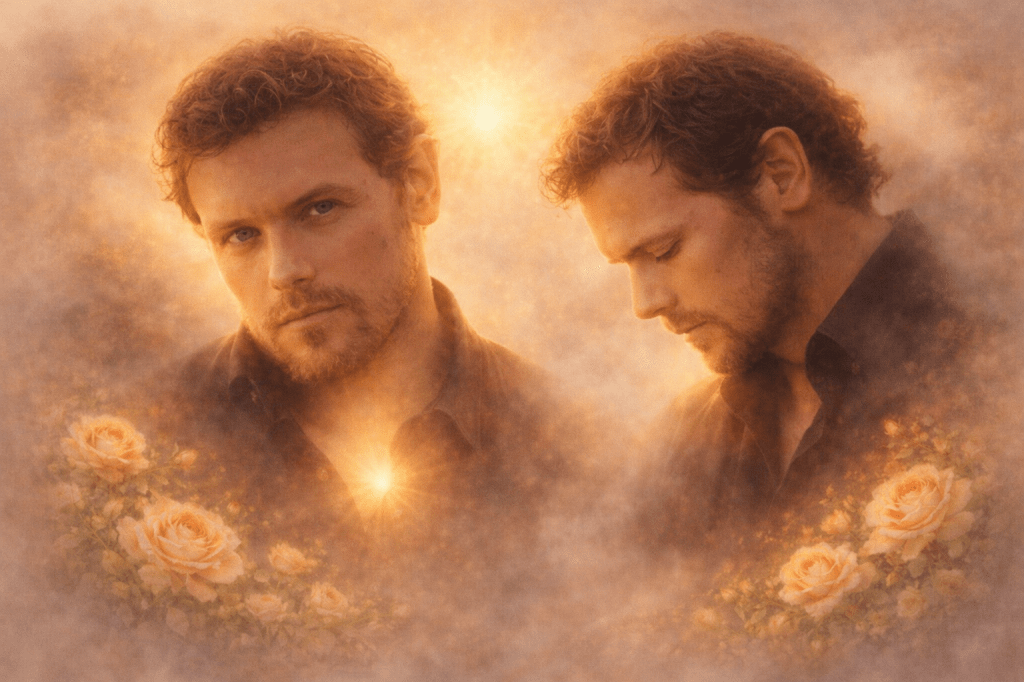
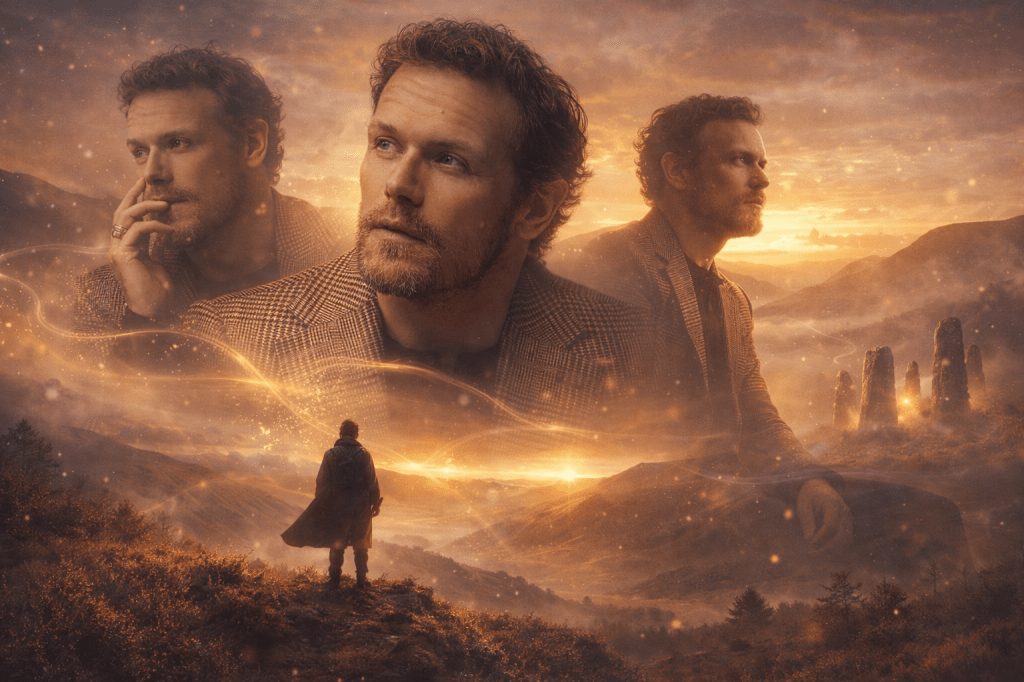
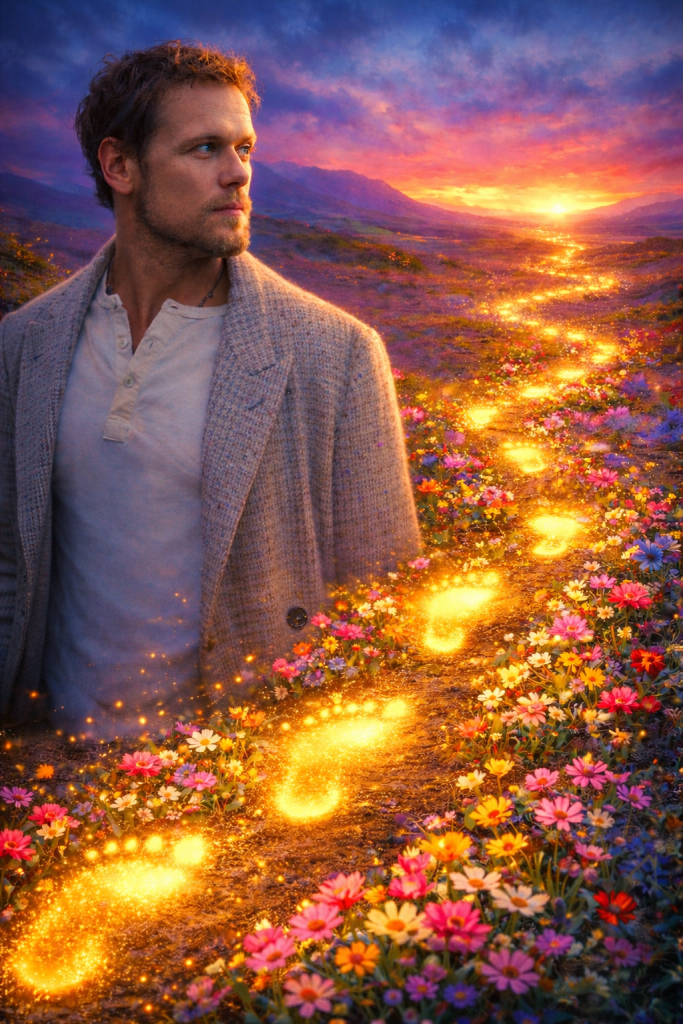
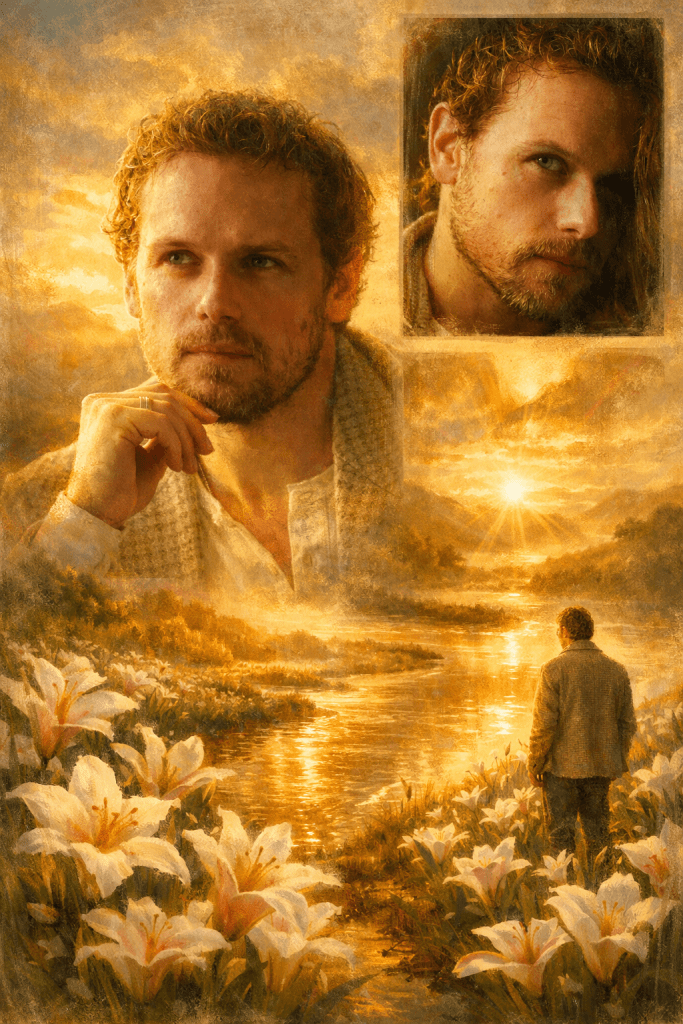
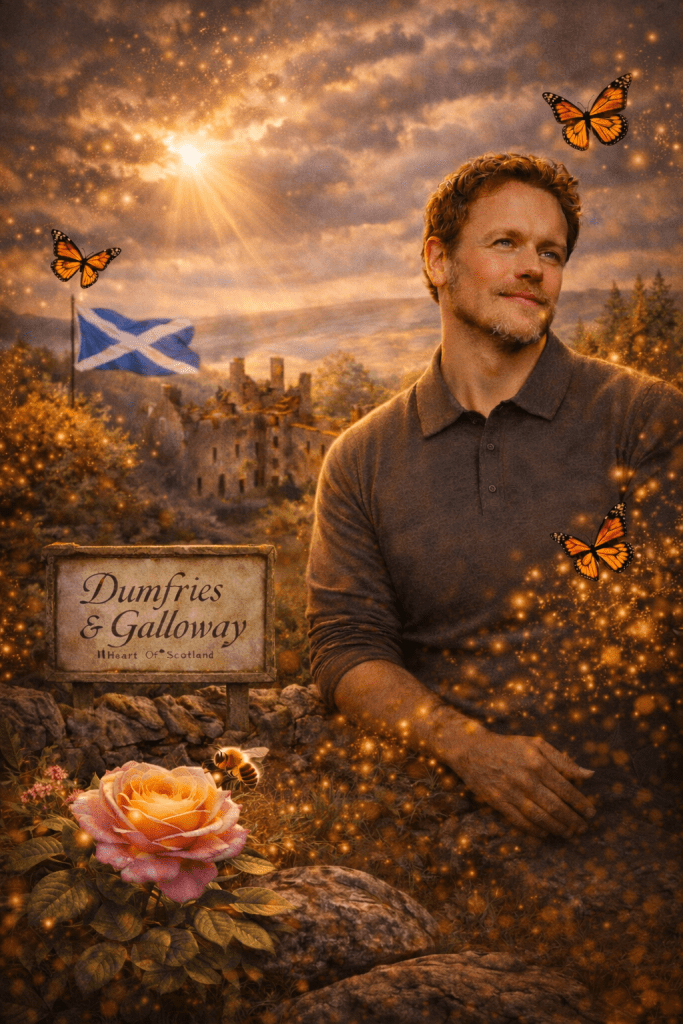
When I begin to create from one of his images, it doesn’t come from a structured plan or a need to produce something specific. It begins with a feeling that I can’t ignore. Sometimes that feeling is softness, something warm and steady that feels like it deserves to be protected and held gently. Other times it’s strength, not the kind that is loud or forceful, but the kind that is carried quietly over time without needing recognition. There are moments when it feels deeper than that—like a sense of responsibility, or the weight of continuing forward even when things aren’t easy. Without even realizing it, I start asking myself what that feeling would look like if it could be seen. That’s when the layers begin to form. Light might wrap around him because the presence feels warm and constant. Roses might appear because growth, resilience, and care feel like part of that emotional understanding. Scottish textures or landscapes might weave into the image because where someone comes from is part of their foundation, part of their identity, part of their shape. Nothing I create is random. Every detail comes from something I felt first. Because I’m not trying to recreate him—I’m responding to him, and in doing that, I’m continuing to celebrate what I see in a way that feels natural to me.
The way I experience all of this is deeply connected to how my mind works. Being autistic means I don’t move through the world in quick impressions or surface-level understanding. I notice patterns, I notice consistency, and I notice the way someone shows up over time—not just once, but again and again. That’s where a person’s shape becomes clear to me. It isn’t built from assumptions or imagination, but from repetition, from observation, from quietly witnessing how someone continues to carry themselves through their life and their work. And once that shape forms in my mind, it becomes something I hold onto in a very real and meaningful way. It also becomes something I naturally feel should be acknowledged more than it often is—because consistency like that isn’t ordinary.
I’ve also come to understand that there is a difference between truly appreciating someone and unintentionally taking from them. It can be easy, especially in a world that moves quickly, to cross that line—to assume, to create narratives, or to turn someone into something they never asked to be. That’s never what I want. For me, celebrating someone means staying grounded in what is real—what they have shown through their work, their actions, and their consistency. It means respecting what isn’t shared and understanding that who they are is not something I get to define. My art isn’t about shaping him into something new; it’s about reflecting what I see in a way that honors what already exists. It’s about appreciation that stays respectful, steady, and genuine.
There is something about consistency that stands out to me more than anything else. People can have moments where they shine, but it is something entirely different to continue showing up over time. To keep building, to keep creating, to keep evolving without losing the core of who you are requires a level of discipline and intention that isn’t always visible to others. And that is why, to me, someone like him isn’t just worth celebrating in big moments or milestones—he’s worth celebrating every day. Not in a way that overwhelms or crosses boundaries, but in a quiet, ongoing acknowledgment of what he continues to give through his work and presence. Because when someone chooses, over and over again, to show up with purpose, that kind of consistency becomes something meaningful enough to recognize daily.
So when I create—when I add light, texture, softness, and symbolism—I’m not trying to change him or add something that wasn’t already there. I’m responding to something I felt, something I noticed, something that took time to form in the way I see. This is my way of honoring that. My way of slowing a moment down and allowing it to expand into something more. My way of saying, quietly but clearly, that I see the shape of who he is through what he does—and that kind of presence, to me, is something worth recognizing, appreciating, and celebrating every single day.
And sometimes, the quietest way of seeing someone… is the most meaningful way of celebrating them.
Sometimes people ask a simple question that quietly opens a door inside you:
“What activities do you lose yourself in?”
For some people the answer might be sports, travel, or reading a good book. For me, it’s something a little different.
I lose myself in visual storytelling.
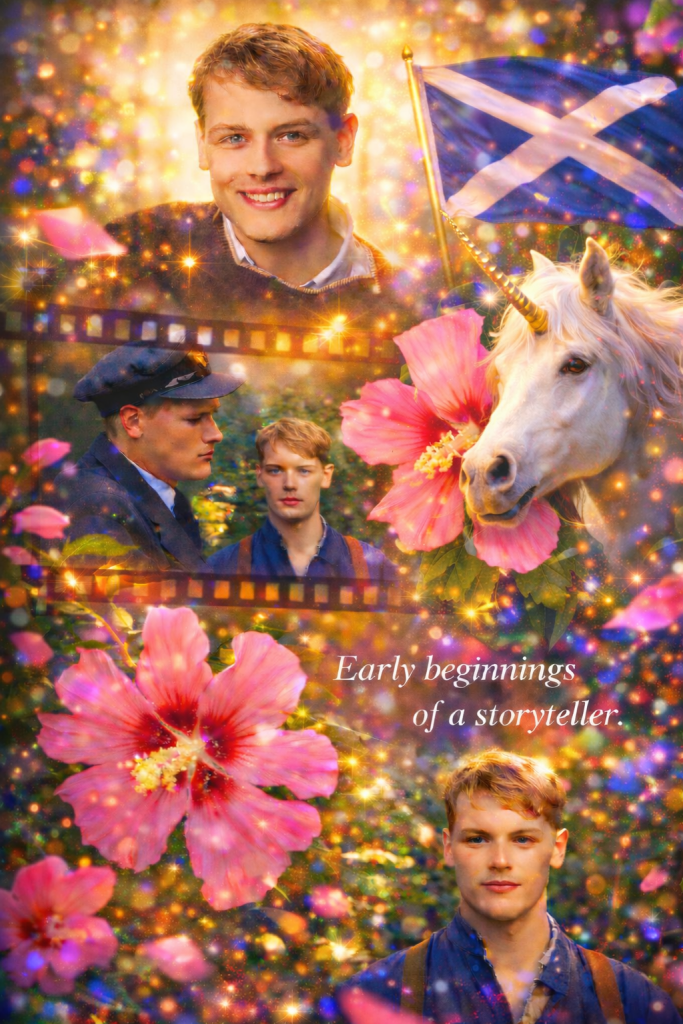
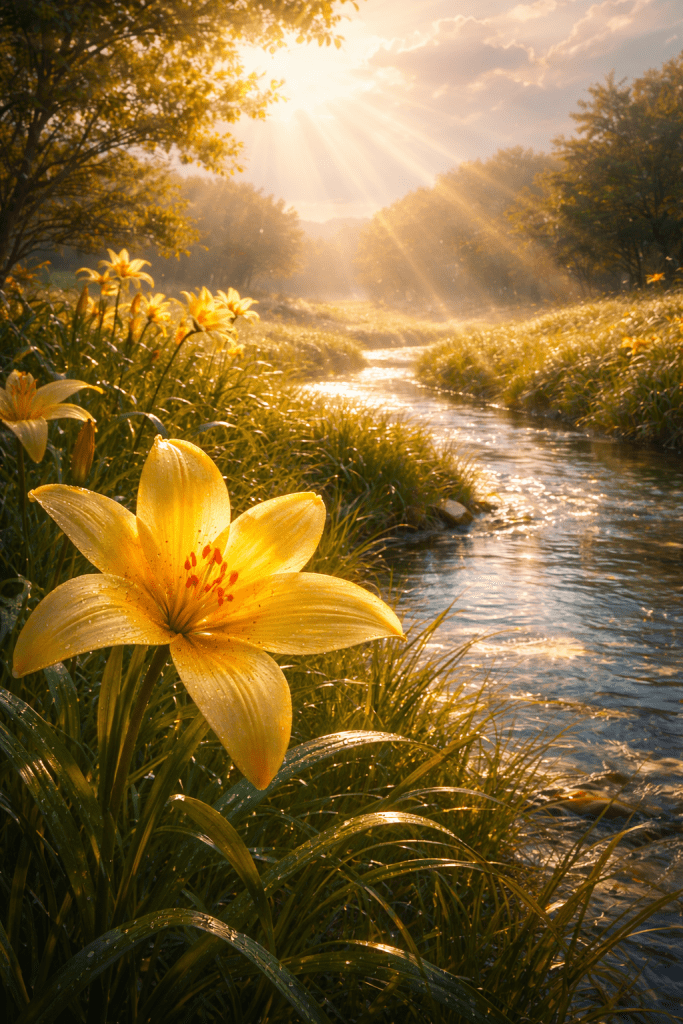
It often begins with something very small—sunlight touching a flower, a quiet path in nature, a rose glowing with color, or the gentle movement of water in a river. Most people might walk past those moments without thinking twice. But for me, those tiny details feel like the beginning of a story waiting to be told.
I take a photograph, something simple and ordinary, and begin to imagine what it could become. With a little creativity, patience, and a lot of heart, the image slowly transforms into something more dreamlike. Soft light appears, colors deepen, landscapes begin to feel peaceful and hopeful, and suddenly the photo holds a story.
It’s not about changing reality.
It’s about revealing the feeling inside it.
When I’m working on an image like that, hours can pass and I don’t even notice. My mind becomes quiet. The noise of the day fades away. The world slows down, and suddenly I’m just creating—layer by layer, light by light, emotion by emotion.
In those moments, I’m not thinking about expectations or worries.
I’m simply being the person I’ve always felt meant to be: a storyteller who speaks through images.
Nature plays a big role in that. I love gardens, flowers, sunlight filtering through trees, and rivers that reflect the sky like mirrors. There’s something deeply grounding about those things. They remind me that beauty doesn’t need to shout to be powerful. Sometimes it just quietly exists, waiting for someone to notice.
That’s what inspires me most.
Not perfection, but authenticity.
And if there’s one place that has captured my imagination and creativity in a powerful way, it’s southern Scotland, especially Dumfries and Galloway. There’s something about that landscape that feels deeply poetic to me—the rolling countryside, the quiet rivers, the ancient castles, and the sense that history and stories are woven into the land itself.
Even from across the ocean, I feel drawn to it.
Dumfries and Galloway seems like a place where the world slows down just enough for people to truly see it. The light over the hills, the stillness of the countryside, and the feeling that every path might hold a story from centuries ago make it feel almost timeless.
It’s the kind of place that sparks the imagination of a storyteller.
One of the reasons that connection grew stronger for me is because of the way Sam Heughan speaks about where he comes from. You can hear the pride and affection he has for southern Scotland whenever he talks about it. That love for his homeland makes you want to see it, understand it, and appreciate it in the same way.
In many ways, he has been a constant creative muse in my own journey as a storyteller.
Not just because of a role he plays on screen, but because of the way he approaches life—his love for Scotland, his dedication to storytelling, his creativity, and the way he encourages people to explore the world and challenge themselves.
That kind of spirit is inspiring.
It reminds me that creativity can come from many places: from landscapes, from stories, from history, and from people who are passionate about what they do.
My art often reflects that inspiration. When I create images, I sometimes imagine the soft golden light over the hills of southern Scotland, rivers reflecting the sky, and the quiet strength of castles that have stood for centuries. Those visions naturally find their way into the dreamy, painterly style I love to create.
And deep down, there is also a quiet hope.
A hope that someday I will finally stand in Dumfries and Galloway myself, seeing those landscapes with my own eyes instead of just through imagination and photographs. To walk through that countryside, feel the air, see the rivers, and understand why that place means so much to the people who call it home.
Until then, creativity is the bridge that takes me there.
Because when I lose myself in storytelling—through images, nature, and imagination—it feels like part of my heart is already wandering those beautiful hills of southern Scotland.
And maybe that’s the true power of storytelling.
It allows people, places, and ideas to connect across oceans long before we ever meet them in person. ✨
When most people dream about visiting Scotland, they picture the Highlands — towering mountains, dramatic glens, and misty castles stretching across the north.
And yes, the Highlands are breathtaking.
But Scotland is more than the places everyone talks about.
There is another part of the country that deserves just as much attention — a quieter, deeply beautiful region that often gets overlooked by travelers.
Dumfries and Galloway.
Recently, Sam spoke about how southern Scotland sometimes gets ignored when people talk about visiting the country. Many travelers rush north to see the famous Highland scenery, but in doing so they miss something equally powerful — the peaceful landscapes and rich history of the south.
Hearing that made me reflect on something personal: how my love for Scotland first began.
For me, that story actually goes back to when I was about thirteen years old. My sister and I used to attend Celtic festivals every year in Arizona here in the United States. Those festivals were filled with music, traditions, and cultural celebrations from Scotland and other Celtic regions. I remember hearing the sound of bagpipes echoing through the air, seeing people wearing kilts, and watching the dancing and storytelling that brought the culture to life.
Even though I was thousands of miles away from Scotland, something about those experiences stayed with me.
There was a spirit in that music and culture that felt timeless.
Looking back now, I realize those festivals planted the first seed of curiosity and admiration for Scotland — its landscapes, its history, and the pride people carry for their homeland.
Years later, storytelling brought that curiosity back in an even deeper way. When I discovered Outlander, I was drawn in by the characters and the story, but what truly captured my imagination was the world behind it — the landscapes, the history, and the sense that Scotland itself felt like a living character within the story.
As someone who loves visual storytelling and creative art, Scotland began to feel like a place where imagination and reality meet. The rivers, castles, forests, and open landscapes feel like living stories waiting to be experienced.
That’s why regions like Dumfries and Galloway feel so meaningful to me.
This part of southern Scotland carries a quieter kind of beauty — rolling green countryside, coastal cliffs, peaceful forests, and castles that seem to rise naturally from the land itself.
Places like Caerlaverock Castle especially capture my imagination. When I see images of it, I don’t just see a historic landmark. I see a place filled with centuries of stories, standing quietly within the southern landscape.
And maybe that quietness is part of its charm.
Because Dumfries and Galloway hasn’t been overrun by tourism the way some places have. It still holds a sense of authenticity — a Scotland that feels grounded, peaceful, and deeply connected to its history.
Scotland will always be known for the Highlands, and they deserve admiration.
But Scotland’s story is bigger than just the north.
Sometimes the most meaningful places are the ones waiting patiently to be discovered.
For me, Dumfries and Galloway represents more than just a travel destination. It represents a place I hope to experience someday — not just as a visitor, but as someone who first fell in love with the spirit of Scotland many years ago through music, culture, and storytelling.
And maybe someday, somewhere along life’s journey, I will fall in love with someone who feels about their homeland the way Sam has spoken about his hometown and the south of Scotland — with pride, warmth, and deep respect for where they come from. Someone who understands what it means to carry a love for a place in their heart.
In many ways, that’s how I feel about Scotland as well. Even from across the ocean, it has inspired my imagination and creativity in ways I never expected.
Because of that, I highly encourage travelers, businesses, and anyone who loves Scotland to take a closer look at Dumfries and Galloway. This region deserves just as much appreciation as the Highlands. There is so much history, beauty, and culture waiting to be discovered there.
When people speak up about places they love, it helps bring attention to them. Sam has spoken about how special southern Scotland is and how much pride he feels for his hometown and the region around it. The more people who recognize that and show interest in Dumfries and Galloway — by visiting, supporting local businesses, or simply learning more about the area — the more that region can grow and be appreciated for what it truly offers.
Southern Scotland holds a quiet kind of beauty that deserves to be seen and valued just as much as the more famous destinations.
And for me personally, one place in that region captures my imagination more than almost any other.
Caerlaverock Castle……Sometimes the places that inspire us from afar become the places we dream of seeing the most.
Every time someone well known steps back into the spotlight, something very predictable happens online.
A short clip appears.
Someone zooms in.
Someone slows it down.
Someone posts a theory.
Within hours the speculation begins spreading across social media like wildfire.
This is how rumor culture works today.
A few seconds of video suddenly becomes a full story. That story gets reposted, analyzed, and repeated until people begin treating speculation like it’s a confirmed fact.
But the truth is simple: short clips rarely tell the full story.
Camera angles can be misleading. A greeting can look like something else depending on perspective. Edits, reposts, and slowed footage can turn ordinary moments into something dramatic when they were never meant to be.
When we only see a few seconds of video, our brains naturally try to fill in the missing pieces. Unfortunately, the story our minds create is not always the truth.
Often those clips are also removed completely from context. What happened before the camera started recording? What happened right after? Who else was present in that moment?
Without that context, a few seconds of footage can easily be misunderstood.
Today’s digital world has also made things even more complicated. Editing tools and AI can enhance, trim, zoom, and slow clips in ways that make moments appear very different from how they actually happened.
That is exactly why responsible journalism exists.
Real journalists verify information before reporting it. They check sources, confirm context, and make sure a story is grounded in fact. A single ambiguous clip is never enough to establish the truth.
Unfortunately, some corners of the internet don’t operate that way.
Anyone can post anything. One post becomes ten reposts. Ten reposts become “evidence.” And suddenly speculation begins to masquerade as certainty.
Rumors grow like weeds.
They spread quickly, choke out facts, and thrive on attention. The more people analyze them, repost them, and argue about them, the more they grow.
And there’s another pattern many longtime fans have noticed.
Every time Sam Heughan is thrown back into the spotlight — when a new season is released, when premieres happen, when interviews begin circulating — rumors suddenly begin appearing again.
Clips get dissected.
Theories appear.
Certain pages begin pushing dramatic stories.
Why?
Because attention brings clicks.
And clicks bring engagement.
Unfortunately, some corners of the internet have discovered that speculation about a public figure’s personal life generates traffic. The more dramatic the claim, the more views it receives. I’ve even heard that some YouTube creators attempt to build content and possibly make money from speculation about Sam’s personal life.
Whether every claim about that is true or not, the fact that this kind of rumor economy exists should make all of us pause.
A real person’s private life should never become someone else’s business model.
And that’s where fans have a responsibility.
The best thing we can do is shut these rumors down early — nip them in the bud before they grow into something bigger than they ever were. Rumor culture might seem harmless at first, but once people get caught up in it, it quickly becomes unhealthy and toxic.
That’s why I often say this very clearly:
Please do not drag me into rumor conversations.
I’m not interested in decoding slowed-down clips.
I’m not interested in screenshots presented as “proof.”
And I’m not interested in gossip disguised as investigation.
If something is real, it will eventually be confirmed through reliable journalism or by Sam himself.
Until then, it remains exactly what it is: speculation.
Over the years, Sam Heughan has been very clear about something important. He keeps his private life private. He has said this consistently in interviews and has drawn that boundary himself.
And that boundary deserves respect.
Just as importantly, Sam Heughan does not owe anyone access to his personal life. Being a public figure does not mean surrendering every part of one’s privacy to the internet. Fans may admire his work, but admiration should never turn into entitlement.
Sometimes the healthiest thing people can do is step back from speculation and focus on their own lives instead of trying to dissect someone else’s.
Real admiration does not look like rumor hunting.
Real admiration looks like respect.
It means trusting the words someone has spoken about their own life instead of trying to decode a few seconds of video. It means stepping away from rumor-driven spaces and refusing to give attention to speculation.
Most importantly, it means remembering why we became fans in the first place.
Not because of gossip.
Not because of speculation.
But because of the stories he brings to life.
When we focus on the work, the creativity, and the storytelling that inspired us, the noise of rumors fades into the background where it belongs.
Sometimes the best way to deal with rumor weeds is simple:
Storytelling has always been one of humanity’s most powerful ways of understanding itself. Long before screens and stages, stories were shared around fires and passed from generation to generation. They carried lessons about courage, love, resilience, and hope. Even today, storytelling continues to guide us through the emotional landscapes of life.
There are certain storytellers in this world who seem to understand something deeply human. They don’t simply step into roles and recite lines. Instead, they carry entire emotional landscapes with them — courage, heartbreak, love, resilience — and invite audiences to walk through those landscapes alongside them.
When a storyteller truly understands the human heart, the characters they bring to life begin to feel timeless. We recognize parts of ourselves within them. Our struggles, our hopes, our quiet strengths. In that way, storytelling becomes more than entertainment. It becomes a bridge between human experiences.
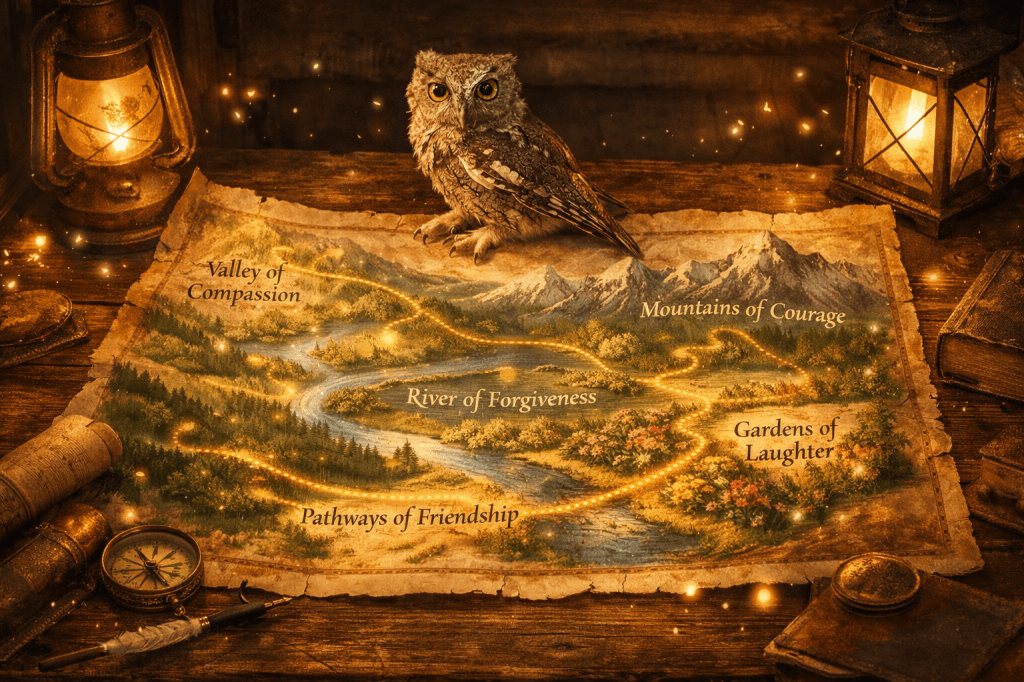
Stories allow us to travel through emotions we may not yet fully understand ourselves. They take us into valleys of grief, across mountains of courage, and along rivers of hope. Through these journeys, storytelling reminds us that the human experience is shared in ways we sometimes forget.
Actors who approach storytelling with empathy and dedication become guides through these emotional landscapes. Their work reminds us that storytelling is not simply about playing a role — it is about understanding the soul of a character and sharing that understanding with the audience.
One actor whose work reflects this kind of storytelling is Sam Heughan. Through the characters he has brought to life, he demonstrates how powerful storytelling can be when it is grounded in emotional truth and respect for the story being told. What makes performances like these stand out is not simply talent, but a genuine appreciation for the craft itself.
Great storytelling asks artists to step into many different lives and experiences. It requires curiosity about the world and compassion for the many ways people live, struggle, grow, and love. That kind of work leaves an impression on audiences because it reflects something honest about the human experience.
For me personally, storytelling has always felt deeply meaningful. As someone who experiences the world with an autistic mind, I often notice emotional details and moments of humanity that others might pass by quickly. Stories — whether in books, film, or art — help translate those emotions into something shared and understood. They create a sense of connection between people who may have never met but recognize pieces of themselves within the same story.
Perhaps that is why certain stories stay with us long after the screen fades to black or the curtain falls. They linger because they touched something real within us.
In a world that can sometimes feel loud and distracted, storytelling still holds a quiet power. It reminds us of courage, compassion, vulnerability, and hope — the very qualities that shape who we are.
And when storytellers approach their craft with sincerity, they create something lasting. Not just a performance, but a connection.
Because at its heart, storytelling has always been one of the ways humanity learns to understand itself.
Sometimes I think the world moves so quickly that the deeper meaning behind great storytelling can get lost in the noise. Conversations rush toward speculation and quick opinions, when the truth is that what really lasts are the stories themselves — and the people who care enough to bring them to life.
For more than a decade, audiences watched something extraordinary unfold through the character of Jamie Fraser.
All of those qualities lived inside that role, but what made the character resonate so deeply wasn’t just the writing or the setting. It was the humanity behind the performance. The quiet moments where very little needed to be said, yet everything could be felt.
Those moments are what stay with people.
And moments like that only happen when someone approaches storytelling with genuine care.
That is something I have always sensed when watching Sam Heughan’s work. Jamie Fraser became a character loved around the world, but behind that character is an actor who clearly respects the deeper meaning of storytelling — the idea that stories can move people, inspire reflection, and sometimes even help us understand our own lives a little better.
Now, as Outlander approaches the closing of its remarkable journey, another chapter quietly begins.
In a recent 2026 interview reflecting on life after the series, Sam spoke about stepping into new creative challenges after spending more than a decade bringing Jamie Fraser to life. For someone who truly loves the craft of acting, that next step is a natural one — exploring new characters and discovering new stories waiting to be told.
One of those new paths is already taking shape through his work on the upcoming thriller series Embassy, a project that shows his journey as a storyteller continuing to evolve.
Jamie Fraser will always remain a powerful and beloved part of television history.
But the truth about real storytellers is that they are never meant to stay in one chapter forever. They keep moving forward, searching for the next story that calls to them.
And when you watch closely enough, you begin to realize that what makes certain performances unforgettable isn’t just talent — it’s the character and sincerity of the person bringing the story to life.
That sincerity is something people recognize, even if they cannot always explain why.
Perhaps that is the quiet beauty of storytelling.
The roles may change. The stories may evolve.
But the heart behind them is what people remember the most.
Why red carpet photos and anonymous tips often create stories that were never there.
In the modern digital age, celebrity culture moves at extraordinary speed. A photograph taken in a crowded room can be uploaded within minutes, shared across social platforms, discussed in comment sections, and eventually turned into a rumor that thousands of people repeat.
What began as a normal moment can quickly become a story that was never intended to exist.
This phenomenon is especially common during premieres, press events, or industry gatherings where actors are photographed constantly. Cameras capture hundreds of candid interactions throughout the evening. But when a single frame is removed from its context and shared online, the interpretation of that moment can change dramatically.
Understanding how this cycle works helps explain why so many celebrity rumors begin with something very ordinary.
The Reality of Red Carpet and Industry Events
To someone watching from the outside, red carpet premieres can look glamorous and controlled. In reality, they are fast-moving, crowded environments where many interactions happen simultaneously.
Actors attending premieres or press events are rarely alone. Throughout the evening they are typically surrounded by a wide range of people connected to the project or event. These may include:
fellow cast members
producers and directors
studio executives
publicists and managers
brand representatives
photographers and videographers
friends and colleagues attending the event
These environments are busy, loud, and tightly scheduled. Publicists often guide actors through crowds while photographers call out directions. Conversations happen quickly and often very close together simply because it is difficult to hear over the noise of the room.
Because of this, small gestures are extremely common. Someone may touch another person’s back to guide them through a crowd. A colleague might lean in closely to speak. Friends greet each other with brief hugs or supportive gestures.
These are completely normal social behaviors in busy environments.
However, when one photograph captures only a fraction of that interaction, viewers may interpret it very differently from how the moment actually unfolded.
The Power of a Single Frame
Professional photography agencies such as Getty Images document public events extensively. Photographers often take hundreds or even thousands of photos in rapid succession.
These images capture brief moments such as:
greetings between colleagues
conversations during crowded events
quick hand gestures while speaking
a publicist guiding someone through a group
photographers directing a pose for the camera
Each photograph represents only a split second of time.
When viewers see a single isolated image without the surrounding sequence of photos, it becomes easy to assume a narrative. Human psychology naturally tries to fill in missing context, especially when people already have curiosity about a public figure.
A gesture that lasted two seconds can suddenly be interpreted as something far more significant.
The Rise of Anonymous Gossip Submissions
In recent years, social media has accelerated how quickly speculation spreads. Accounts dedicated to celebrity gossip frequently rely on anonymous submissions sent by followers who claim to have witnessed something involving a public figure.
One widely known example is DeuxMoi, which publishes anonymous tips about celebrity sightings and rumors.
These types of submissions usually follow a similar format:
“A friend saw…”
“Someone at the event said…”
“Spotted with a mystery person…”
It is important to recognize that most of these tips are:
anonymous
unverified
based on personal interpretation rather than confirmed information
Even the platforms that publish these submissions often include disclaimers explaining that the information has not been verified.
Despite this, once a rumor appears online it can spread rapidly. Other accounts repeat the story, screenshots circulate, and discussions grow around an event that may have been misinterpreted from the start.
Why Rumors Often Appear During Major Events
Rumors rarely appear at random. They tend to increase during periods when actors or public figures are receiving significant attention.
This often occurs during:
television season premieres
film festivals
press tours
award ceremonies
major product launches or business announcements
During these periods, media coverage increases and photographers capture more images. Fans are also paying closer attention to public appearances.
More attention naturally leads to more speculation.
A moment that might have gone unnoticed during a quiet time can suddenly become a topic of conversation simply because more people are watching.
Understanding the Difference Between Rumor and Journalism
Not all sources of information operate under the same standards.
Professional journalism follows editorial processes designed to verify information before publication. Established outlets such as Variety, The Hollywood Reporter, Reuters, BBC, and Associated Press rely on confirmation, sources, and editorial review before presenting claims as fact.
By contrast, rumor-based content often comes from places that prioritize speed and speculation over verification.
Examples of sources that frequently spread unverified rumors include:
anonymous gossip submission accounts
blind-item rumor blogs
unsourced screenshots circulating on social media
speculation threads without confirmation
These platforms may occasionally report something accurate, but they are not structured around verification in the same way professional journalism is.
For readers, recognizing the difference between these types of sources is essential.
Why Context Matters
One of the biggest challenges in modern media culture is the loss of context.
A photograph taken during a crowded event shows only a single perspective. It does not show the moments before or after. It does not capture the full conversation, the surrounding people, or the environment of the event.
Without that context, audiences may interpret what they see in ways that were never intended.
In many cases, rumors begin not because anyone deliberately created a false story, but because viewers simply misunderstood what they were seeing.
A More Thoughtful Approach to Celebrity Culture
Fans and readers play an important role in shaping the tone of online discussions about public figures.
When speculation begins circulating online, it can be helpful to pause and ask a few questions:
Where did this information originate?
Is the claim supported by a reliable source?
Could the moment simply be a normal interaction taken out of context?
Approaching celebrity culture with curiosity rather than assumption helps prevent rumors from spreading unnecessarily.
Respecting the Human Side of Public Figures
Actors, artists, and creators share their work with audiences, but their personal lives remain their own unless they choose to share them publicly.
A respectful fandom recognizes the difference between appreciating someone’s work and speculating about private aspects of their life.
Celebrating performances, storytelling, and creative achievements keeps conversations focused on the things that artists themselves choose to share with the world.
Sometimes the most thoughtful response to a rumor is simply to step back, look at the larger picture, and remember that behind every photograph is a real person living a real life beyond the frame.
Sources and References
Getty Images – editorial photography from entertainment events
Note: Anonymous gossip submissions and rumor-based accounts often publish unverified information and should not be treated as confirmed reporting
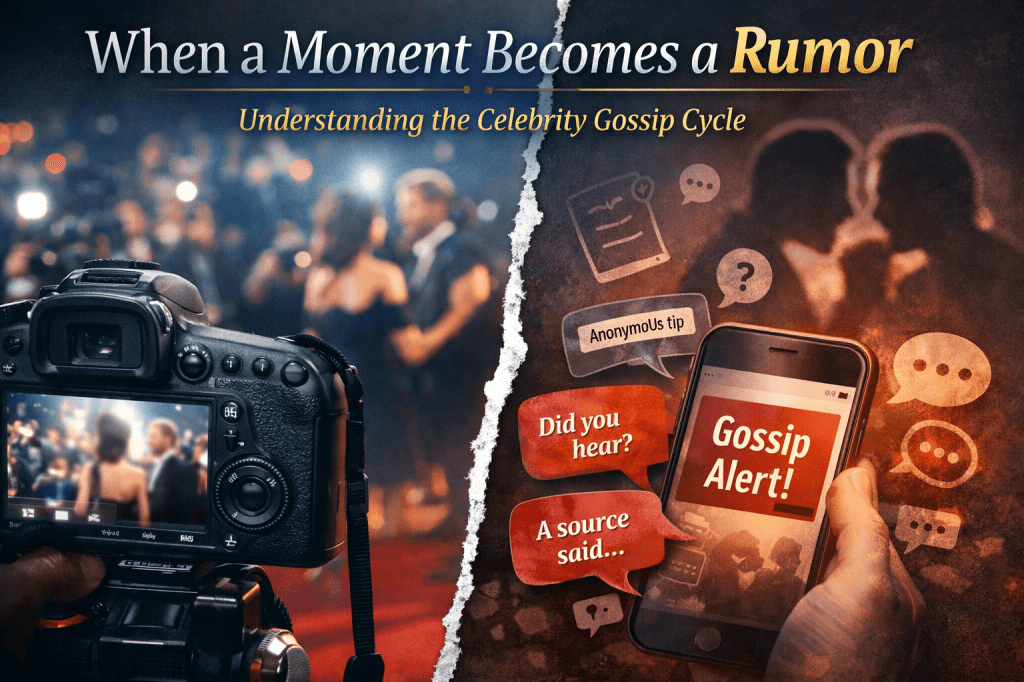
When a Moment Becomes a Rumor: Understanding the Celebrity Gossip Cycle
Why red carpet photos and anonymous tips often create stories that were never there.
In the modern digital age, celebrity culture moves at extraordinary speed. A photograph taken in a crowded room can be uploaded within minutes, shared across social platforms, discussed in comment sections, and eventually turned into a rumor that thousands of people repeat.
What began as a normal moment can quickly become a story that was never intended to exist.
This phenomenon is especially common during premieres, press events, or industry gatherings where actors are photographed constantly. Cameras capture hundreds of candid interactions throughout the evening. But when a single frame is removed from its context and shared online, the interpretation of that moment can change dramatically.
Understanding how this cycle works helps explain why so many celebrity rumors begin with something very ordinary.
The Reality of Red Carpet and Industry Events
To someone watching from the outside, red carpet premieres can look glamorous and controlled. In reality, they are fast-moving, crowded environments where many interactions happen simultaneously.
Actors attending premieres or press events are rarely alone. Throughout the evening they are typically surrounded by a wide range of people connected to the project or event. These may include:
fellow cast members
producers and directors
studio executives
publicists and managers
brand representatives
photographers and videographers
friends and colleagues attending the event
These environments are busy, loud, and tightly scheduled. Publicists often guide actors through crowds while photographers call out directions. Conversations happen quickly and often very close together simply because it is difficult to hear over the noise of the room.
Because of this, small gestures are extremely common. Someone may touch another person’s back to guide them through a crowd. A colleague might lean in closely to speak. Friends greet each other with brief hugs or supportive gestures.
These are completely normal social behaviors in busy environments.
However, when one photograph captures only a fraction of that interaction, viewers may interpret it very differently from how the moment actually unfolded.
The Power of a Single Frame
Professional photography agencies such as Getty Images document public events extensively. Photographers often take hundreds or even thousands of photos in rapid succession.
These images capture brief moments such as:
greetings between colleagues
conversations during crowded events
quick hand gestures while speaking
a publicist guiding someone through a group
photographers directing a pose for the camera
Each photograph represents only a split second of time.
When viewers see a single isolated image without the surrounding sequence of photos, it becomes easy to assume a narrative. Human psychology naturally tries to fill in missing context, especially when people already have curiosity about a public figure.
A gesture that lasted two seconds can suddenly be interpreted as something far more significant.
The Rise of Anonymous Gossip Submissions
In recent years, social media has accelerated how quickly speculation spreads. Accounts dedicated to celebrity gossip frequently rely on anonymous submissions sent by followers who claim to have witnessed something involving a public figure.
One widely known example is DeuxMoi, which publishes anonymous tips about celebrity sightings and rumors.
These types of submissions usually follow a similar format:
“A friend saw…”
“Someone at the event said…”
“Spotted with a mystery person…”
It is important to recognize that most of these tips are:
anonymous
unverified
based on personal interpretation rather than confirmed information
Even the platforms that publish these submissions often include disclaimers explaining that the information has not been verified.
Despite this, once a rumor appears online it can spread rapidly. Other accounts repeat the story, screenshots circulate, and discussions grow around an event that may have been misinterpreted from the start.
Why Rumors Often Appear During Major Events
Rumors rarely appear at random. They tend to increase during periods when actors or public figures are receiving significant attention.
This often occurs during:
television season premieres
film festivals
press tours
award ceremonies
major product launches or business announcements
During these periods, media coverage increases and photographers capture more images. Fans are also paying closer attention to public appearances.
More attention naturally leads to more speculation.
A moment that might have gone unnoticed during a quiet time can suddenly become a topic of conversation simply because more people are watching.
Understanding the Difference Between Rumor and Journalism
Not all sources of information operate under the same standards.
Professional journalism follows editorial processes designed to verify information before publication. Established outlets such as Variety, The Hollywood Reporter, Reuters, BBC, and Associated Press rely on confirmation, sources, and editorial review before presenting claims as fact.
By contrast, rumor-based content often comes from places that prioritize speed and speculation over verification.
Examples of sources that frequently spread unverified rumors include:
anonymous gossip submission accounts
blind-item rumor blogs
unsourced screenshots circulating on social media
speculation threads without confirmation
These platforms may occasionally report something accurate, but they are not structured around verification in the same way professional journalism is.
For readers, recognizing the difference between these types of sources is essential.
Why Context Matters
One of the biggest challenges in modern media culture is the loss of context.
A photograph taken during a crowded event shows only a single perspective. It does not show the moments before or after. It does not capture the full conversation, the surrounding people, or the environment of the event.
Without that context, audiences may interpret what they see in ways that were never intended.
In many cases, rumors begin not because anyone deliberately created a false story, but because viewers simply misunderstood what they were seeing.
A More Thoughtful Approach to Celebrity Culture
Fans and readers play an important role in shaping the tone of online discussions about public figures.
When speculation begins circulating online, it can be helpful to pause and ask a few questions:
Where did this information originate?
Is the claim supported by a reliable source?
Could the moment simply be a normal interaction taken out of context?
Approaching celebrity culture with curiosity rather than assumption helps prevent rumors from spreading unnecessarily.
Respecting the Human Side of Public Figures
Actors, artists, and creators share their work with audiences, but their personal lives remain their own unless they choose to share them publicly.
A respectful fandom recognizes the difference between appreciating someone’s work and speculating about private aspects of their life.
Celebrating performances, storytelling, and creative achievements keeps conversations focused on the things that artists themselves choose to share with the world.
Sometimes the most thoughtful response to a rumor is simply to step back, look at the larger picture, and remember that behind every photograph is a real person living a real life beyond the frame.
Sources and References
Getty Images – editorial photography from entertainment events









 Deep Thinking