Some of my favourite creations….hope you all enjoy them because I thought they came out beautiful.😊😊😊
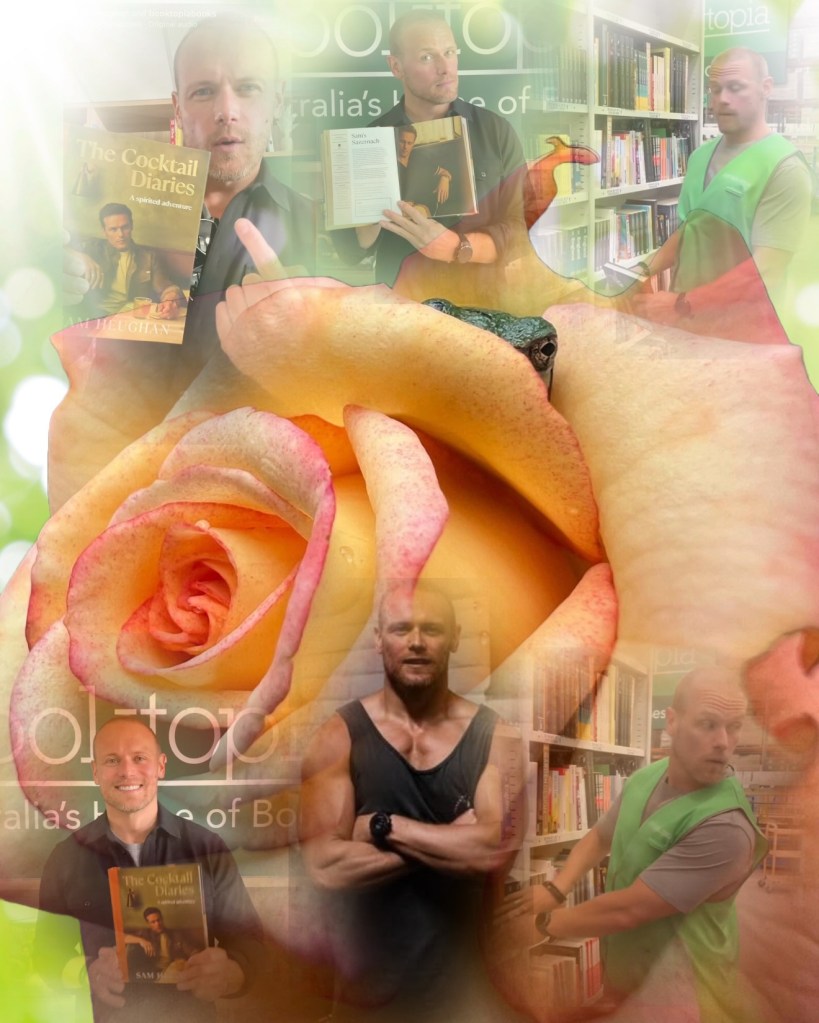

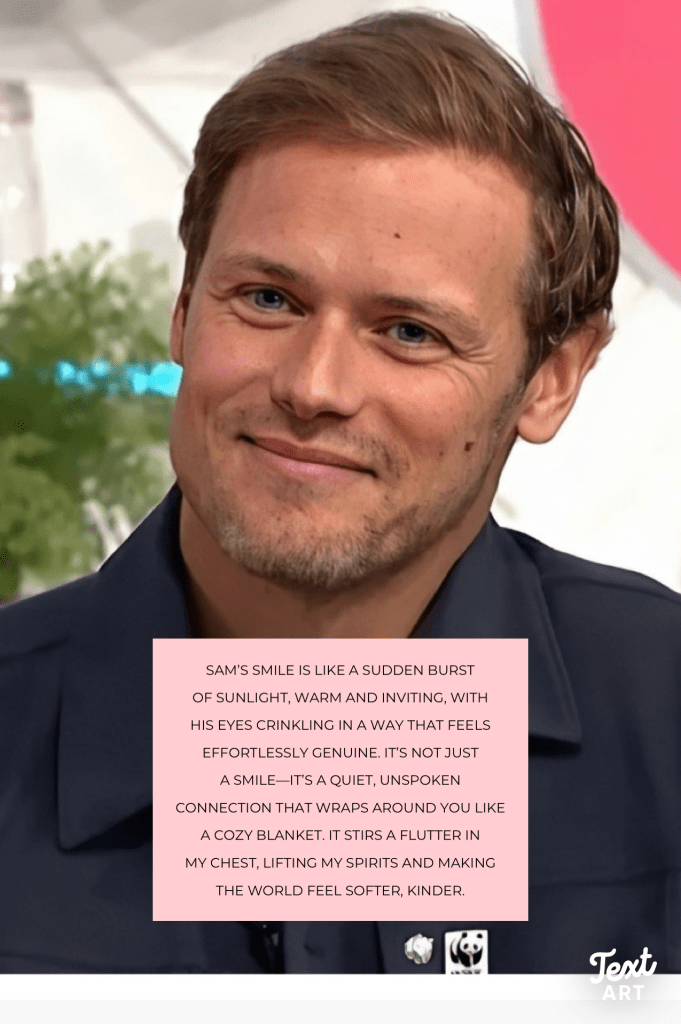
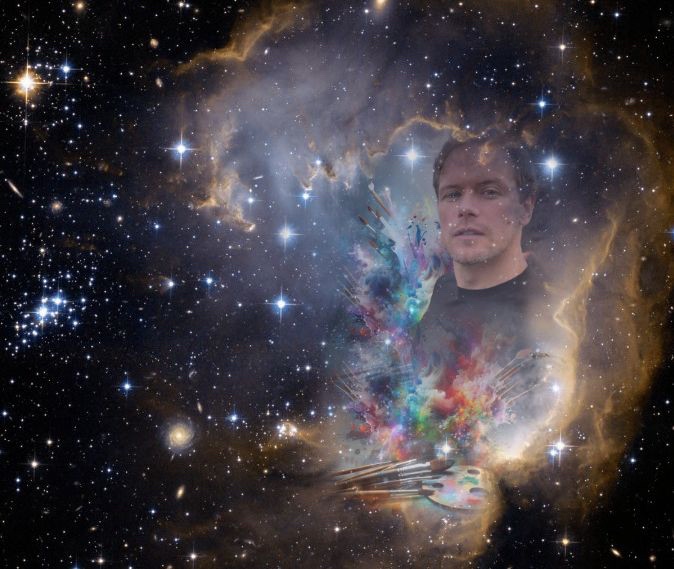
Some of my favourite creations….hope you all enjoy them because I thought they came out beautiful.😊😊😊
Who is your favorite historical figure?
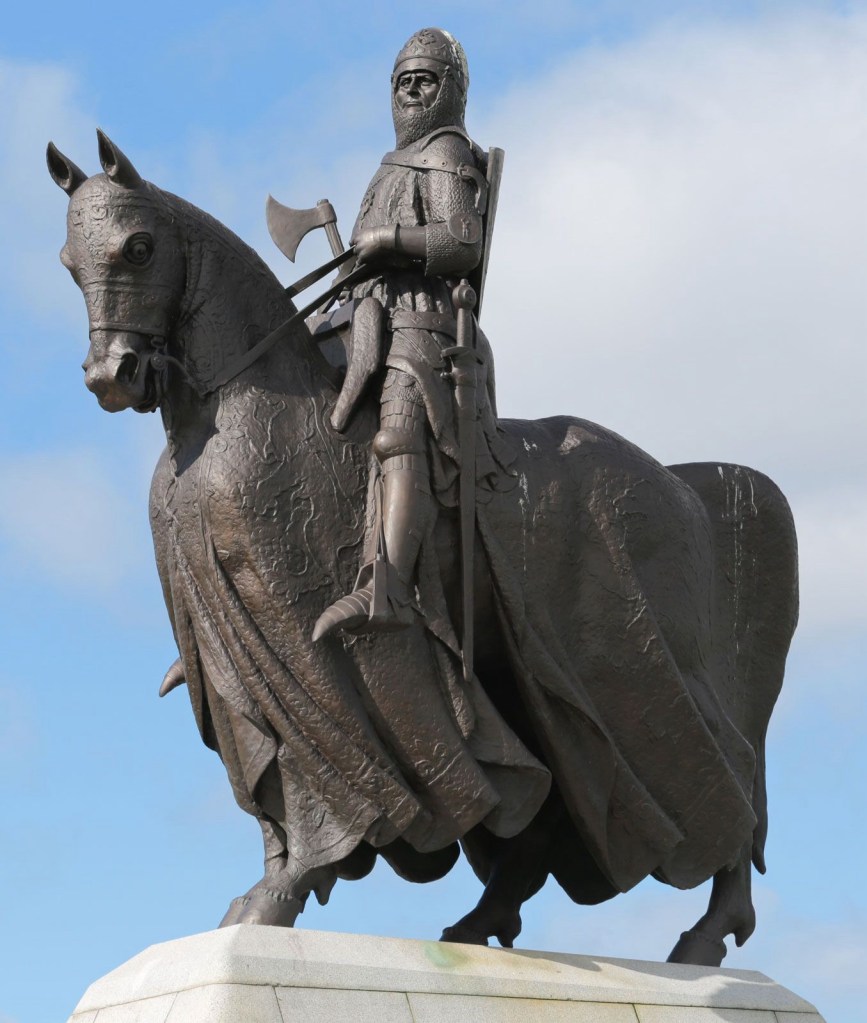
When considering my favorite historical figures, I often find myself drawn to those who have made a significant impact on their nation’s history. While there are many remarkable individuals to choose from, Robert the Bruce stands out as my favorite Scottish historical figure.
Robert the Bruce, King of Scots from 1306 to 1329, played a pivotal role in Scotland’s fight for independence from England. His leadership and determination were instrumental in securing Scotland’s freedom, most notably through his victory at the Battle of Bannockburn in 1314. This triumph not only demonstrated his military prowess but also his ability to inspire and unite the Scottish people during a time of great adversity.
What I admire most about Robert the Bruce is his resilience. Despite facing numerous setbacks, including excommunication and the loss of his lands, he never wavered in his commitment to Scotland’s cause. His perseverance in the face of overwhelming odds is a testament to his character and dedication.
Moreover, Robert the Bruce’s legacy extends beyond his military achievements. He was a shrewd statesman who worked tirelessly to consolidate his kingdom and secure recognition of Scotland’s independence. His efforts culminated in the Treaty of Edinburgh-Northampton in 1328, which recognized Scotland as an independent nation.
In choosing Robert the Bruce as my favorite Scottish historical figure, I am inspired by his courage, leadership, and unwavering commitment to his country’s freedom. His story is a powerful reminder of the impact one individual can have on the course of history, and it continues to resonate with me today.
Sources for Further Reading:
I’ve always seen the world through a lens—literally, with my camera, and figuratively, in how I chase truth and individuality. Lately, I’ve been grappling with how woke ideology is unraveling our societies, sowing division, and stifling honest expression. It’s a problem that demands action, and as I think about how to confront it, I find myself considering how someone like a well-known Scottish actor and community-builder might approach it too—not what he thinks, but how he’d tackle it, based on his grounded, resilient way of living. Our approaches, mine through storytelling and his through fostering connection, point to a way to push back with truth and courage.
For me, woke ideology is a trap. It promises justice but delivers conformity, reducing people to labels and punishing those who dare speak freely. I see it in the hesitation before someone shares a thought, the fear of being “canceled” for a misstep. As someone who values the raw, unfiltered moments I capture in photographs or the stories I dream up under Scotland’s vast skies, this feels like a theft of our humanity. My approach is to resist by staying true to myself—creating art that reflects reality, speaking my mind even when it’s risky, and treating people as individuals, not categories.
The Scottish actor’s approach, from what I see, would likely center on action and connection. He’s someone who meets challenges head-on, whether it’s building a fitness community or pouring his heart into storytelling on screen. He doesn’t seem to dwell on complaints; he creates. If faced with something like woke ideology, I imagine he’d focus on fostering spaces where people can come together authentically. His work with a whisky brand, for instance, isn’t just about a product—it’s about shared experiences, stories swapped over a dram. That’s a quiet but powerful way to counter division.
Where our approaches align is in prioritizing what’s real over what’s performative. I resist woke ideology by refusing to play its game—by making art that doesn’t bend to trends, by having conversations that cut through dogma. He, I think, does this by staying rooted. His commitment to Scotland, from his charity work to his love for its landscapes, shows a man who values substance over fleeting fads. If he were to tackle this issue, he’d likely keep doing what he does best: building communities that celebrate what unites us, not what tears us apart.
How do we defeat this ideology? My way is to live unapologetically. I pour my heart into my photography, even when the world nudges me toward my cybersecurity degree. I speak up, messy as it may be, because silence lets fear win. I seek out real connections—friends, strangers, anyone willing to talk honestly over coffee or a Highland trail. His approach, I suspect, would lean on his knack for rallying people. Look at how he’s united fans and athletes worldwide through shared goals—fitness, storytelling, or just a love for Scotland. If he were confronting this ideology, he might create more spaces like these, where people can be themselves without judgment, where a good laugh or a deep chat trumps moral policing.
We’d both agree, I think, on the need to rebuild trust. Woke ideology thrives on suspicion, convincing us we’re enemies before we’ve met. My response is to double down on human connection—sharing a story, listening to someone’s truth, finding common ground. His way seems to be through action that inspires. His fitness challenges or fan events aren’t just events; they’re proof that people can come together despite differences. If he were tackling this issue, he’d probably keep fostering those moments—maybe a whisky tasting, maybe a charity hike—where people remember what it’s like to just be together.
Free speech is non-negotiable for me. I’ve always felt driven to say what’s on my heart, whether it’s about life, love, or the world’s chaos. I fight woke ideology by refusing to self-censor, by embracing the messiness of real talk. His approach, I imagine, would be quieter but no less firm. He’s navigated fame’s scrutiny with humor and grace, never shying away from his values or his story. If he were to face this ideology’s speech-policing, he’d likely keep doing what he does—sharing his journey, supporting others’ voices, and letting his work speak louder than any dogma.
Woke ideology divides, but we can overcome it by living true and building bridges. My camera captures the world as I see it; his work brings people together to share it. Our approaches—mine through art and words, his through community and action—show that we don’t need to conform to fight back. We just need to keep creating, connecting, and speaking freely. As I’d say over a sunset in the Highlands, and as I think his life quietly proves: truth and humanity are worth fighting for.
Write about your first crush.
When I think about my first crush, my mind goes back to my ex-husband, long before he became my ex. He was my world then—charming, familiar, everything I thought I wanted in a man. I poured my heart into that love, believing it was the shape of forever. But life has a way of teaching us, doesn’t it? We grew apart, our paths diverged, and I learned that love, as beautiful as it feels, sometimes needs more than just a spark to endure. That chapter closed, but it left me wiser, with a clearer sense of who I am and what matters to me.
Now, at this point in my life, I find myself with a new crush—one that feels a little silly to admit, but it’s real and it brings me joy. It’s a celebrity crush, on Sam Heughan. I know it’s not the kind of love you build a life on, but there’s something about him that speaks to my heart. It’s not just his charm or the way he lights up a screen as Jamie Fraser in Outlander. It’s deeper than that. It’s the way he carries himself—his kindness, his authenticity, the way he seems to live with purpose and heart.
Sam feels like a reflection of the values I hold dear: sincerity, resilience, and a quiet strength that doesn’t need to shout to be felt. I admire how he’s stayed grounded despite fame, how he shares glimpses of his Scottish roots with such pride, and how he treats people with warmth and respect. There’s a humanity to him that feels rare, like he’s someone who’d sit down for a coffee or a dram of whisky and listen, really listen, to your story. That’s what draws me in—the idea of someone who values connection, who sees the world with a sense of wonder and gratitude.
Maybe it’s silly to have a crush on someone so far removed from my everyday life, but it’s also a reminder of what I aspire to: living openly, loving deeply, and staying true to who I am. Sam represents a spark of inspiration, a nudge to keep my heart open to possibility, whether that’s in love or in the way I move through the world. My first crush taught me about love’s highs and lows, but this crush? It’s teaching me to dream again, to find joy in the little moments of admiration, and to hold onto the values that make me,
Since the end of my marriage, Sam Heughan has become my first crush in a while, and it’s something that always brings me joy.
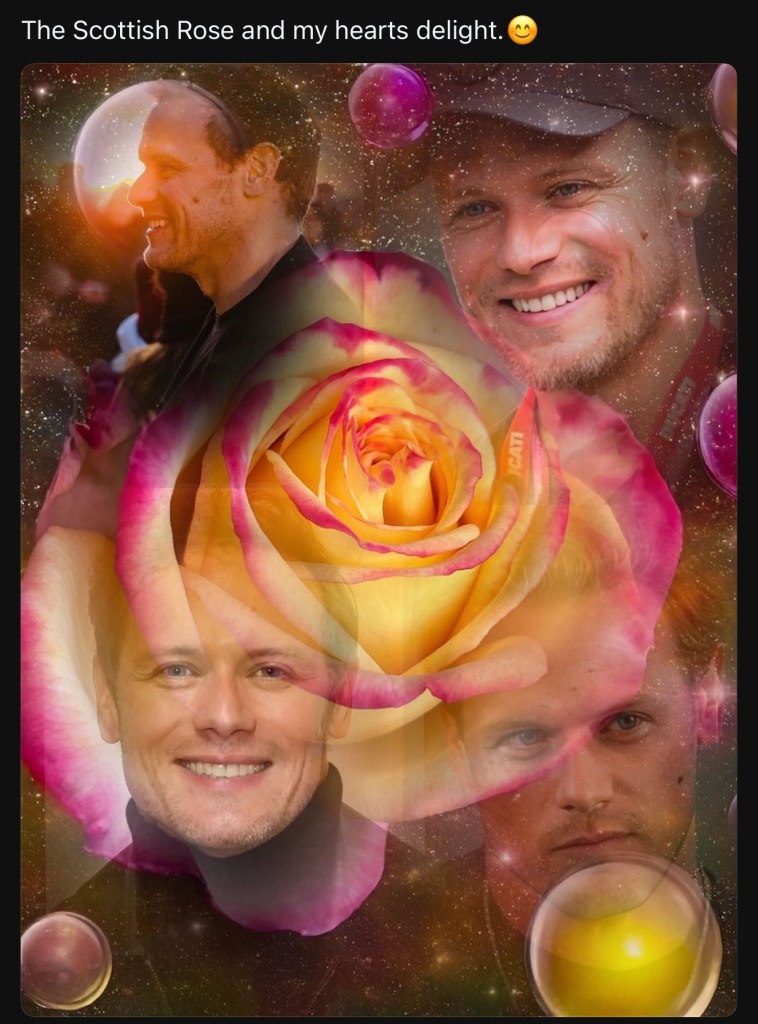
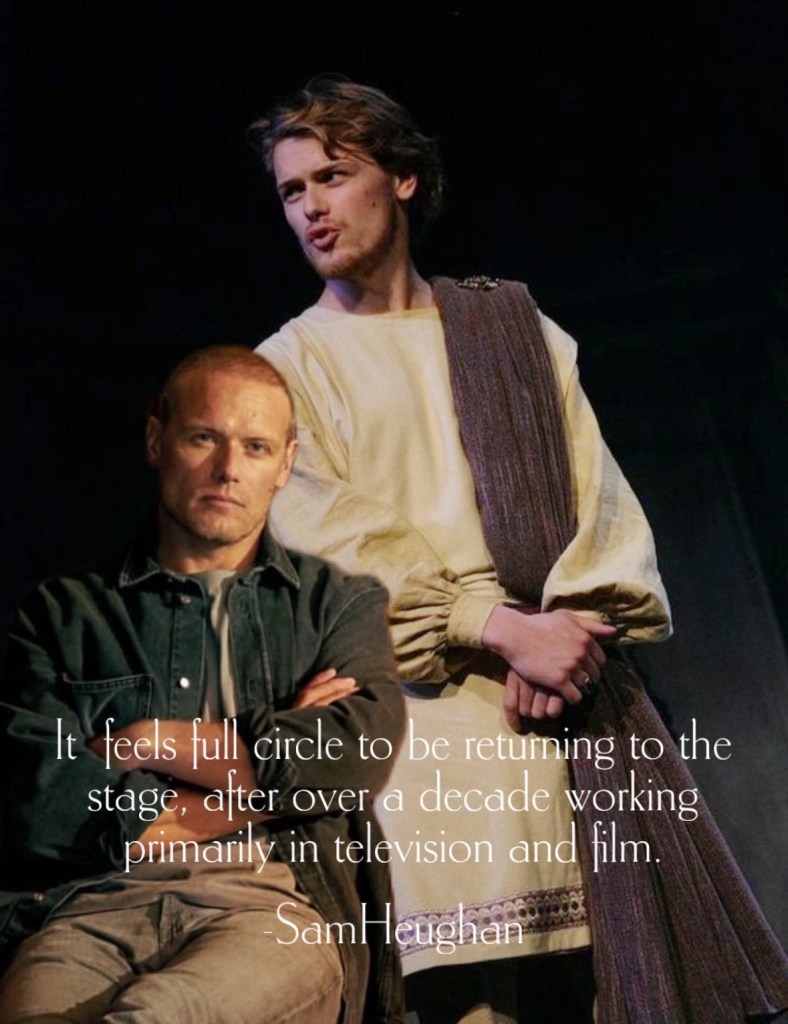
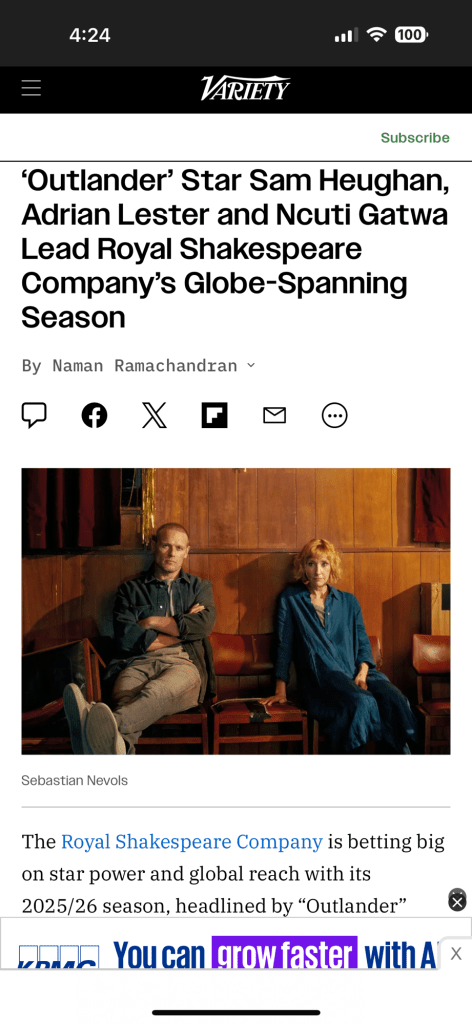
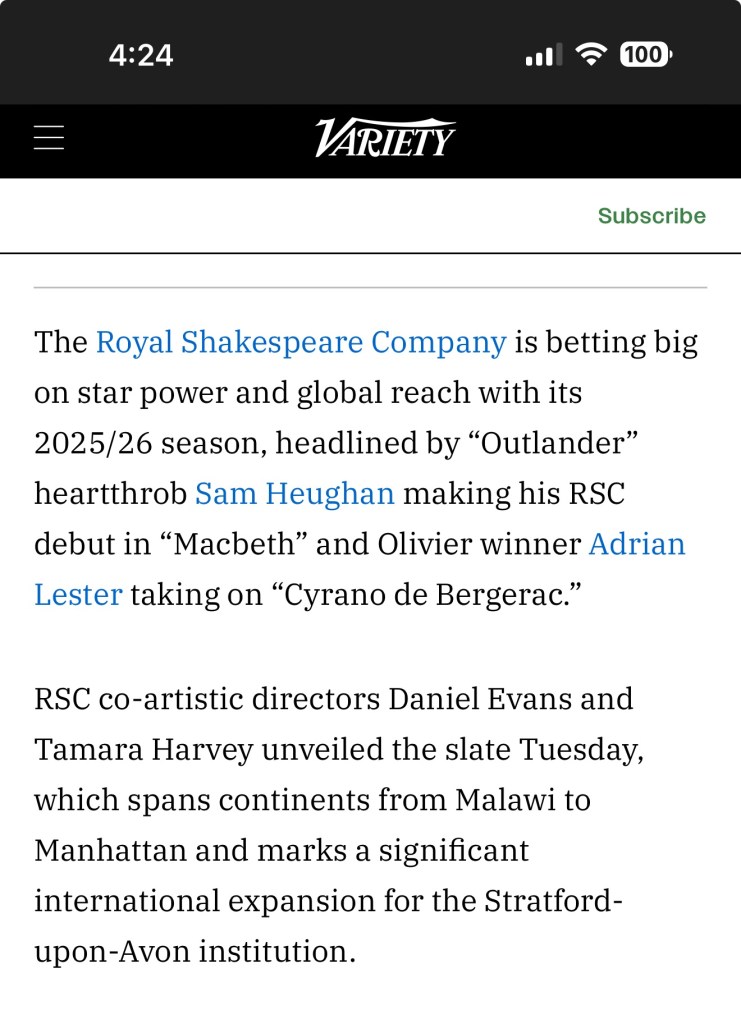
As a mildly autistic woman, I’m absolutely thrilled about Sam Heughan’s casting as Macbeth in the upcoming production at the Royal Shakespeare Company’s The Other Place in Stratford-upon-Avon, a monumental achievement that reflects his unwavering dedication and hard work finally bearing fruit! From his captivating portrayal of Jamie Fraser in Outlander to his early stage performances at venues like the Royal Lyceum Theatre in Edinburgh, where he honed his craft in his native Scotland, Heughan’s journey resonates deeply with me, showcasing a passion, resilience, and versatility that feel authentic and inspiring. Macbeth is a personal favorite because its haunting exploration of ambition, guilt, and the unraveling of the human psyche grips me with its raw emotional depth and eerie supernatural elements, creating a timeless narrative that speaks to my love for stories that feel both intense and true. Heughan’s Scottish heritage ties him authentically to the play’s Highland setting, and his ability to embody both strength and vulnerability—seen in Jamie’s fierce yet tender moments in Outlander—promises a riveting interpretation of Macbeth’s tragic descent from honorable warrior to tormented king. What truly sets Sam apart, in my view, is his remarkable humanity; his genuine kindness and warmth feel like a rare gift in a world that can sometimes feel overwhelming or superficial, especially when navigating social nuances can be challenging for me. His ability to connect with people, whether through his heartfelt interactions at fan events or his commitment to initiatives like My Peak Challenge, which promotes fitness and charity, radiates a sincerity that makes me feel understood and safe, like he’s someone who would embrace my unmasked self without judgment. This humanity makes me admire him not just as an actor but as a person whose heart carries a quiet, contagious joy, like a warm blanket soothing my soul in moments of sensory overload or uncertainty. I imagine him bringing this same depth to Macbeth, infusing the role with a poignant vulnerability that highlights the character’s inner turmoil and moral struggle, especially in soliloquies like “Is this a dagger which I see before me,” which I connect with for its raw honesty about doubt and fear. Fans on X are buzzing about his magnetic stage presence and his Royal Shakespeare Company debut, and I’m eager to see him channel his authentic, heartfelt energy into this iconic role, creating a performance that’s both powerful and deeply human.
In today’s digital age, artificial intelligence (AI) is transforming industries, from healthcare to e-commerce, and launching an AI-focused website can be an exciting venture. Whether you’re showcasing AI tools, offering consulting services, or building a community around AI innovation, one thing is non-negotiable: trust. A trustworthy website not only attracts users but also establishes your credibility in a competitive space. Two critical factors in achieving this are ensuring accurate information and using a legitimate email address. Let’s dive into why these matter and how to get them right.
Why Accurate Information Is Non-Negotiable
When creating an AI website, the information you present—whether it’s about your services, AI technology, or case studies—must be correct and reliable. Inaccurate or misleading content can quickly erode trust and make your site appear unprofessional or, worse, like a scam. Here’s why accuracy is crucial:
1. Builds Credibility: AI is a complex field, and users expect expertise. Providing well-researched, factual content showcases your knowledge and positions you as a trusted authority.
2. Avoids Misrepresentation: Exaggerating claims, such as promising unrealistic AI capabilities, can backfire. Users who feel misled may leave negative reviews or flag your site as untrustworthy.
3. Protects Your Reputation: In the age of social media and online reviews, a single mistake can go viral. For example, a 2023 post on X highlighted how a poorly vetted AI website was called out for false claims, leading to a loss of user trust.
How to Ensure Accuracy
• Fact-Check Content: Verify technical details, statistics, and case studies. Use reputable sources like academic journals, industry reports, or trusted tech blogs.
• Test Your AI Claims: If your website promotes an AI tool, test it thoroughly to ensure it performs as advertised. Transparency about limitations builds trust.
• Hire Experts: If you’re not an AI expert, consult professionals to review your content for accuracy.
• Update Regularly: AI evolves rapidly. Keep your website current to reflect the latest advancements and trends.
The Importance of a Legitimate Email Address
Your website’s contact information, particularly your email address, is often the first point of interaction with potential clients or users. A legitimate, professional email address signals trustworthiness, while a questionable one can raise red flags. For instance, free email services like GMX are frequently associated with phishing and scams, which can harm your reputation.
Why GMX and Similar Services Are Risky
According to cybersecurity reports, GMX is a popular choice among scammers due to its free, easy-to-create accounts and lack of stringent verification. A 2024 discussion on X noted that phishing emails often originate from GMX addresses, leading users to distrust websites using them. While not every GMX user is a scammer, the association alone can make your site look suspicious.
How to Choose a Legitimate Email Address
• Use a Custom Domain: An email like info@yourwebsite.com looks professional and ties directly to your brand. Services like Google Workspace or Microsoft 365 make this easy to set up.
• Avoid Free Providers with Poor Reputations: Steer clear of GMX, Yandex, or other free email services linked to spam or phishing. If you must use a free provider, Gmail or Outlook are safer options.
• Display Contact Information Clearly: Include your email, phone number, and physical address (if applicable) on your website’s contact page to show transparency.
• Secure Your Email: Use two-factor authentication and strong passwords to prevent your email from being hacked, which could further damage your credibility.
The Consequences of Getting It Wrong
Failing to prioritize accuracy or using a questionable email address can have serious consequences:
• Loss of Trust: Users are savvy and quick to spot red flags. A single misleading claim or a GMX email can drive them away.
• SEO Penalties: Search engines like Google prioritize trustworthy websites. Inaccurate content or spammy practices can lower your rankings.
• Legal Risks: Misrepresenting your AI product or service could lead to legal action from users or competitors.
• Brand Damage: In the AI industry, where trust is paramount, a damaged reputation can be hard to recover from.
Building a Website Users Can Trust
Creating a trustworthy AI website starts with a commitment to accuracy and professionalism. By ensuring your content is factual and your email address is legitimate, you set a strong foundation for building user confidence. Here are some final tips to tie it all together:
• Be Transparent: Clearly explain what your AI does, who you are, and how users can reach you.
• Engage with Your Audience: Respond promptly to inquiries and address concerns to show you value your users.
• Monitor Your Reputation: Regularly search for mentions of your website on platforms like X to stay ahead of potential issues.
In the fast-evolving world of AI, trust is your greatest asset. By prioritizing accurate information and a professional email address, you’ll not only avoid the pitfalls of appearing untrustworthy but also build a website that stands out for all the right reasons. Ready to launch your AI website? Start with trust, and the rest will follow.
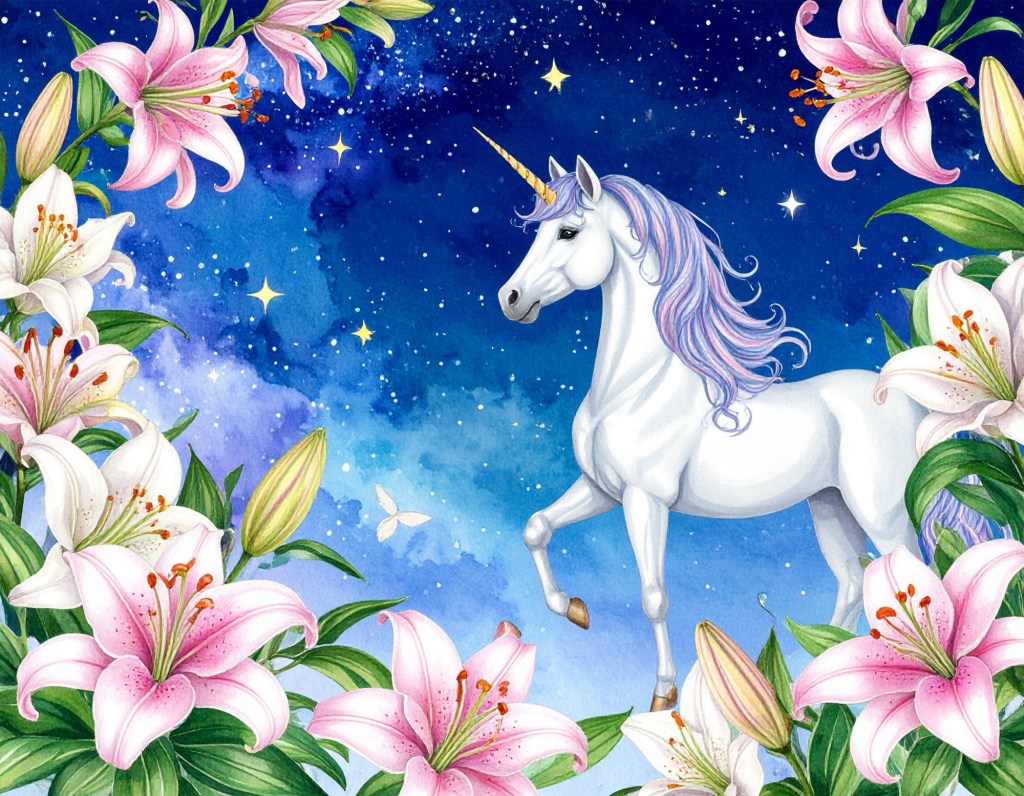
The unicorn, a creature of myth and wonder, embodies the essence of rarity and beauty, much like my own journey through life as an individual with autism. Just as the unicorn stands apart from the ordinary, I too navigate the world with a perspective that is uniquely my own.
The unicorn’s horn, a symbol of purity and healing, mirrors my ability to see the world in ways others might overlook. My mind, much like the unicorn’s magical nature, processes information with a depth and clarity that can reveal hidden patterns and connections. This gift allows me to approach challenges with creativity and insight, transforming obstacles into opportunities for growth.
In a world that often values conformity, the unicorn reminds me of the strength found in embracing my differences. Its grace and elegance inspire me to move through life with confidence, knowing that my uniqueness is my greatest asset. The unicorn’s mythical status reflects the mystery and wonder that I bring to the world, encouraging others to see beyond the surface and appreciate the richness of diverse perspectives.
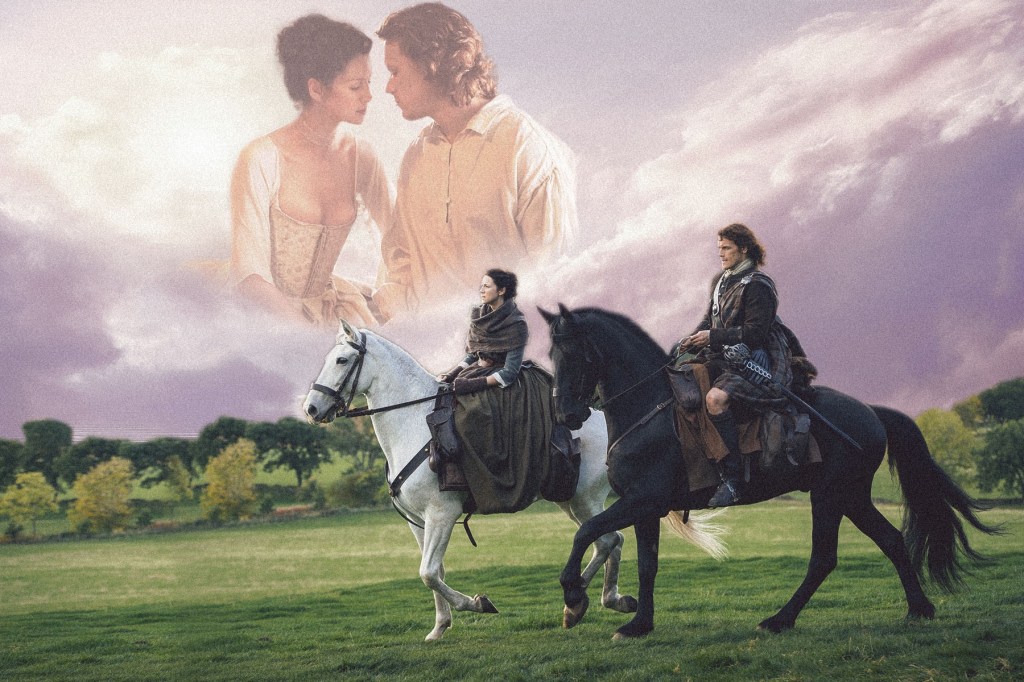
Perhaps it is this deep connection to the unicorn that draws me to Scotland, a land where the unicorn is celebrated as the national animal. The rich history and enchanting landscapes of Scotland captivate my imagination, offering a sense of belonging and inspiration. The simplicity yet profound beauty of its rolling hills and ancient castles resonate with my soul, inviting me to dream of visiting or even moving there one day. Maybe, amidst the misty highlands, I will find a Scotsman who shares the same dreams and desires that my heart calls for—a love like Jamie and Claire Fraser’s, filled with adventure, passion, and deep connection.
As I navigate the complexities of life, the unicorn serves as a guiding light, reminding me that my journey is one of beauty and significance. My autistic mind, much like the unicorn, is a testament to the power of individuality and the endless possibilities that arise when we embrace who we truly are. Scotland, with its deep-rooted connection to this mythical creature, feels like a place where my spirit can truly thrive.
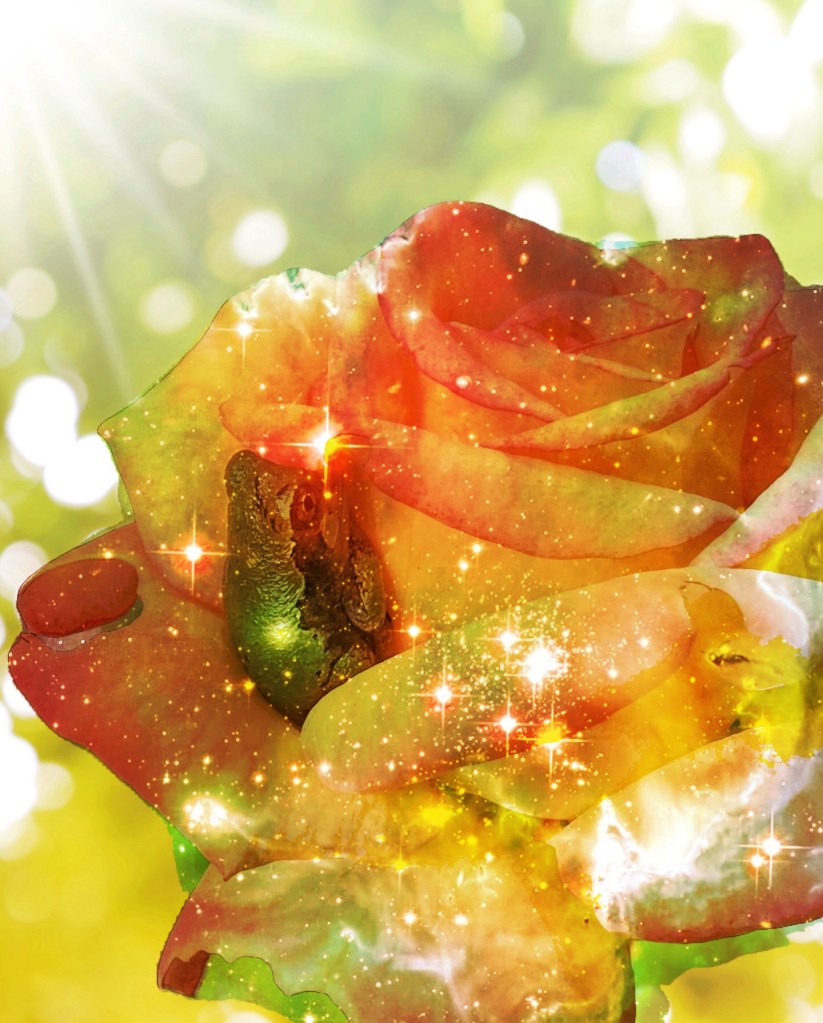
Once upon a time, in a vibrant garden where colors danced in the sunlight, there bloomed a rose unlike any other. This rose, with petals that shimmered in hues of orange and gold, held a secret deep within its heart—a tiny, enchanted frog named Liora.
Liora had lived in the rose for as long as she could remember, protected by the soft petals that surrounded her. She was no ordinary frog; she was a guardian of dreams, tasked with watching over the hopes and wishes of those who wandered into the garden. Each night, as the stars twinkled above, Liora would listen to the whispers of dreams carried by the gentle breeze.
One day, a young girl named Elara stumbled upon the garden. Drawn by the intoxicating fragrance of the magical rose, she approached, her heart heavy with unfulfilled dreams. She had always longed to be an artist, but fear held her back. As she gazed at the rose, Liora felt a spark of connection. The girl’s dreams resonated with the magic of the garden.
With a flick of her tiny tongue, Liora cast a spell of inspiration. The rose began to glow, and the air filled with sparkling lights that danced around Elara. She felt a rush of creativity and courage, as if the garden itself was urging her to embrace her passion.
Elara closed her eyes, and in that moment, she envisioned herself painting vibrant landscapes, capturing the beauty of the world around her. The rose shimmered brighter, and Liora knew that the girl’s dreams were taking flight.
When Elara opened her eyes, she felt transformed. The weight of doubt had lifted, replaced by a newfound determination. She thanked the rose, unaware of the tiny guardian within, and promised to return to the garden, to share her art and the magic it held.
As days turned into weeks, Elara visited the garden often, each time bringing her sketches and paintings. Liora watched with joy as the girl blossomed into the artist she was meant to be. The rose, once a mere flower, became a symbol of hope and inspiration for all who entered the garden.
And so, the enchanted rose and its tiny guardian continued to weave dreams into reality, reminding everyone that within the heart of a flower lies the power to inspire and create magic.
What countries do you want to visit?
Countries I Want to Visit and Why: A Personal Journey
Traveling isn’t just about seeing new places—it’s about chasing stories, feelings, and moments that make the world feel bigger and closer at the same time. Scotland, the Netherlands, Ireland, and England and Wales (Great Britain) have been on my mind for years, each pulling me in with their unique histories, landscapes, and cultures. Here’s why I’m drawn to these places and what I hope to experience in each.
1. Scotland
Scotland feels like it’s calling my soul with its wild, untamed beauty. I imagine standing on a windswept cliff in the Highlands, breathing in the crisp air, surrounded by jagged mountains and shimmering lochs. I’m fascinated by its history—castles like Eilean Donan and Stirling whisper tales of clans, rebellions, and resilience. I want to wander Edinburgh’s cobblestone streets during the Fringe Festival, soaking in the energy of performers and storytellers. The thought of sipping a peaty single malt whisky by a pub fire, listening to a local share tales of folklore like the Loch Ness Monster, makes me feel connected to something ancient. Scotland’s rugged charm and proud culture feel like a place where I could lose myself and find something new.
2. The Netherlands
The Netherlands strikes me as a perfect blend of creativity and calm. I picture myself cycling along Amsterdam’s canals, the water reflecting colorful, gabled houses as I head to the Van Gogh Museum to stand in front of Sunflowers, feeling the passion in every brushstroke. Beyond the city, I’m eager to visit Keukenhof in spring, where endless tulip fields in reds, yellows, and pinks would be a photographer’s dream. I’m curious about the Dutch way of life—how they’ve mastered balance, from their eco-friendly cities to cozy cafés serving stroopwafels. I want to visit historic towns like Utrecht or Delft, where time feels slower, and maybe even try my hand at a windmill tour to understand this innovative country’s past. The Netherlands feels like a place where art and serenity meet, and I want to soak it all in.
3. Ireland
Ireland’s pull is almost mythical. I want to drive along the Wild Atlantic Way, with its green hills rolling into the sea and dramatic Cliffs of Moher rising against crashing waves. I’m captivated by Ireland’s ancient Celtic heritage—sites like Newgrange, older than the pyramids, make me want to trace the steps of ancestors. I can’t wait to settle into a Galway pub, where live music fills the air with fiddles and laughter, and locals share stories over a pint of Guinness. Ireland’s warmth, its blend of joy and melancholy in its music and poetry, feels like it would speak to my heart. Whether exploring Dublin’s literary haunts or hiking in Connemara, I want to feel the pulse of a land that’s both vibrant and timeless.
4. England and Wales (Great Britain)
England and Wales together feel like a tapestry of history, culture, and adventure. In England, I’m drawn to London’s electric energy—standing in Trafalgar Square, visiting the British Museum, or catching a West End show. But I also crave the quiet of the Cotswolds, with its stone villages that look like they’re from a storybook. Stonehenge is a must, not just for its mystery but to feel the weight of thousands of years under my feet. I’m a bit of a literature nerd, so walking in the footsteps of Shakespeare in Stratford-upon-Avon or visiting Jane Austen’s Bath would be a dream. In Wales, I’m itching to explore Snowdonia’s peaks, maybe even try hiking up Yr Wyddfa (Snowdon) for a view that takes my breath away. Castles like Caernarfon and the Welsh language’s lyrical sound pull me to a culture that feels both proud and welcoming. England and Wales together promise a mix of bustling history and serene landscapes.
Why These Places Matter to Me
Each of these destinations feels like a chapter in a story I want to live. Scotland’s wild spirit, the Netherlands’ artistic calm, Ireland’s soulful warmth, and the rich, layered history of England and Wales—they all offer something unique yet connected. I’m chasing moments: the chill of a Scottish morning, the creak of a Dutch windmill, the laughter in an Irish pub, the ancient stones of a Welsh castle. These places feel like they’ll challenge me to see the world differently, to slow down and savor the beauty of cultures that have thrived for centuries.
What’s something you would attempt if you were guaranteed not to fail.
I would love to be an actress, but I’m hesitant to pursue it because I’m afraid of failing. I enjoy being creative and using my imagination to bring something meaningful to a movie. However, I’m also on the shy side and sometimes struggle with articulation, which makes me doubt my abilities.
 Deep Thinking