America’s story is often reduced to a single phrase: “Immigrants built this country.” Immigration absolutely played an important role — but it was never the only thing that held this nation together.
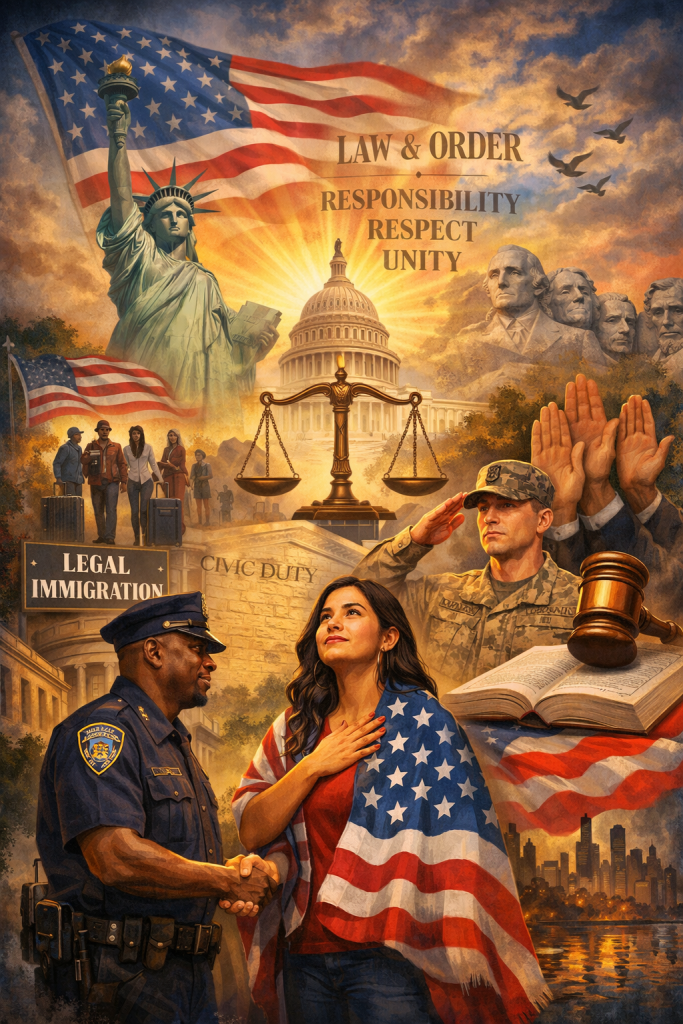
America was built on shared values: respect for law, personal responsibility, civic duty, and a commitment to something larger than ourselves. Immigration worked because it was paired with those principles — not because they were ignored. A nation is not just people crossing borders; it is a social contract.
People from many cultures and backgrounds came here seeking opportunity. What made that possible wasn’t the absence of rules — it was the presence of them. Historically, those who came understood that laws mattered, institutions mattered, contribution mattered, and respect for the country mattered. They didn’t just arrive — they participated.
Immigration alone does not build a nation. Shared responsibility does.
Law and order are often portrayed today as cold or uncaring, but in reality, they are what make fairness possible. Laws exist to create stability, protect communities, and ensure equal standards. Without immigration laws, legal immigrants are devalued, systems become inconsistent, trust erodes, and everyday citizens and lawful newcomers carry the burden.
A society without rules doesn’t become more humane — it becomes chaotic. And chaos harms the most vulnerable first. Respecting immigration law is not about rejecting people; it is about preserving a system that can function for everyone.
What is especially troubling today is the growing hostility toward law enforcement that is being amplified in cultural and public discourse. When influential voices frame police broadly as enemies rather than as individuals tasked with maintaining order, it fuels division rather than solutions.
Law enforcement officers are not symbols — they are people. They are human beings doing difficult work to protect communities, enforce laws, and respond to crime. Criticism and reform are part of a healthy democracy, but vilification without nuance is not. When hostility toward law enforcement becomes normalized, it leads to increased tension, loss of trust, and real-world harm.
Supporting law enforcement does not mean ignoring accountability. It means rejecting blanket hatred and recognizing that order is necessary for freedom to exist.
There is also an important truth that must be said with clarity and humanity: being in a country comes with obligations. If someone is not a citizen, the expectation is not hostility — it is respect for the law. That includes proper documentation, lawful behavior, and respect for the people and institutions of the country.
This is not cruelty; it is consistency. People who come here legally, follow the process, and live peacefully deserve dignity and protection. But when individuals commit crimes or show open hostility toward the country and its people, it is reasonable for society to expect accountability. No nation can survive if it excuses criminal intent or contempt for its laws in the name of compassion.
Another value we are losing is basic respect for leadership, regardless of political opinion. You do not have to agree with the president to show respect. Disagreement is not an excuse for dehumanization. Compassion, decency, and civility should not disappear because of politics.
Respecting the office matters because it reflects respect for the nation itself. We can challenge policies, question decisions, and advocate for change without tearing down the dignity of leadership or encouraging hostility toward the institutions that hold the country together.
America did not thrive because it welcomed everyone without standards. It thrived because it welcomed people into a framework of shared expectations. That balance — openness with responsibility, compassion with law, diversity with unity — is what allowed people from different backgrounds to build something lasting together.
Protecting that balance is not hateful, cruel, or backward. It is an act of respect — for the United States, for its people, and for the idea that freedom works best when it is paired with responsibility.
At its core, this is not about politics. It is about human decency, mutual respect, and remembering that a nation survives not only on who enters it — but on what its people agree to uphold once they are here.
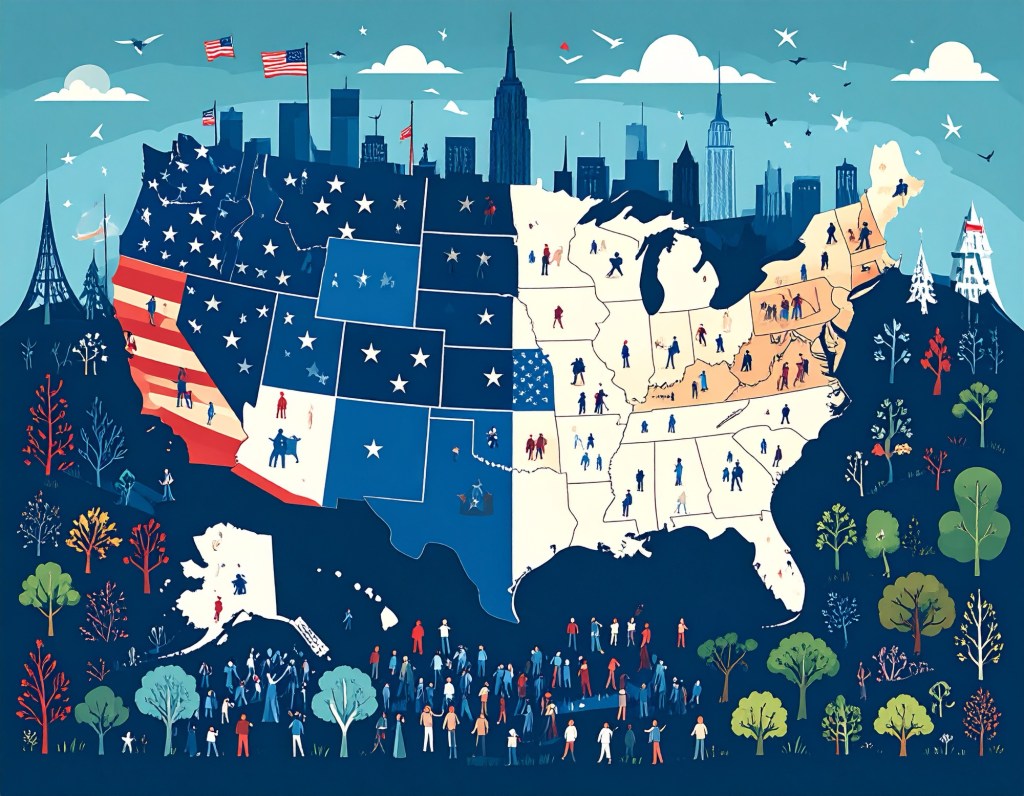
America is a vibrant, complex nation filled with diverse stories and struggles. To be kind to America means embracing its people with compassion, respecting its laws, and bridging divides with understanding. Here’s how we can do that, rooted in a heartfelt vision of kindness and fairness.
1. Value Every Person’s Journey
Every American has a unique story. Whether born here or arriving as immigrants or refugees, each person deserves to be seen and valued. Growing up in a family that worked hard to survive, I learned that struggles shape us but don’t define our worth. Kindness means welcoming everyone—regardless of background or identity, including the LGBT community—with open arms. At the same time, respecting America’s laws, like those on immigration, ensures fairness and safety, reflecting a patriotism grounded in goodness.
2. Listen and Understand, Despite Differences
Division is pulling America apart. Too often, we struggle to have respectful, intelligent conversations when we disagree. Kindness can change that. By listening with an open heart, we can find common ground. Being kind to America means rejecting media hype and propaganda that fuel anger, focusing instead on clarity and compassion. An independent mind, free from fads, helps us see people as individuals, not stereotypes.
3. Honor Life and Choices with Care
Kindness extends to the most vulnerable, including the unborn. Women deserve full control over their bodies, and their choices must be respected. Yet, alternatives like adoption or support programs can honor both a woman’s autonomy and the potential of life. Sexual decisions carry weight, and when made carelessly, an unborn child—innocent and voiceless—often bears the consequences. My own miscarriage taught me how precious life is, even when unplanned, fueling my deep love for the unborn and my call for compassion toward all life.
4. Build a Great America Together
To make America great—and keep her great—we must work together. This means valuing everyone, upholding laws, and solving challenges with kindness. It’s about being a respectful patriot who believes in a nation where all feel cared for. Compassion is the glue that can mend our divides, creating a future where we celebrate our shared humanity.
A Personal Plea
I’ve faced bullying, struggled to get by, and known heartbreak, but those experiences taught me to approach life with love and an open heart. I believe every life matters, and kindness is everything. Let’s be kind to America by listening to each other, respecting differences, and building a nation where compassion reigns.
Growing up in the 1990s in Flagstaff, Arizona, I remember an America that felt like home. We came together for Fourth of July parades, high school football games, and community barbecues under the shadow of the San Francisco Peaks. We celebrated everyone—different backgrounds, beliefs, and dreams—without forcing anyone to conform or flaunting lifestyles in each other’s faces. “We the People” meant unity, freedom, and respect. But today, politics and hate have spiraled out of control, and I wonder how we let it happen. The Democrats’ troubling history and their obsession with villainizing people, combined with the betrayal of RINOs—Republicans who act like Democrats behind closed doors—have made it hard to trust politicians or the media they lean on. Their actions, including the recent uproar over Stephen Colbert’s show, pushed me to become an independent voter. This is my story.
A Kid in Flagstaff: When America Knew Who It Was
In the ‘90s, Flagstaff was a small town where neighbors waved and looked out for each other. I’d ride my bike through downtown, past the old train station, feeling like everyone had a place here. Nobody cared if you voted differently or went to a different church. We didn’t force beliefs on each other, and nobody shoved their lifestyle in your face. America felt united, and “We the People” was a promise we believed in.
Now, division tears us apart. Neighbors in Flagstaff argue over politics, and families struggle with rising costs and shrinking opportunities. Hateful rhetoric and cancel culture have replaced the community spirit I grew up with. It’s nearly impossible to separate truth from the lies spun by politicians and media. The latest example—Democrats and their media allies accusing CBS of bribing President Trump over Stephen Colbert’s show cancellation—shows how far they’ll go to dodge accountability. This shift broke my trust in political parties and reshaped how I see myself as a voter and citizen.
Democrats: A History of Division and Media Manipulation
The Democratic Party’s past is hard to stomach. In the 19th century, they defended slavery and later enforced Jim Crow laws and segregation into the 20th century. Figures like Senator Robert Byrd, a former Ku Klux Klan member, remained a Democratic leader until 2010. While they’ve rebranded as champions of fairness, their modern tactics are just as divisive.
Today, Democrats focus on accusing and villainizing anyone who disagrees with them. In 2016, Hillary Clinton called Trump supporters a “basket of deplorables,” dismissing millions as racist or hateful for having different views (Clinton, 2016). In 2021, they labeled parents protesting critical race theory in schools as “domestic threats,” despite these being ordinary moms and dads concerned about their kids’ education (DOJ, 2021). This shuts down debate and tears communities like Flagstaff apart.
They also use the media to push their narrative. Outlets like CNN and MSNBC amplify Democratic talking points, spinning stories to make opponents look evil while ignoring their own failures. During the 2020 riots in cities like Minneapolis, media called them “mostly peaceful protests” while businesses burned (CNN, 2020). In Flagstaff, small businesses have struggled with rising costs, but Democrats and their media allies pushed defunding police instead of helping us feel safe.
The recent Stephen Colbert controversy is a perfect example. In July 2025, CBS announced that “The Late Show with Stephen Colbert” would end in May 2026, citing financial losses due to declining ad revenue and a shrinking late-night audience (POLITICO, 2025). Yet Democrats, including Senators Elizabeth Warren and Adam Schiff, along with media outlets, accused CBS of bribing President Trump, falsely claiming the cancellation was retaliation for Colbert’s criticism of Trump. They tied it to a $16 million settlement Paramount (CBS’s parent company) paid Trump in 2024 over an edited “60 Minutes” interview with Kamala Harris, ignoring CBS’s statement that the decision was purely business-driven, as the show was no longer profitable (The New York Times, 2025; The Washington Post, 2025). Democrats would rather blame Trump than admit their ally’s show couldn’t sustain itself. Their history of control—from Jim Crow to modern media manipulation—shows they care more about power than people.
RINOs: Republicans Who Betray Their Voters
Then there are the RINOs—Republicans In Name Only—who campaign on conservative values but vote like Democrats. In 1990, George H.W. Bush broke his “no new taxes” promise, raising taxes despite campaigning against them (Bush, 1990). More recently, Senator Mitt Romney continued this betrayal by voting for a $1.2 trillion infrastructure bill in 2021, stuffed with spending unrelated to roads or bridges, adding to the national debt while Flagstaff families struggled with economic hardship (Congress.gov, 2021).
Senator Lisa Murkowski is another example. In 2022, she supported a gun control bill that many conservatives saw as infringing on Second Amendment rights, siding with Democrats over her voters (Congress.gov, 2022). In Flagstaff, we needed lower taxes to help small businesses recover, but too many Republicans backed bloated budgets that ignored us. RINOs talk about fiscal responsibility and traditional values but often cave to corporate elites or Washington insiders, betraying the voters who trusted them.
How Their Actions Shaped My Choices
The actions of Democrats and RINOs show they don’t represent “We the People.” Democrats’ obsession with villainizing dissenters and using media to control the narrative—like their baseless accusations against CBS over Colbert’s cancellation—drowns out real concerns. Their focus on accusing border security advocates of “xenophobia” ignores how unchecked immigration policies strain local schools and hospitals in places like Flagstaff. RINOs, meanwhile, sell out their voters by supporting policies that don’t reflect our priorities, like runaway spending or weak stances on core issues.
The unity I knew as a kid in the ‘90s—when Flagstaff felt like a true community—has been replaced by a system where politicians prioritize power, donors, and media approval over citizens. I’m tired of the hate they’ve sown and the lies they spread, whether it’s smearing opponents or crying “bribe” when a company makes a financial decision. It’s why I became an independent—to vote for candidates who focus on solutions, like lower costs, better jobs, and safer communities, not division or betrayal.
Choosing Independence as a Citizen
Becoming an independent was about reclaiming my voice as a citizen. I’m done with Democrats’ history of division and their media-fueled attacks on anyone who thinks differently, like their overblown reaction to Colbert’s show ending. I’m fed up with RINOs who campaign as conservatives but govern like elites. Being independent means I judge candidates by their actions, not their party label. It’s freed me to focus on what matters: policies that bring back the unity and opportunity I remember from Flagstaff in the 1990s.
If you’re sick of politicians and media tearing us apart, I urge you to dig into their actions. Check their voting records, not just their speeches. Ask yourself: Are these leaders fighting for you? For me, the answer was no—so I chose independence. What’s your story?

 Deep Thinking