There’s something I’ve been sitting with for a while now… something that feels important to say, not just as a fan, but as a human being trying to understand another human being more deeply.
I keep seeing people talk about how Sam Heughan seems “different” in interviews after Outlander wrapped. Quieter. More reserved. Not quite the same energy people remember.
And I think the question people are asking is:
What changed?
But the question I keep coming back to is:
What if nothing is wrong at all?
What if what we’re seeing… is what it actually looks like when someone steps out of years of intensity and finally has space to just be?
Because from my perspective—as someone who is autistic and has spent years working in retail, constantly navigating a fast-paced, overwhelming environment—I understand what it means to live in a state of being “on” almost all the time.
And I don’t think people fully realize what that does to a person over time.
When you’re “on,” you’re not just doing tasks.
You’re managing your tone, your facial expressions, your reactions.
You’re filtering yourself in real time.
You’re reading people, adjusting to them, keeping things smooth—even when internally, you might feel overstimulated, exhausted, or completely drained.
For me, that’s what masking looks like.
It’s smiling when I’m overwhelmed.
It’s staying calm when everything around me feels chaotic.
It’s pushing through noise, pressure, expectations—because that’s what’s required to function in that space.
And after doing that day after day… year after year…
You don’t just clock out and instantly feel like yourself again.
There’s a delay.
There’s a kind of emotional and mental echo that lingers.
And sometimes, when you finally step out of that constant state of performance… you don’t feel like the version of yourself people are used to seeing.
You feel quieter.
More inward.
More careful.
Not because you’ve lost who you are—
But because you’re finally in a space where you don’t have to project it all the time.
And that’s where I think the misunderstanding happens.
People are used to seeing a version of someone that exists within a role, within a system, within a certain expectation. In his case, that role carried years of emotional storytelling—love, loss, trauma, strength—all expressed outwardly, over and over again.
That takes something out of you.
Not in a negative way, but in a very real, human way.
So when that role ends, or even shifts, there’s a natural period of recalibration.
A return.
But returning to yourself isn’t always loud or obvious.
Sometimes it looks like pauses.
Like quieter answers.
Like someone choosing not to give as much of themselves away all at once.
And from the outside, that can be mistaken as distance.
But from the inside?
It can feel like relief.
I’ve had moments like that in my own life—especially after long stretches of working in environments where I had to constantly adapt just to be understood.
Moments where I didn’t feel like the “version” of me people expected.
And I’ve realized something important through that:
That version wasn’t the only version of me.
It was just the one people were most familiar with.
So when I see him now, I don’t see someone who’s “not himself.”
I see someone who may be shedding layers that were necessary for a time… but not meant to be carried forever.
I see someone protecting their energy.
I see someone allowing space for a more natural rhythm.
And I think… if more people understood what it feels like to live in that constant state of giving, adapting, and performing—whether it’s on a set or on a retail floor—they might pause before labeling that shift as something negative.
Because not every change is a loss.
Sometimes it’s a return.
Sometimes it’s healing.
And sometimes… it’s the first real breath someone has taken in a long time.
So before we say someone seems different… or not like themselves…
Try standing in his shoes for a moment.
Not as a fan.
Not as someone watching from the outside.
But as someone who knows what it feels like to carry expectations, to adapt constantly, and to slowly find your way back to yourself when the weight lifts.
Because from that place…
You might not see someone who’s changed in a way that should be questioned.
You might see someone who’s finally allowing themselves to exist without having to perform it.
And that, to me, isn’t something to critique.
It’s something to respect.
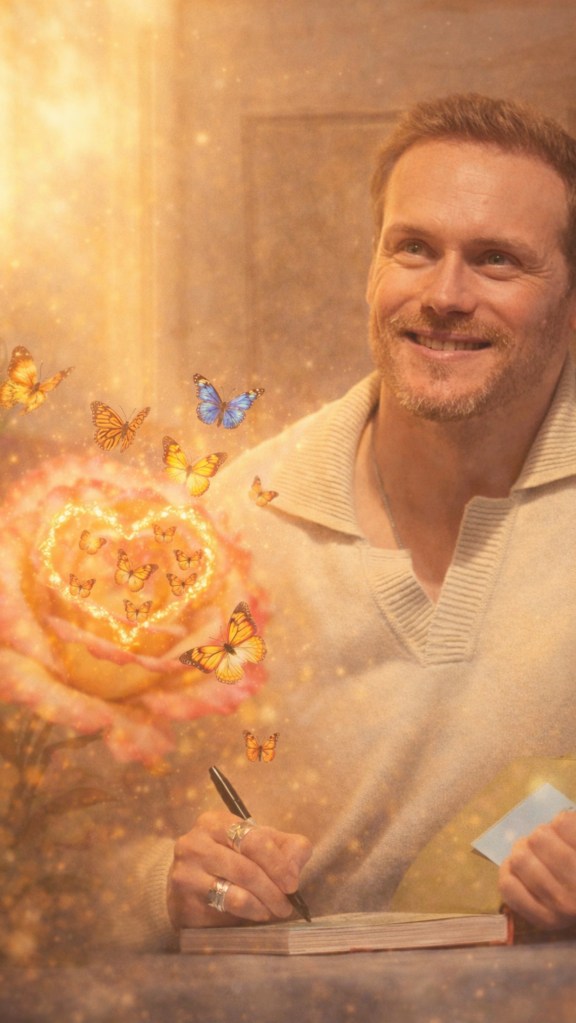
 Deep Thinking