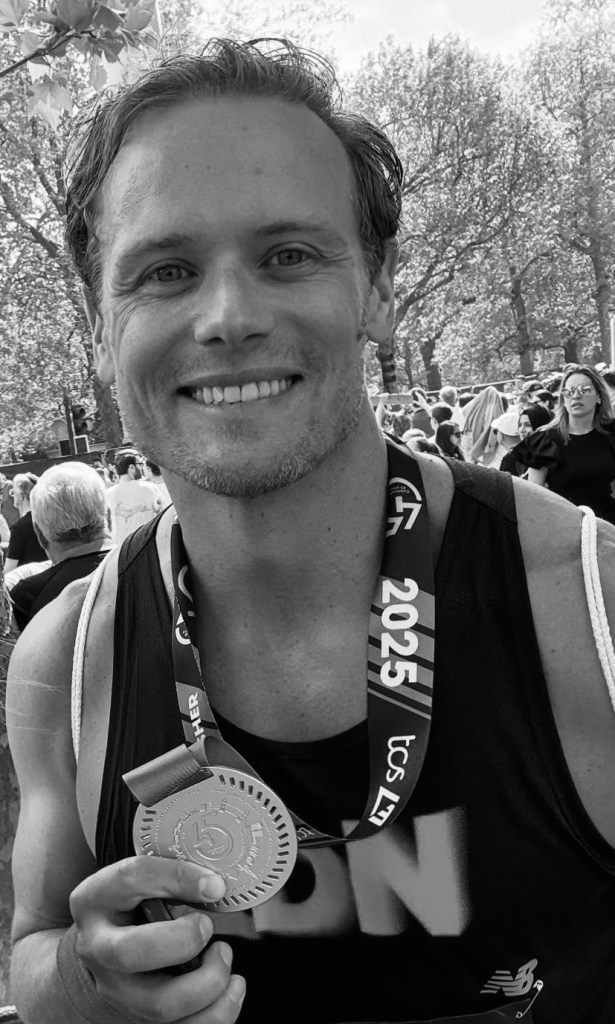
Right now, Sam Heughan’s life is still largely shaped by work — even though some people assume that once filming ends, everything suddenly slows down. That isn’t how this industry works, and it certainly isn’t how his career works.
The final season of Outlander has already been filmed. The long days on set, the physical demands, the emotional weight of closing out a role that lasted years — that part is complete. But filming ending does not mean the work is over, nor does it create wide-open personal time.
After production wraps, there is still an extended period of responsibility tied to a project of this size: post-production involvement, promotional planning, press obligations, and the mental process of stepping away from a character that required long-term immersion. That transition alone takes time and energy. Endings aren’t instant — they’re gradual.
He has also already completed Macbeth, a project that demanded a completely different level of focus and discipline. Theatre is unforgiving. It requires months of rehearsal, strict performance schedules, vocal and physical conditioning, and total presence. Even after a run ends, recovery is necessary. That recovery isn’t leisure — it’s maintenance.
Beyond acting, his schedule remains structured by ongoing professional commitments, including physical training, travel, meetings, preparation for future work, and continued involvement with My Peak Challenge. These are not casual add-ons. They are time-consuming responsibilities that require consistency and planning.
What often gets misunderstood is the idea of “free time.” When someone like him isn’t visible, it doesn’t mean they’re idle or available. It usually means they’re protecting focus, managing recovery, or handling responsibilities privately. Quiet time is not empty time.
This is what a disciplined career actually looks like. Time is allocated carefully. Energy is managed deliberately. There is very little room for spontaneity, and even less for unnecessary distraction. Personal time exists, but it is limited — and guarded — because it has to be.
What stands out most to me in this phase is intention. There’s no rush to overexplain or overexpose. The work has been done, the commitments are still being honored, and the schedule reflects that reality.
This isn’t a life built around availability. It’s built around responsibility, preparation, and follow-through. And understanding that makes it easier to appreciate the work for what it truly costs — time, focus, and consistency, given over many years.
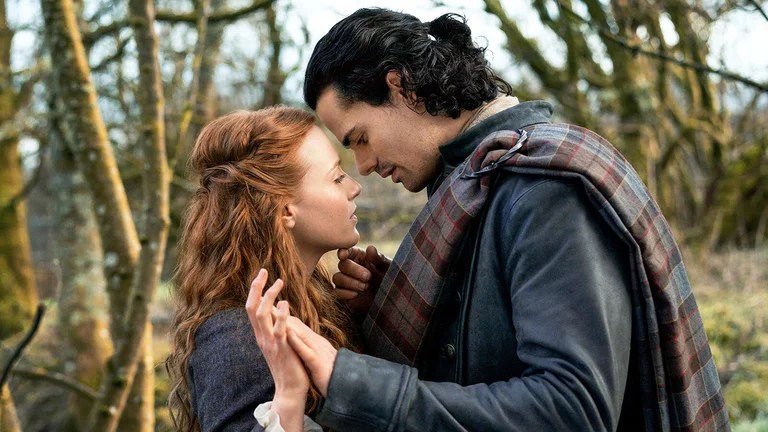
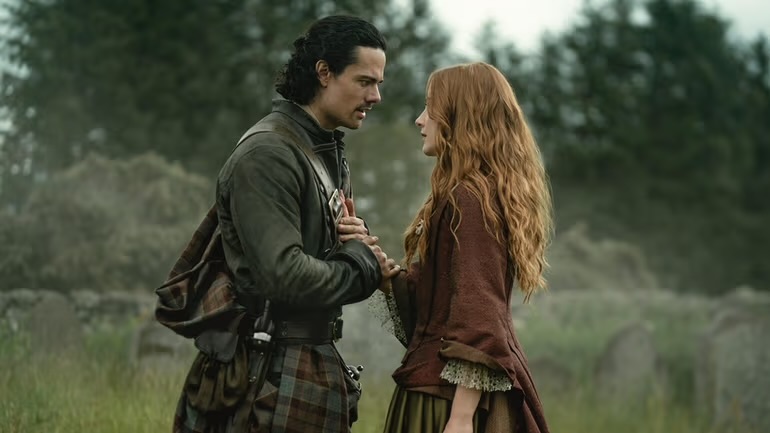
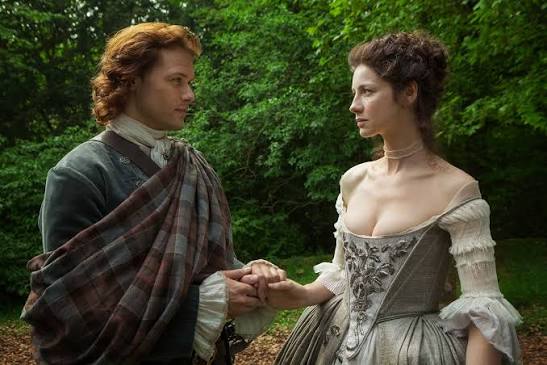
Before everything changed, before love and trauma reshaped her life, Claire was still Claire Randall.
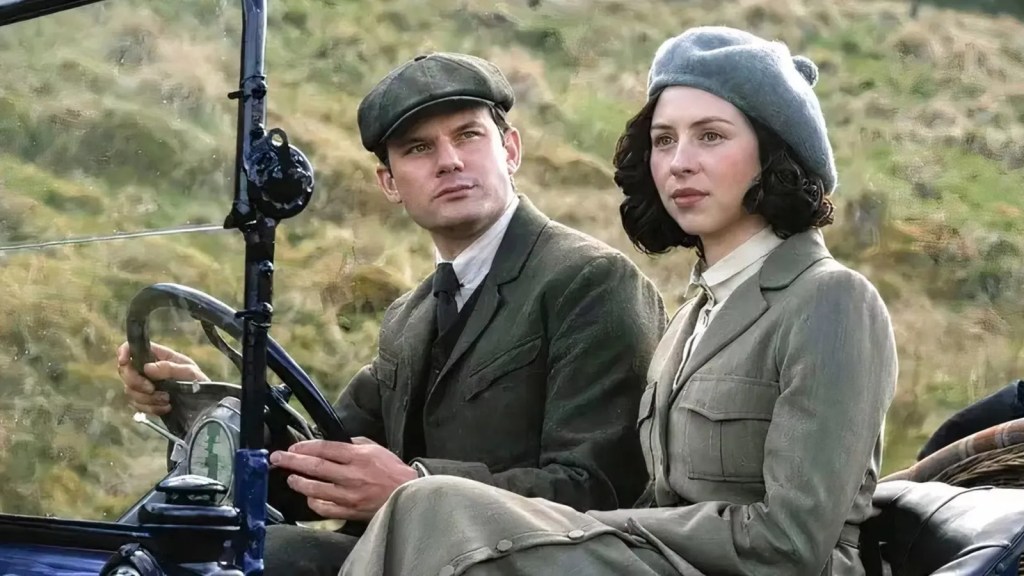
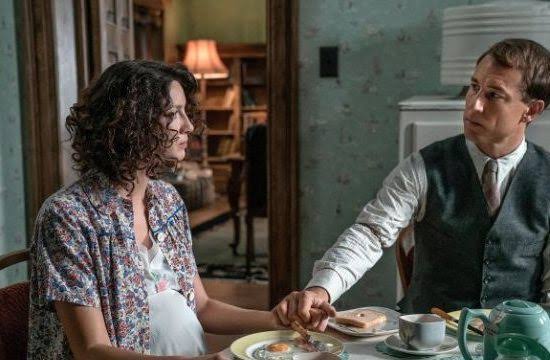
When the story begins, she’s on a second honeymoon with her husband after being separated by World War II. Their marriage didn’t feel broken to me. It didn’t feel strained in the way people later describe it. It felt like two people who had been pulled apart by circumstance and were trying — genuinely trying — to reconnect. There was structure. There was affection. There was a sense of order that made emotional sense to me.
As someone who is high-functioning autistic, I pay close attention to patterns, intentions, and cause-and-effect. At the beginning, the pattern is clear: Claire isn’t running from her marriage. She’s investing in it.
Her time travel isn’t a choice. It’s abrupt. Disorienting. Violent in its own way. One moment she’s anchored in something familiar, and the next she’s thrown into a world where survival replaces comfort. That kind of sudden disruption hits me hard as a viewer because I understand what it feels like when your sense of stability disappears without warning.
That distinction matters to me deeply.
Because everything that happens to Claire in the past happens while she is still Claire Randall. She doesn’t go looking for another life. She adapts because she has to. And adaptation is something I understand well. You don’t change because you want to — you change because staying the same would break you.
By the time she becomes Claire Fraser, the change has already happened.
One of the most disturbing parts of the story for me was Captain Black Jack Randall. Not just because of what he did, but because of how he looked. He wore Frank’s face. And as someone whose brain makes strong visual and emotional associations, I immediately understood why Claire could never separate the two cleanly again.
People often say, “But Frank didn’t do anything wrong.” And logically, that’s true. But trauma doesn’t work on logic. Once a face becomes associated with cruelty, control, and terror, your nervous system doesn’t ask for context. It reacts.
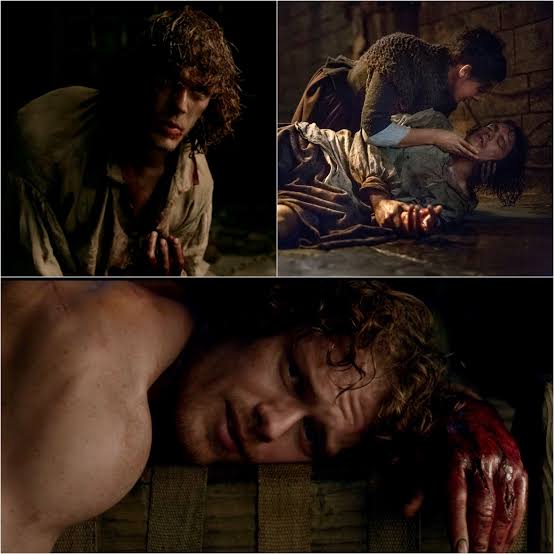
What Captain Black Jack Randall did to Jamie wasn’t just physical violence. It was methodical psychological destruction. Identity was stripped away. Autonomy was taken. And Claire didn’t just hear about it — she carried it. She held that knowledge inside her body, inside her memory, inside her sense of safety.
That kind of trauma doesn’t stay in the past. It changes how your brain categorizes the world.
Then Claire returns to her own time.
And she doesn’t return empty-handed.
She comes back pregnant — carrying Jamie’s child.
That detail matters to me more than it seems to for a lot of viewers. Because now Claire isn’t just processing trauma. She’s carrying a living, breathing connection to the man she loved, the life she lost, and the violence she witnessed. Jamie isn’t just a memory — he’s part of her future, growing inside her, even as she’s expected to resume a life that no longer fits.
As someone who experiences emotions deeply but processes them internally, I understand how overwhelming that would be. Claire isn’t just grieving. She’s holding grief, fear, love, and responsibility all at once — without a safe place to put any of it.
So when she comes back to Frank, I don’t see a woman being distant or unfair. I see a woman whose internal world has been fundamentally reorganized. She’s carrying another man’s child. She’s living with the knowledge of what was done to that child’s father — by a man who shares her husband’s face.
That is an impossible emotional equation.
This is where my perspective differs from many viewers.
I understand why people feel sorry for Frank. I can intellectually see his pain. But emotionally, my focus stays with Claire. Because I know what it’s like when your internal reality no longer matches what people expect from you on the outside.
Frank lost the version of Claire he remembered.
Claire lost her sense of safety, her innocence, the man she loved, and the life she built — all while preparing to become a mother under circumstances she never chose.
Those losses don’t weigh the same to me.
What stood out to me more as the story continued was how Frank struggled with Claire’s inability to return to who she was. From my perspective, his need for control and restoration felt less like love and more like discomfort with unpredictability — something I recognize, because unpredictability unsettles people who rely on emotional norms.
But Claire couldn’t perform normal anymore. She couldn’t mask what she’d been through.
She wasn’t being cold.
She wasn’t being ungrateful.
She was changed.
And expecting her to be otherwise would have meant denying everything she endured — including what was done to Jamie, and the child she carried back with her.
This part of the story stayed with me because it didn’t offer neat resolutions. It showed what happens when two people are separated not by lack of love, but by lived experience. One person went through something that rewired their entire internal world — and the other never could.
That feels painfully real to me.
And it changed the way I saw Frank — not as a monster, but as someone who could never fully cross the distance trauma created.
Some faces never look the same again.
Some loves don’t fail — they’re transformed beyond return.
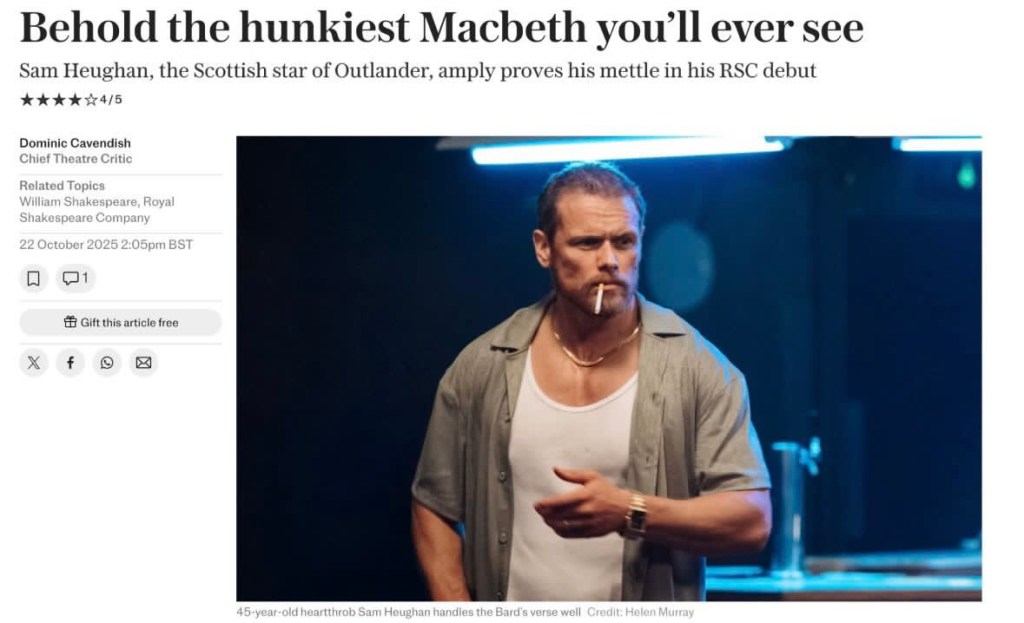
When I read the review titled “Behold the hunkiest Macbeth you’ll ever see,” I couldn’t help but feel disappointed. That headline didn’t just miss the mark — it missed the entire meaning of what Sam Heughan achieved with his performance.
This wasn’t about being “the hunkiest” anything. This was about an actor stepping into one of the most emotionally demanding roles in all of Shakespeare, and giving everything he had to bring that character to life. Sam didn’t just perform Macbeth — he became him. He found the human side beneath the ambition, the guilt, and the darkness, and made it resonate. That’s what deserved to be in the headline.
I know the play Macbeth well. It’s one of the most intense examples of the raw, dark side of human nature — a story that exposes how power, guilt, and fear can destroy the human spirit. I still remember the discussions about it back in high school, how it fascinated and unsettled us at the same time. It’s a play that demands emotional honesty and psychological depth — and that’s exactly what Sam delivered.
I haven’t seen his play myself, but from what so many fans have shared, he did incredibly well. People have been amazed by how completely he immersed himself in the role — how he didn’t just act Macbeth, but lived him. Maybe one day I’ll get to see it for myself, but even from afar, it’s clear he brought something powerful and deeply human to that stage.
By focusing on his looks, the review took away from what mattered most: his craft, his growth, and his courage to dive headfirst into a role that challenges even the most seasoned actors. Sam has spent years proving that he’s not defined by appearance — his strength lies in his emotional connection to every role he takes on.
I wish more people, and more critics, would see Sam with open eyes — to recognize how he immerses himself completely in his characters. The depth he brings to Macbeth isn’t something you can measure in surface appeal. It’s how he makes the audience feel every ounce of the character’s struggle that stands out.
The review should have done better. A headline like that reduces real artistry to a punchline, and that’s not fair to anyone who takes their craft seriously. Sam’s performance deserved respect — not distraction.
Because when an actor gives everything to a role, the least the media can do is give the art the attention it deserves.
How do you know when it’s time to unplug? What do you do to make it happen?
I know it’s time to unplug when my soul feels heavy, like the constant buzz of screens is drowning out my inner voice. As someone who treasures authenticity and emotional depth, I sense it when I’m drifting from what grounds me—when I’m no longer fully present in the moment. It’s like a quiet call to return to what’s real.
To make it happen, I lean into nature’s embrace. Since I have to carry my phone, I tuck it away deep in my pocket, far from reach, and head out for a walk in the woods or by a stream. The crunch of leaves underfoot or the soft ripple of water pulls me back to the present. I might pause to journal my thoughts or sketch a fleeting scene—a tree’s shadow, a bird in flight—capturing the beauty that speaks to me. These simple acts feel like a reset, reconnecting me to my core.
I also find unplugging easier with someone who shares my love for life’s quiet wonders—a friend to wander with, sharing dreams or just soaking in the stillness together. It’s about carving out space for what’s genuine, whether alone or in good company. That’s when I feel recharged, ready to face the world with a clearer, more open heart.