She is still here, breathing softly, existing in that hushed space where time seems to stretch and thin all at once. The world outside keeps moving, loud and demanding, but in this room everything feels slower. More intentional. More honest.
And in this in-between moment, Daisy is still teaching me.
Animals don’t rush what cannot be rushed. They don’t fight the moment they’re in or try to control the next one. Daisy isn’t anxious about what’s coming. She isn’t replaying yesterday or worrying about tomorrow. She is simply present, resting when her body asks for rest, leaning into comfort when she needs it, trusting the rhythm of being cared for.
Sitting with her has made me realize how uncomfortable humans are with stillness. We fill silence with opinions, fear, noise, and certainty. We especially do this now, in a country that feels deeply divided, where even compassion can become something people argue about.
But Daisy doesn’t live on a side.
Left or right means nothing to her. Arguments mean nothing to her. Being right means nothing to her. What matters to her is tone, touch, and whether the space feels safe.
Animals teach us something simple that we often forget: connection does not begin with agreement. It begins with gentleness.
Daisy doesn’t listen in order to respond. She listens to feel. She senses intention rather than ideology. She reminds me that empathy is not a position you defend, but something you practice quietly, especially when no one is watching.
Loving her right now means staying grounded in the present. It means resisting the urge to rush ahead emotionally or to frame this moment as an ending before it truly is. She is still here, and that deserves presence rather than anticipation.
When the time does come, Daisy will not be alone and she will not be frightened. She will have a kind veterinarian whose purpose is to move slowly, speak softly, and ease her gently into peace. And fortunately, Daisy’s passing will be at home, in her own bed and blanket, with people like me beside her, loving her fully and faithfully to the very end.
That choice matters. It reflects responsibility, love, and respect for a life that has given more than it ever asked for.
Animals understand trust in a way humans often forget. They trust that we will listen when their bodies speak. They trust that we will stay when things become hard. They trust that love does not disappear just because care looks different at the end.
That trust is sacred.
In a world where people talk past one another, assume the worst, and treat vulnerability as weakness, Daisy offers a different way of being. A quieter way. A kinder way.
She shows that strength can look like softness. That courage can look like mercy. That love does not need to be loud to be real.
For now, Daisy is still here. And I am here with her, listening, learning, and staying.
Sometimes the most important lesson animals give us is not how to let go, but how to love fully in the present moment, without fear and without conditions.
I want to start this by being honest and taking responsibility for an earlier misunderstanding on my part. At first, I didn’t think Sam had a tattoo. That wasn’t said to dismiss anyone or shut down conversation. It came from how difficult it has become to tell what’s real online when images and videos are constantly zoomed in, cropped, slowed down, filtered, or reposted out of context.
The issue was never that people didn’t notice something. People did see something. The uncertainty came from exaggeration. When clips are over-zoomed, overly sharpened, or repeatedly reposted, details can start to look distorted. Lines appear harsher than they really are, shapes can look unnatural, and in a digital space where AI imagery and heavy editing are everywhere, it becomes reasonable to question whether what you’re seeing is real or being amplified beyond reality. That’s where the confusion came from.
Because of that distortion, I questioned what I was seeing, and I acknowledge now that I was mistaken. I do apologize to anyone I may have confused by saying so. Sometimes it genuinely takes clearer, more natural footage to remove doubt once exaggeration has already influenced perception.
More recently, in the Food52 video released this year, the image quality is clean and unforced. There’s no extreme zooming or visual manipulation. In that context, Sam’s tattoo is visible in a straightforward, realistic way. I noticed it in real time when he briefly flashed his wrist. It wasn’t staged or emphasized, just a natural moment that confirmed what people had already been unsure about. Seeing it clearly in an undistorted setting removed the uncertainty entirely.
I also want to explain why I looked up Sam’s tattoo in the first place. Like most people, when I notice something unfamiliar, I get curious about what it means in general. That curiosity wasn’t about dissecting Sam as a person or assigning motives to him. It was about understanding the symbol itself, the same way someone might look up the meaning of any tattoo they come across. I’m a naturally curious person, but curiosity doesn’t cancel out respect. There’s a line between learning and intrusion, and I’m very aware of that line. I’m not interested in putting Sam under a microscope or turning him into something to be analyzed like a science experiment. I’d rather learn thoughtfully while still respecting boundaries.
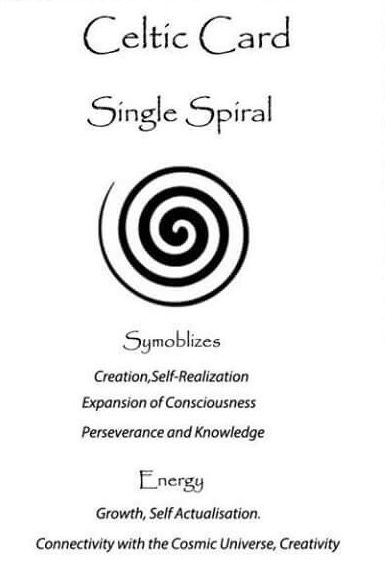
To answer people’s curiosity clearly, the tattoo is a single Celtic spiral. This is one of the most common and ancient symbols within Celtic culture. People from Ireland wear it. People from Scotland wear it. People across Great Britain wear it. It appears throughout Celtic history and across generations. There is nothing mysterious or hidden about it. It is widely used because it resonates with lived experience, cultural identity, and personal meaning, not because it signals a secret message.
The single spiral traditionally symbolizes creation, self-realization, and the expansion of consciousness. It represents growth from a central point outward, the idea that life begins within and continues to unfold as we learn, endure, and evolve. It is often associated with perseverance, knowledge, and understanding. Rather than representing attachment to another person, the spiral reflects an individual journey through life.
It is also deeply connected to creativity and energy. In Celtic symbolism, the single spiral represents creative force, personal expression, and the drive to build, imagine, and move forward. For many people, creativity isn’t limited to art alone; it’s part of how they live, work, and shape their path. The spiral reflects that ongoing process of becoming.
From my own perspective, this meaning resonates because it aligns with how Sam has spoken over the years about growth, learning, and being shaped by where he comes from, including his upbringing and the relationship he has acknowledged with his father. I’m not presenting this as a confirmed explanation or claiming insight into his private choices. It’s simply an interpretation of why this symbol makes sense on a human level, because for many people the spiral represents carrying your past with you while still moving forward.
I also want to be honest about why I care enough to write something like this. I genuinely enjoy learning about Sam as a person because he is one of the most interesting and intriguing men I’ve ever seen in the public eye. He has managed to move through Hollywood without falling into its traps, and he has done so with humility, groundedness, and a clear sense of self. That kind of character is rare.
I suppose that’s why I feel protective. People like Sam deserve peace of mind. They deserve space to live, grow, and exist without having their lives turned into fiction by strangers. They deserve the best from their fans, not people who spend their time inventing stories, pushing parasocial narratives, or treating a real human being like entertainment to dissect.
What the single spiral is not is a romantic symbol. Historically and culturally, it has never represented romantic attachment, relationships, marriage, or devotion to another person. Any attempt to turn it into that comes from modern projection, not Celtic tradition. Its meaning has always centered on life, growth, creativity, perseverance, and continuity.
This is why the symbol is so widely used. It doesn’t announce anything. It doesn’t signal a private message. It doesn’t require a dramatic backstory. It quietly reflects the journey of life itself, which is something people across Celtic cultures have connected with for centuries.
I also hope this helps put to rest some of the parasocial behavior and invented narratives that circulate among so-called fans. Real appreciation doesn’t require turning someone into a mystery to solve or a story to control. Sam is a human being, not a character under a microscope, and symbols don’t exist to fuel speculation.
Not everything needs a story invented around it. Not every detail needs to be examined until it becomes something it never was. Sometimes the most respectful thing we can do is allow something to simply be what it is.
In this case, the simplest explanation is also the most accurate. Sam has a tattoo. It is a single Celtic spiral, a symbol deeply rooted in Celtic culture and widely understood for what it represents. Anything beyond that belongs to Sam himself, should he ever choose to share it. And if he doesn’t, that should be enough.
Clarity doesn’t always come from zooming in further. Sometimes it comes from stepping back and letting things be exactly what they are.
Few topics in modern discourse are as emotionally charged as borders. For many, opinions are formed quickly and defended fiercely, often without space for reflection. But meaningful conversations do not begin with certainty — they begin with courage. The courage to pause, question assumptions, and reassess what we believe we already understand.
This is not a call to abandon compassion. It is a call to think more deeply about how compassion actually works in the real world.
Why Reassessment Matters
Reassessment is uncomfortable because it requires humility. It asks us to consider that we may have inherited opinions rather than formed them ourselves. It challenges narratives we’ve repeated without fully examining their consequences.
Borders are often discussed in absolutes — either as symbols of cruelty or symbols of protection. Reality is more complex. Borders are not moral statements; they are functional necessities. They exist so laws can be applied fairly, systems can be managed responsibly, and a nation can meet its obligations to both its citizens and those who seek to enter.
Reassessing borders means shifting from emotional reactions to practical outcomes.
Separating Emotion From Function
Emotion is a natural human response, especially when discussions involve suffering and injustice. But emotion alone cannot build sustainable systems.
Borders function as organizing tools. They define where laws apply, how resources are allocated, and who is accountable. Without these boundaries, governance becomes arbitrary, enforcement becomes selective, and trust erodes.
Encouraging reassessment requires acknowledging a hard truth: good intentions do not guarantee good outcomes. In fact, policies driven purely by emotion often create the very harm they seek to prevent.
Order Is What Makes Compassion Possible
A common belief is that enforcement and empathy cannot coexist. This assumption deserves careful reconsideration.
Compassion without order leads to chaos.
Order without compassion leads to rigidity.
A functioning society requires both.
When borders are managed lawfully:
Asylum claims can be evaluated fairly
Aid can be directed where it is truly needed
Exploitation by criminal networks is reduced
Communities remain stable and safe
When systems are overwhelmed, compassion becomes inconsistent and selective. The most vulnerable suffer first. Reassessing borders means recognizing that structure is not the enemy of empathy — it is what allows empathy to endure.
Who Really Pays the Price for Ignored Borders?
It is worth asking who benefits when borders are disregarded.
Not migrants, who are often misled into dangerous journeys.
Not families, who face exploitation and abuse.
Not communities, who absorb the strain on schools, healthcare, and emergency services.
Not legal immigrants, who follow the rules only to see them dismissed.
Disorder benefits those who profit from chaos — traffickers, smugglers, and criminal networks.
Reassessment means evaluating results, not intentions.
The Rule of Law Deserves Reflection, Not Dismissal
Laws exist to create fairness and predictability. When laws are selectively enforced or ignored because enforcement is unpopular, they lose legitimacy.
A society cannot function on exceptions alone.
Encouraging people to reassess borders means asking difficult questions:
Should laws apply only when convenient?
Can justice exist without consistency?
What happens when enforcement disappears but expectations remain?
Borders are one of the primary ways a nation maintains the rule of law. Questioning how they are enforced is valid. Dismissing enforcement entirely is not.
Capacity Is Reality, Not Cruelty
Every system has limits. Healthcare, housing, education, infrastructure, and social services are finite. Ignoring those limits does not make a nation kinder — it makes it unstable.
Acknowledging capacity is not a moral failure. It is an act of responsibility.
Encouraging reassessment means reframing the conversation away from guilt and toward sustainability. A system that collapses under strain helps no one.
Reassessing Without Shame
Changing or refining an opinion is often treated as weakness. In reality, it is one of the strongest things a person can do.
Reassessment does not require abandoning values. It requires aligning them with reality.
You can care deeply about human dignity and still believe in enforcement.
You can support immigration and still expect laws to matter.
You can be empathetic and realistic at the same time.
Encouraging people to reassess borders means freeing them from false choices that demand moral purity at the expense of functionality.
The Courage to Think Independently
One of the healthiest acts in a divided culture is independent thinking. Not reaction. Not repetition. Thought.
Reassessment begins when we ask:
Have I examined outcomes, not just intentions?
Have I confused compassion with the absence of boundaries?
Have I allowed slogans to replace understanding?
Borders are not a test of who is good or bad. They are a test of whether a society is willing to govern itself responsibly.
Conclusion: Reassessment Is Not Betrayal — It Is Maturity
Borders are not about fear.
They are about responsibility.
They are about sustainability.
They are about protecting people from chaos — on every side.
Encouraging reassessment is not about winning an argument. It is about restoring thoughtful discourse in a world that often rewards outrage over understanding.
You do not have to agree to think critically.
You only have to be willing to reconsider.
That willingness — to pause, reflect, and reassess — is where progress actually begins.
In the aftermath of the Minneapolis incident involving ICE officers, public opinion did not develop slowly or with full information. It formed quickly — largely based on how the event was first presented rather than on a complete understanding of what actually happened.
Before most people ever saw the full timeline, a narrative had already taken hold. That narrative was built around selective video clips, emotionally charged commentary, and the absence of early context. The first footage widely circulated was not the beginning of the encounter, but a later moment framed in a way that implied the officer was at fault.
Once that implication was established, everything that followed was interpreted through it.
The Order of the Clips Was Not Neutral
The first clip shown to the public began close to the moment force was used. In many cases, it was shared without clearly stating that it was partial footage rather than the full interaction.
Viewers were not initially told that:
The clip did not show how the encounter began
Earlier footage existed
Verbal commands had already been issued
The situation was still unfolding rapidly
When people are shown a dramatic moment without its lead-up, they naturally fill in the gaps. Headlines, captions, and commentary often guide those assumptions.
First impressions matter. In this case, that first impression was built on incomplete information.
What Later-Released Footage Shows
Later footage provided a broader view of the encounter.
Based on available video and official statements, two officers were present and working together.
One officer issued clear verbal commands instructing the woman to exit her vehicle. She did not comply with those instructions.
A second officer was assisting the first and positioned nearby.
At some point during this interaction, the vehicle moved backward and then forward, and contact was made with the assisting officer. Following this sequence, a weapon was discharged.
This does not answer every question, nor does it diminish the seriousness of the outcome. However, it does establish that the encounter involved noncompliance, vehicle movement, and risk to an officer — rather than a single isolated action.
That distinction matters when evaluating decisions made in seconds.
How Leaving Out the Beginning Changes Perception
When coverage begins at the moment force is used, responsibility appears to shift automatically.
Without the earlier footage:
The officer’s actions appear sudden
The refusal to comply is not visible
The danger to the assisting officer is unclear
The event appears static rather than rapidly evolving
Chronology is replaced with assumption.
By the time fuller footage becomes available, many people have already reached conclusions. At that point, added context can feel inconvenient rather than informative — even when it is essential.
Why Was the Woman There in the First Place?
Another question that received limited attention early on is why the woman was present during an active federal enforcement operation.
ICE operations do not occur randomly. Officers do not approach individuals or vehicles without a lawful reason tied to an ongoing action. While not all details have been publicly released, this encounter did not begin in a vacuum.
Some officials have suggested the woman may have been present in a way that interfered with the agents’ work. Others have disputed aspects of that claim. What has not been conclusively established is her intent.
That distinction matters. Responsible analysis requires separating what is confirmed, what is alleged, and what remains unknown. Assuming intent — either malicious or benign — without verified evidence contributes to misinformation.
If She Was Just Going About Her Business, Why Did She Refuse to Comply?
This is a reasonable question and one that deserves careful consideration.
If someone is simply going about their day, refusing to comply with clear verbal instructions during an enforcement action naturally raises concern. From an officer’s perspective, refusal to comply can signal uncertainty, risk, or potential interference — particularly when combined with vehicle movement.
At the same time, refusal alone does not establish intent. People may refuse instructions for many reasons, including confusion, fear, misunderstanding, or mistrust. What matters is acknowledging that refusal occurred while also recognizing that the motivation behind it has not been fully established.
Ignoring the refusal entirely removes a key element of the timeline and oversimplifies how risk is assessed in real time.
Why Didn’t the Officer Just Jump Out of the Way?
Another common question is why the officer did not simply jump out of the way.
This question assumes time, space, and predictability that often do not exist in fast-moving encounters. Vehicles can accelerate suddenly, change direction, and close distance in fractions of a second. Officers positioned near a vehicle may have limited room to move, obstacles nearby, or other people in the area that restrict escape.
Human reaction time under stress is extremely limited. Officers must process commands, positioning, surroundings, and the presence of others simultaneously. There may be no opportunity to calculate and execute an evasive move before impact.
This does not mean the question is invalid. It means it should be considered within the realities of real-world reaction time rather than hindsight.
How Media Framing Slips Into Propaganda
Modern propaganda does not usually rely on outright falsehoods. It relies on sequencing, omission, and emotional emphasis.
The most inflammatory moment is shown first.
Context is delayed or minimized.
Viewers are encouraged to react before understanding.
This does not require coordination or conspiracy. It thrives in fast-paced media environments driven by speed, outrage, and engagement.
Division Is the Outcome — and Often the Incentive
Outrage spreads faster than nuance. Conflict travels farther than chronology.
When stories are framed around blame rather than process, audiences are pushed into rigid camps. Nuance slows momentum. Full timelines complicate outrage. As a result, they are often sidelined.
Instead of encouraging understanding, coverage fuels rhetoric — and rhetoric fuels division.
I Don’t Take Sides — I Care About Truth
This matters to say clearly: I don’t take sides.
I’m not interested in defending institutions, attacking individuals, or aligning with political tribes. I care about what is factual, what is verified, and what is still unknown.
That means asking uncomfortable questions:
Why do people accept media framing without verification?
Why does emotionally driven coverage travel farther than careful reporting?
Why is bias acknowledged but rarely challenged in practice?
These are questions of media literacy, not politics.
A Personal Pause on Propaganda
A few years ago, I found myself getting caught up in the propaganda machine as well. I didn’t recognize it at first. Like many people, I was reacting to headlines and clips without slowing down to question what I was seeing — or what I wasn’t.
I had to pause and remember something my dad always said: propaganda is the enemy of the people.
Not because it always lies outright, but because it stirs emotion before understanding. It provokes reaction instead of thought. And in the end, it doesn’t benefit anyone. It causes harm.
That reminder changed how I consume information. I slow down. I research. I look for full timelines. I try to separate verified facts from assumptions and emotionally driven narratives.
Why Accuracy Is Essential for Accountability
Accountability cannot exist without accuracy.
When blame is assigned before facts are established:
Public debate becomes ideological
Trust in journalism erodes
Institutions lose credibility
Communities fracture
Most importantly, people lose the ability to distinguish between what happened and how it was framed.
Context Is Not a Defense — It Is a Requirement
A life was lost. That deserves careful and honest scrutiny.
But scrutiny that begins with implication instead of information is not justice — it is distortion.
You cannot fairly evaluate decisions made in seconds if you are only shown one moment. And you cannot understand risk if you are never given the full sequence of events.
Final Thought
Questioning authority matters.
Demanding transparency matters.
But neither can exist without:
Full timelines
Verified information
Honest framing
Critical thinking
Truth does not need propaganda.
It needs patience and integrity.
Editor’s Note
This piece reflects information available at the time of writing. Some details remain under investigation, and additional facts may emerge. The goal here is not to assign guilt or defend any party, but to examine how media framing, partial footage, and emotional narratives can shape public perception before the full context is understood.

 Deep Thinking